Earth and related Environmental SciencesSquarespace

Blog - Metadata Game Changers

Exploring metadata, communities, and new ideas.
Home PageJSON Feed
language
Crossref MetadataMetadata EvaluationEarth and related Environmental Sciences
Published

Over the last several years CrossRef has grown into one of the largest and most significant metadata repositories in the world. It contains over 100,000,000 registered content items and offers many services to help members and other users take advantage of that content. In addition to managing registered content, CrossRef makes links between resources. It is the connective tissue for the web of scholarly communications.
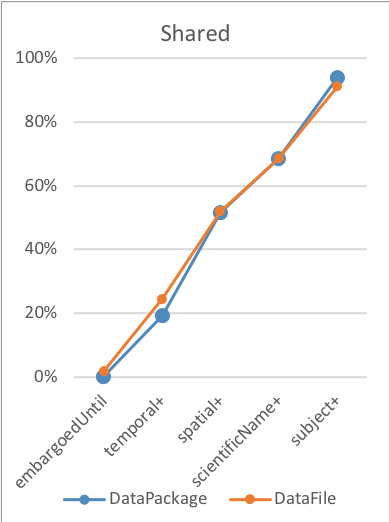
Dryad MetadataEarth and related Environmental Sciences
Published

California Digital Library (CDL) and Dryad recently announced a partnership to address researcher needs and to “move the needle” on digital data adoption throughout the scholarly research community by working together to understand and respond to researcher needs for high-quality scientific data publishing infrastructures.

Earth and related Environmental Sciences
Published

High-quality metadata can help users discover data and other resources in many ways. Good titles, abstracts, and keywords, along with spatial and temporal extents, go a long way with many search strategies. Adding schema.org metadata to landing pages can also help. A second discovery strategy, more like browsing, comes into play once someone finds something interesting.

Using ISO MetadataEarth and related Environmental Sciences
Published

The Doe family consists of mother Jane and her son John. Identifying people and relationships is an important function of metadata. The ISO TC211 metadata standards provide a comprehensive framework for many important metadata use cases. Could ISO metadata be used to describe the Doe family? ISO metadata describes objects with types and properties.

Earth and related Environmental Sciences
Published

Many datasets and products are documented using approaches and tools developed by data collectors to support their analysis and understanding. This documentation exists in notebooks, scientific papers, web pages, user guides, word processing documents, spreadsheets, data dictionaries, PDF’s, databases, custom binary and ASCII formats, and almost any other conceivable form, each with associated storage and preservation strategies.