Raw Data: A novel on Life in Science by Pernille Rørth (Springer, 2016) I was keen to read this “lab lit” novel written by renowned cell biologist Pernille Rørth. I’d seen lots of enthusiastic comments about the book, and it didn’t disappoint.
Fans of probability love random processes. And lotteries are a great example of random number generation. The UK National Lottery ran in one format from 19/11/1994 until 7/10/2015. I was talking to somebody who had played the same set of numbers in all of these lottery draws and I wondered what the net gain or loss has been for them over this period.
Yesterday I tried a gedankenexperiment via Twitter, and asked: If you could visualise a protein relative to an intracellular structure/organelle at ~5 nm resolution, which one would you pick and why? https://twitter.com/clathrin/status/707949738323218432 I got some interesting replies: Myosin Va and cargo on actin filaments in melanocytes – Cleidson Alves @cleidson_alves COPII components relative to ER and Golgi for export of
Every Song Ever: Twenty Ways to Listen in an Age of Musical Plenty Ben Ratliff (Farrar, Straus and Giroux) A non-science book review for today’s post. This is a great read on “how to listen to music”. There have been hundreds of books published along these lines, the innovation here however is that we now live in an age of musical plenty.
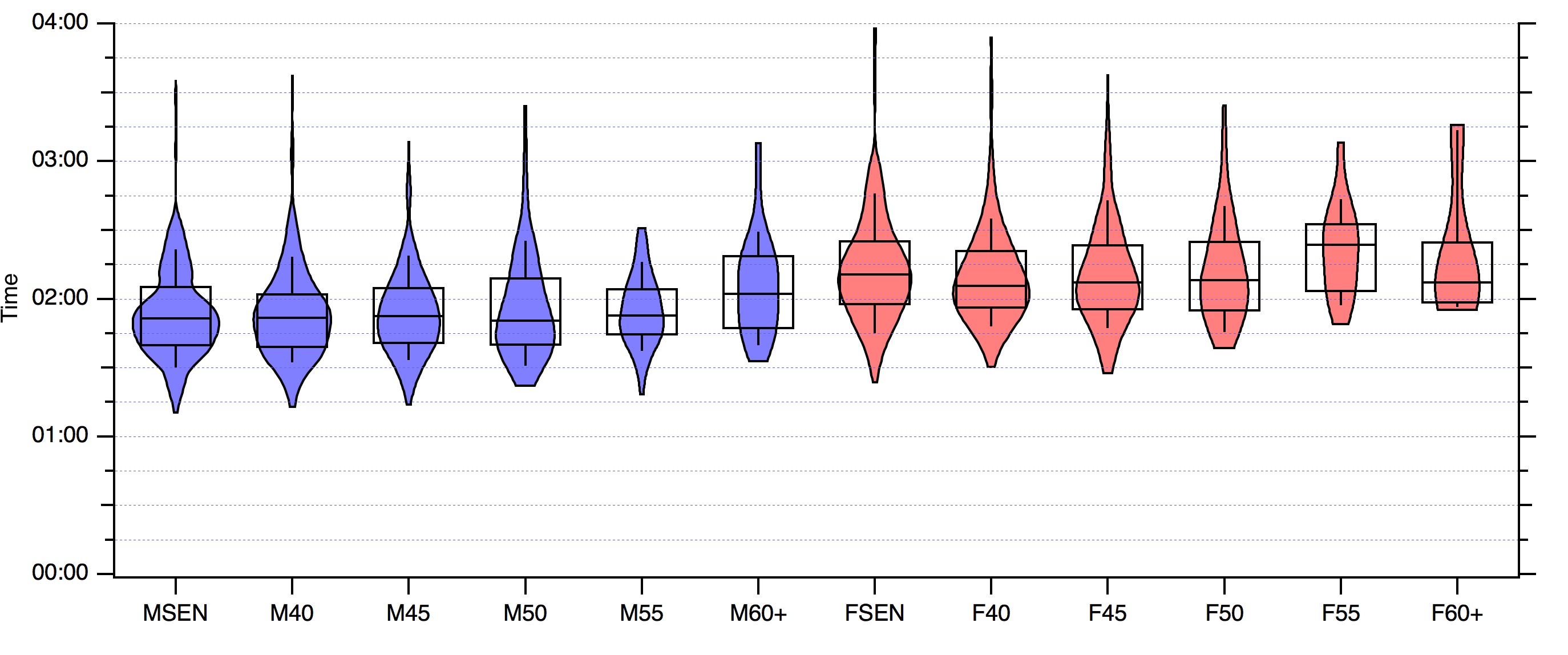
The end of the month sees the Coventry Half Marathon. I looked at what constitutes a good time over this course, based on 2015 results. I thought I’d post this here in case any one is interested. The breakdown of runners by category for the 2015 event. Male Senior (MSEN) category has the most runners, constituting a wide age grouping. There were 3565 runners in total, 5 in an undetermined category and 9 DNFs.
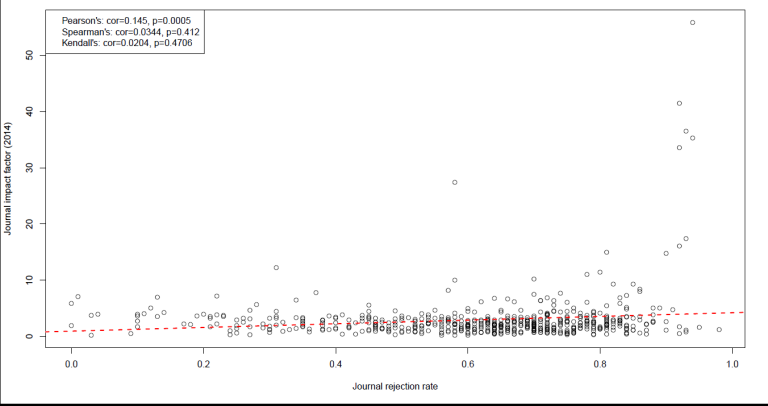
I was interested in the analysis by Frontiers on the lack of a correlation between the rejection rate of a journal and the “impact” (as measured by the JIF). There’s a nice follow here at Science Open.
University of Warwick is a popular conference destination, with thousands of visitors per year. Next time you visit and stay on campus, why not bring your running shoes and try out these routes? Route 1 This is just over 10K and it takes you from main campus out towards Cryfield Pavilion. A path goes to the Greenway (a former railway), which is a nice flat gravel track.
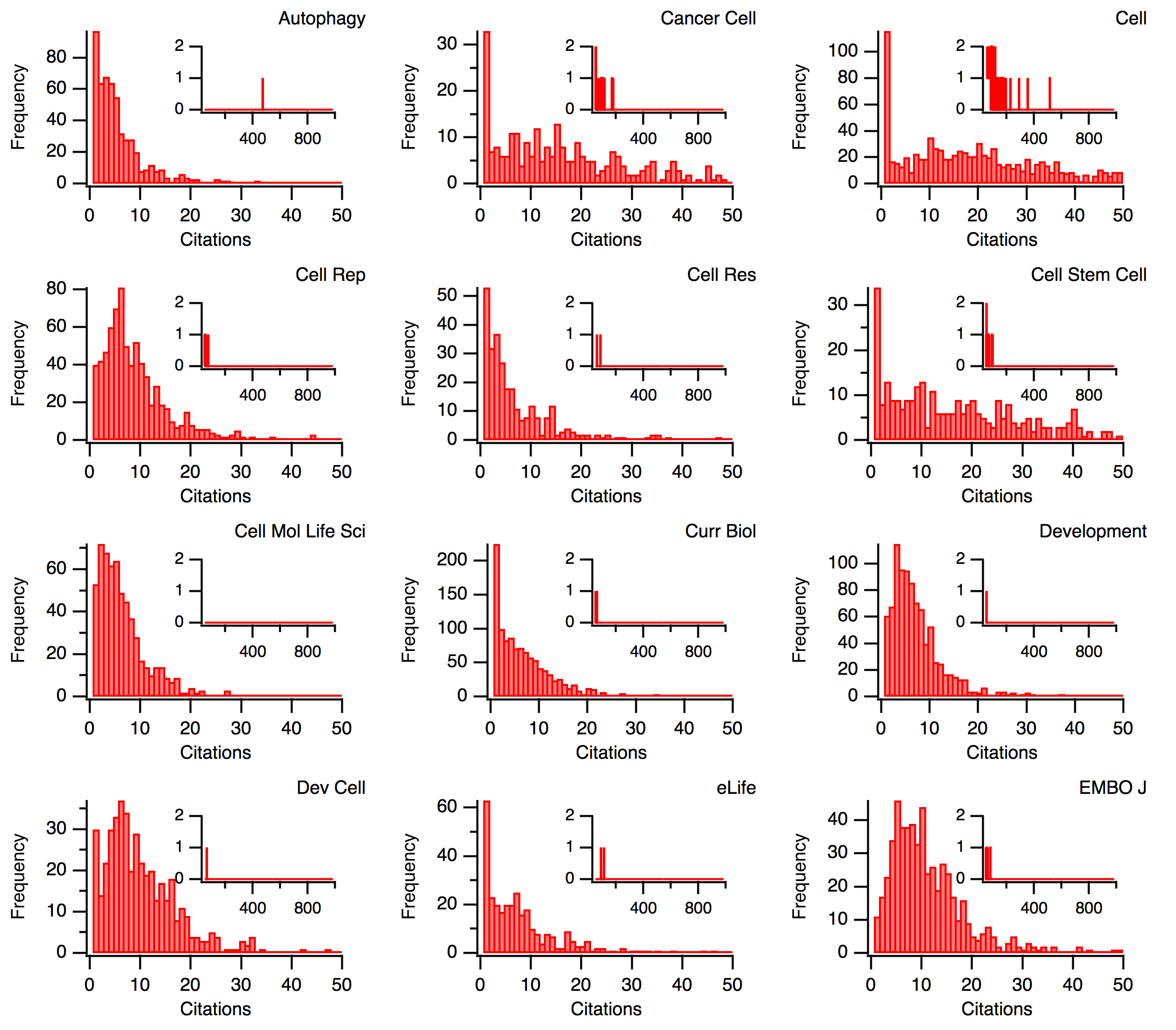
There have been calls for journals to publish the distribution of citations to the papers they publish (1 2 3). The idea is to turn the focus away from just one number – the Journal Impact Factor (JIF) – and to look at all the data.
A few days ago, Retraction Watch published the top ten most-cited retracted papers. I saw this post with a bar chart to visualise these citations. It didn’t quite capture what the effect (if any) a retraction has on citations. I thought I’d quickly plot this out for the number one article on the list. The plot is pretty depressing. The retraction has no effect on citations.
This year #paperOTD (or paper of the day for any readers not on Twitter) did not go well for me. I’ve been busy with lots of things and I’m now reviewing more grants than last year because I am doing more committee work. This means I am finding less time to read one paper per day. Nonetheless I will round up the stats for this year.
I read this article on the BBC recently about alcohol consumption in the UK. In passing it mentions how many people in the UK are teetotal. I found the number reported – 21% – unbelievable so I checked out the source for the numbers. Sure enough, ~20% of the UK population are indeed teetotal (see plots). The breakdown by gender and age is perhaps to be expected. There are fewer teetotal men than women.