Computer and Information SciencesGhost

Research Graph

Research Graph
Research Graph
Home PageRSS Feed
language
Artificial IntelligenceTocComputer and Information Sciences
Published
Author Vaibhav Khobragade
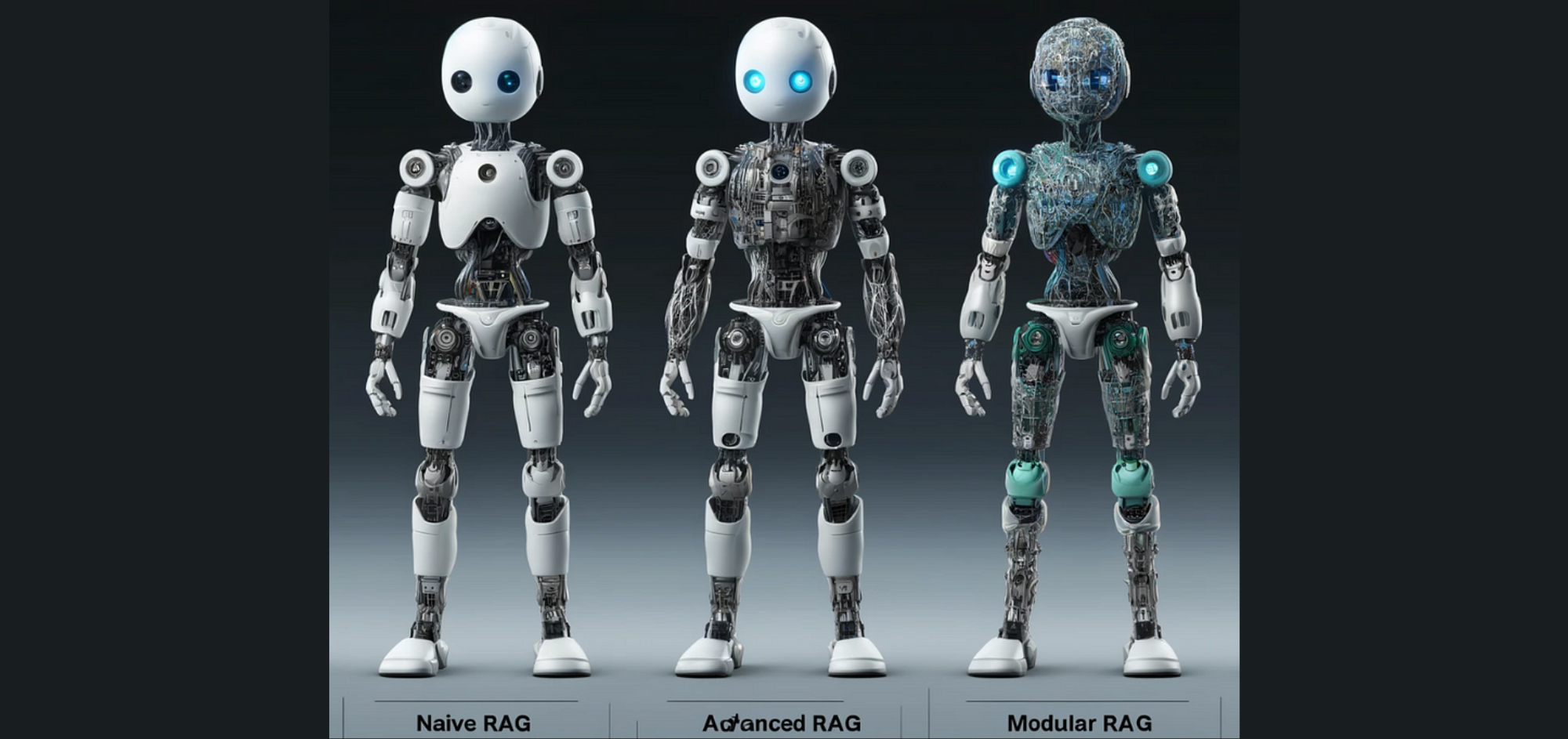
Introduction Large Language Models (LLMs) have achieved remarkable success. But, they still face significant limitations, especially in domain-specific or knowledge-intensive tasks such as question answering, producing “hallucinations” where the models generate responses that sound plausible but are actually incorrect when handling queries beyond their training data or requiring current information.


NaturallanguageprocessingLstmArtificial-intelligenceRecurrent-neural-networkComputer and Information Sciences
Published

The Three Oldest Pillars of NLP Author Dhruv Gupta ( ORCID : 0009–0004–7109–5403) Introduction Natural Language Processing (NLP) has almost become synonymous with Large Language Models (LLMs), Generative AI, and fancy chatbots. With the ever-increasing amount of textual data and exponential growth in computational knowledge, these models are improving every day.

Artificial IntelligenceToc
Published
Author Wenyi Pi

Introduction Misinformation refers to false or inaccurate information that is often given to someone in a deliberate attempt to make them believe something that is not true. This has a significantly negative impact on public health, political stability and social trust and harmony. To address these challenges, large language models (LLMs) are employed to identify inconsistency and verify the veracity of statements.

Large-language-modelsFrameworkRetrieval-augmentedComputer and Information Sciences
Published

A Unified and Collaborative Framework for LLM Author · Qingqin Fang ( ORCID: 0009–0003–5348–4264) Introduction In today’s rapidly evolving field of artificial intelligence, large language models (LLMs) are demonstrating unprecedented potential. Particularly, the Retrieval-Augmented Generation (RAG) architecture has become a hot topic in AI technology due to its unique technical capabilities.

Large-language-modelsArtificial-intelligenceRetrieval-augmented-genMisinformation-researchComputer and Information Sciences
Published
Author Wenyi Pi

Exploring innovative Strategies in Combating Misinformation with Enhanced Multimodal Understanding Author Wenyi Pi ( ORCID : 0009–0002–2884–2771) Introduction Misinformation refers to false or inaccurate information that is often given to someone in a deliberate attempt to make them believe something that is not true. This has a significantly negative impact on public health, political stability and social trust and harmony.

Artificial IntelligenceTocComputer and Information Sciences
Published
Author Xuzeng He

Introduction With the surge of Large Language Models (LLMs) nowadays, there is a rising trend among developers to use Large Language Models to assist their daily code writing. Famous products include GitHub Copilot or simply ChatGPT. However, just like those codes written by human developers, code generated by LLMs can sometimes have a lot of security risks as well.

ConflictLarge-language-modelsRetrieval-augmented-genComputer and Information Sciences
Published

Understanding the Balance between Internal Knowledge and External Sources Author Qingqin Fang ( ORCID: 0009–0003–5348–4264) Introduction Previous research often emphasized the limitations of LLM’s information acquisition pathways, focusing on enhancing its capabilities in this regard.

Neo4jApocCypherKnowledge-graphComputer and Information Sciences
Published
Author Wenyi Pi

Neo4j APOC Library Use Case Author Wenyi Pi ( ORCID: 0009–0002–2884–277) Introduction In the realm of Neo4j, the APOC (Awesome Procedures on Cypher) library stands as a powerful tool. Previously, We have talked about the importance of APOC in optimising Cypher queries and improving query efficiency in our article Exploring Methods of Cypher Query Optimisations.

Knowledge GraphToc
Published
Author Wenyi Pi

Introduction In the realm of Neo4j, the APOC (Awesome Procedures on Cypher) library stands as a powerful tool. Previously, We have talked about the importance of APOC in optimising Cypher queries and improving query efficiency in our article Exploring Methods of Cypher Query Optimisations. This article delves deeper into some important functions available within the APOC library.

Artificial IntelligenceTocComputer and Information Sciences
Published
Author Xuzeng He

Introduction A graph, in short, is a description of items linked by relations, where the items of a graph are called nodes (or vertices) and their relations are called edges (or links). Examples of graphs can include social networks (e.g. Instagram) or knowledge graphs (e.g. Wikipedia). In Instagram for instance, a graph might be used to represent users as nodes and their relationships(who follows whom) as edges.