Earth and related Environmental SciencesGhost

Underworld Geodynamics Community

Underworld Geodynamics Community
Geodynamics, Computation and Education
Home PageRSS Feed
language
Underworld CodePython/JupyterEarth and related Environmental Sciences
Published
Authors Louis Moresi, Julian Giordani, John Mansour

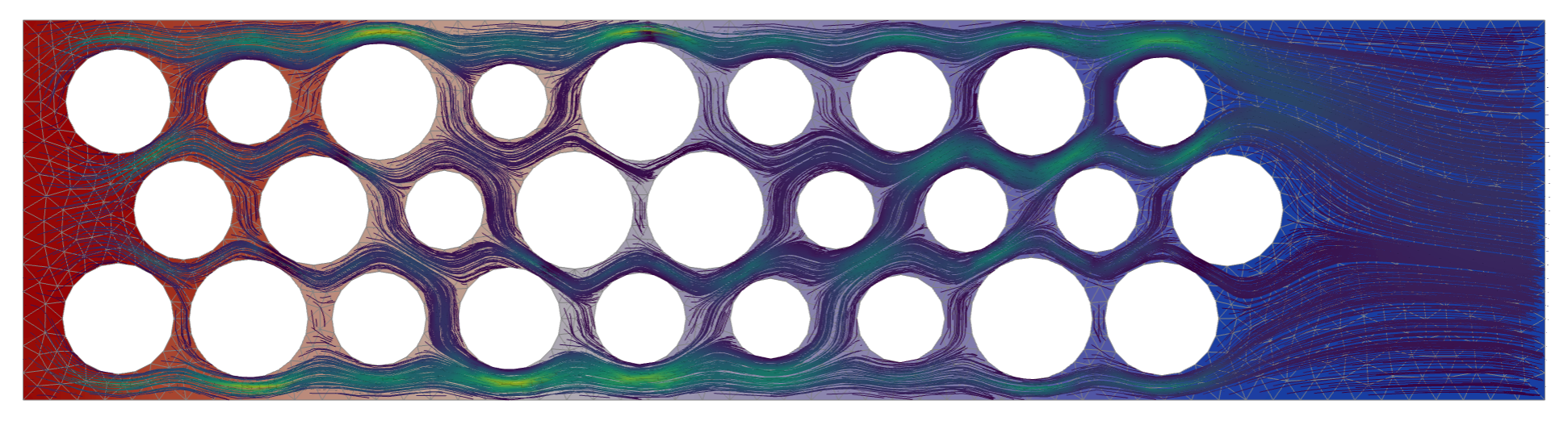
A recent paper in the Journal of Open Source Software describes the implementation details of Underworld3 and a brief motivation for the rewritten codebase (Moresi et al, 2025). Underworld3 combines the power of the symbolic algebra package, sympy (Meurer et al, 2017), with the equation templating system in the parallel finite-element framework of PETSc, through petsc4py (Knepley et al, 2013, Dalcin et al, 2011). Underworld3 has the same

Underworld WorkshopsGetting StartedGeodynamicsEarth and related Environmental Sciences
Published

📍 Location: Curtin University - 402.323:FF, 9am, May 7, 2025 You are invited to a full-day workshop on Underworld — a computational Geodynamics / Tectonics modelling framework. This is an excellent opportunity for researchers, students, and professionals interested in computational geodynamics and Earth science modelling to learn about Underworld.

Underworld CodeTricks Of The TradeEarth and related Environmental Sciences
Published
Author Julian Giordani

Benefits of Containers Pros: Simpler to install Underworld and run with Singularity containers. No need to maintain "bare metal" (hard drive) builds. More efficient Python execution. Increased reproducibility and portability. Cons:

Underworld CodeGeophysicsAuscopeEarth and related Environmental Sciences
Published

We mark January 17, 1994 (the day better known for the Northridge Earthquake) as the birthday of the CITCOM family of codes. I was shaken awake early in the morning, and spent the rest of the day nervously waiting for the next aftershock while I checked that the code was really solving all the test problems quickly and accurately.

GeodynamicsEarth and related Environmental Sciences
Published
Author Juan Carlos Graciosa

Introduction and benchmarking The convection of the Earth’s mantle is usually modelled as an incompressible process, referred to as the Boussinesq approximation. However, in the Earth’s mantle, the pressure increase associated with depth also increases the density due to self-compression (King et al. 2010). In some applications, this compressibility may be non-negligible and modelling it may be desirable.

Earth and related Environmental Sciences
Published
Author Haibin Yang

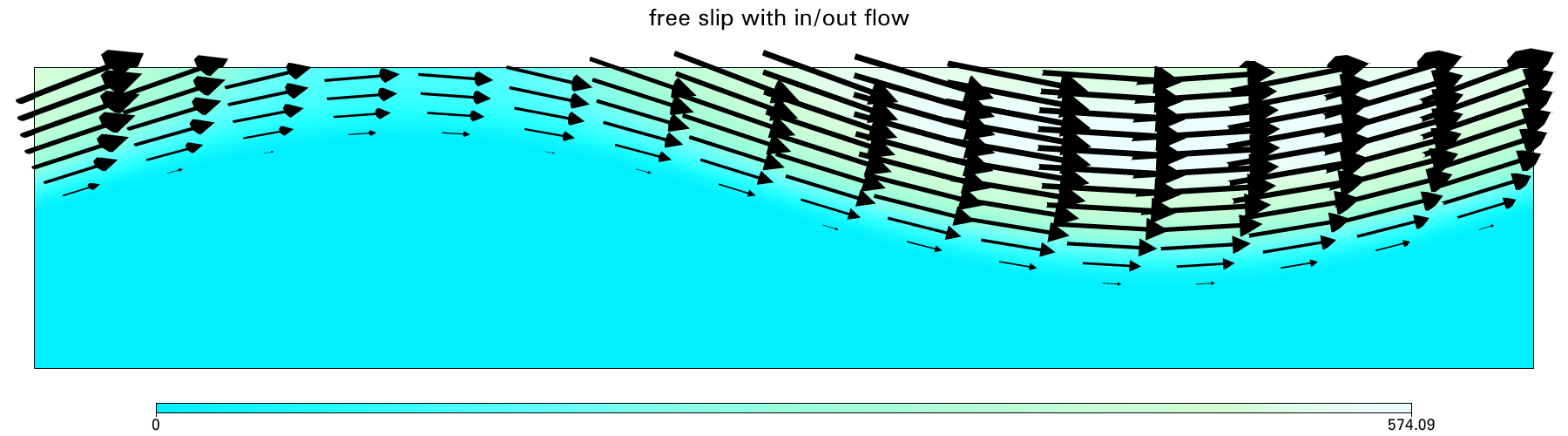
Abstract Numerical models have become an indispensable tool for understanding and predicting the flow of ice sheets and glaciers. Here we present the full-Stokes software package Underworld to the glaciological community. The code is already well established in simulating complex geodynamic systems. Advantages for glaciology are that it provides a full-Stokes solution for elastic–viscous–plastic materials and includes mechanical anisotropy.

Earth and related Environmental Sciences
Published
Author Romain Beucher

Yeah, one repo, one vision! In an effort to simplify maintenance and compatibility between Underworld and UWGeodynamics, we have decided to merge the codes into a single repository. Starting with version 2.13, UWGeodynamics will now live under Underworld. All UWGeodynamics functionalities and workflows will remain available to the users.