HumanitiesGhost

Upstream

Upstream
The community blog for all things Open Research.
Home PageAtom FeedMastodon
language
Original ResearchInsights
Published
Authors Iratxe Puebla, Eleonora Colangelo

For open science to advance, it is essential to monitor its practices to meaningfully assess whether they are achieving their intended goals for research and society. The Open Science Monitoring Initiative (OSMI) was established to help the community assess the adoption and impact of open science across the research ecosystem and beyond.

Thought PiecesHumanities
Published
Author Min-Yen Kan

This post was distilled from a talk that I gave at Schloss Dagstuhl's seminar 25831 "Open Scholarly Information Systems: Status Quo, Challenges, Opportunities". As the video recording mentions, the slides for the talk are openly shared at http://soc-n.us/250916-dagstuhl . Many of us may be familiar with the Dagstuhl seminar series;

Thought PiecesHumanities
Published

International mobility has long been framed as a hallmark of academic success. A postdoctoral stint in Europe, a fellowship in North America, or an exchange program in Asia is often seen as both a professional milestone and a rite of passage. The benefits are undeniable: exposure to cutting-edge facilities, immersion in new scientific cultures, and access to broader collaboration networks.

Thought PiecesHumanities
Published

In my last blog post for Upstream, I noted that there were some potential issues with, and good alternatives to, the NIH plan to cap grant spending on article processing charges. One of my suggestions was that the NIH put its plan out for public comment so they could draw from community input in their final policy. Thankfully, the NIH did just that and the public can submit comments on the plan until 15 September 2025.

Thought PiecesHumanities
Published

Recently, the National Institutes of Health (NIH) announced it will cap the amount of direct funding support that researchers can spend on paying for article processing charges, or APCs. These fees are increasingly used by publishers for their revenue streams and makes researcher contributed articles available to read for free via "gold" open access.

Thought PiecesHumanities
Published

This blog post is an accompaniment for two recent presentations: “ Not playing at the edges, welcoming disruptive change ” and “ A Scholarly Communication landscape scan and update ” for which the slides are available . How do we make sense of the implications of current geopolitical, financial, and technological volatility?

Thought PiecesHumanities
Published

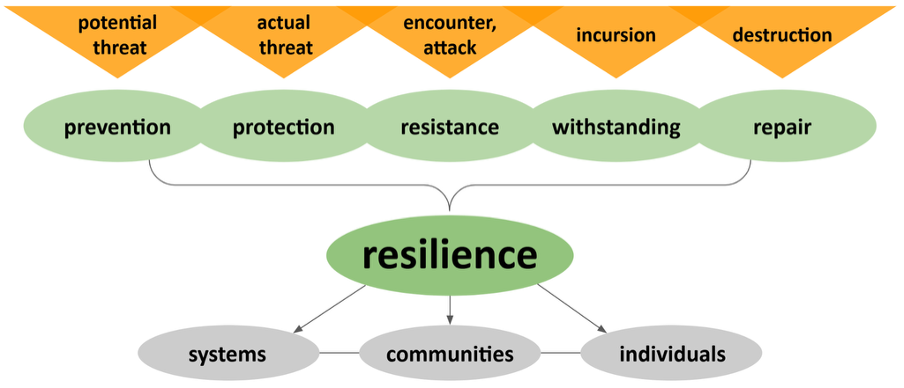
The increasingly hostile attitude of the new U.S. government towards science and academia leaves many of us deeply concerned— if not outright alarmed. In an effort to better understand the unfolding situation and navigate its potential impacts, we provide an overview of five types of threats, each supported by links to documented sources.

Thought PiecesHumanities
Published

[Author's Note: This is Version 2 of this Editorial Blog Post. Version 1 was openly reviewed through MetaROR and this version reflects changes made as a result of those reviews. The response to reviewers is here.] Academia is undergoing a rapid transformation characterized by exponential growth of scholarly outputs.

Thought PiecesHumanities
Published

A few months back, Upstream editor Martin Fenner suggested that I submit my Upstream blog post titled, Drinking from the Firehose? Write More and Publish Less, for peer-review as a sort of experiment for Upstream through MetaROR. MetaROR, a relative newcomer to the scholarly communication community, provides the review and curate steps in the "publish-review-curate" model for meta-research.

NewsHumanities
Published
Author Adam Buttrick

The Collaborative Metadata Enrichment Taskforce (COMET) has released a Community Call to Action, inviting organizations and individuals to contribute resources (funding, expertise, metadata, and infrastructure) to support the first phase of a community-driven infrastructure for making persistent identifier (PID) metadata better and more complete.