Medienwissenschaften und KommunikationswissenschaftenEnglischGhost

the modern peer

academic publishing: unfiltered and uncensored.
StartseiteRSS-Feed
language
Englisch
Veröffentlicht
Autor Luís Oliveira
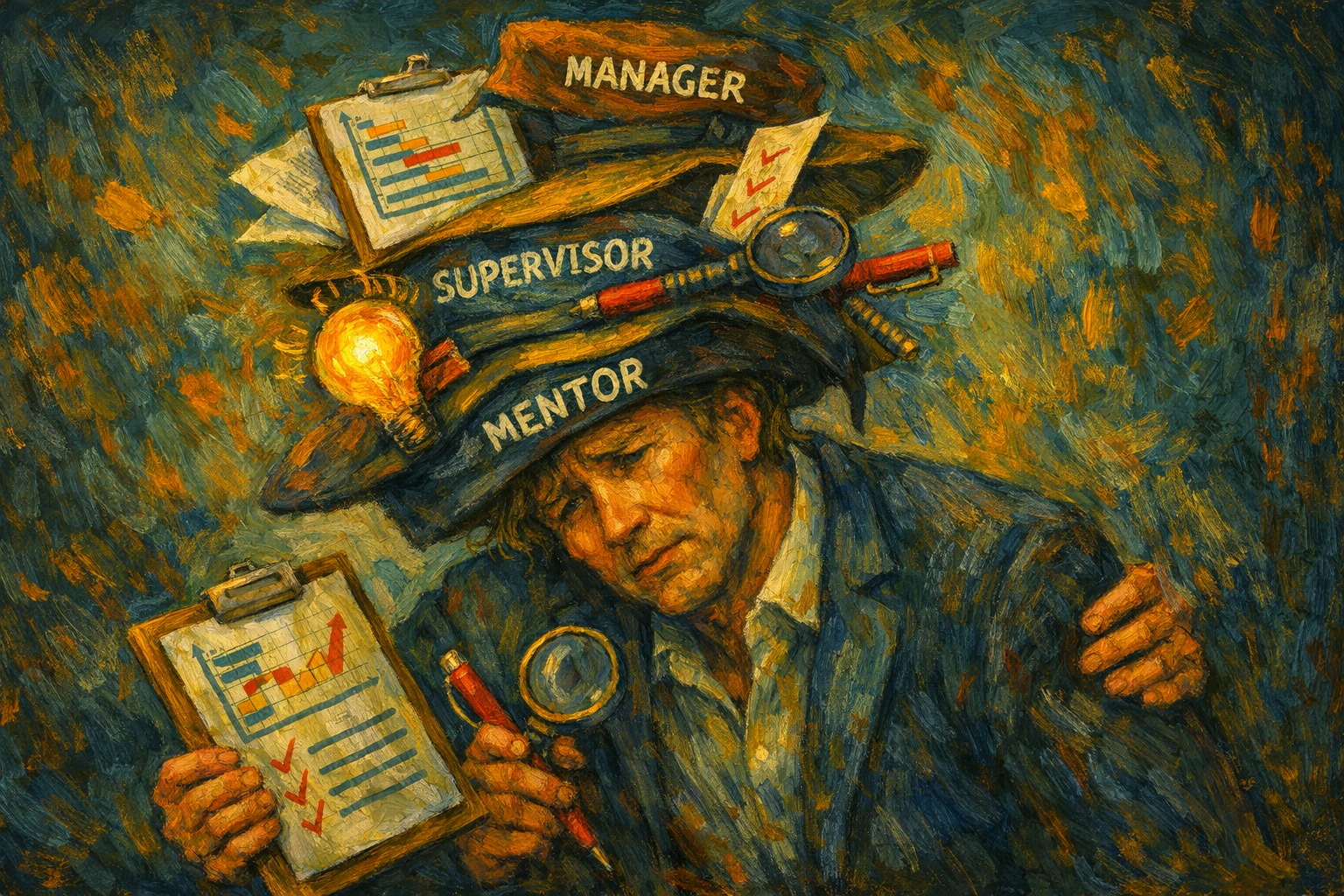
There are many academia-specific keywords: “grant”, “stipend”, “precarity”. But what is the correct designation for the leader of a research group who writes projects, manages people, supervises students, etc? Manager? Supervisor? Mentor? Because these are very different concepts. It could be easier to stick with the concept of “principal investigator” (aka PI), I know. But, let’s face it, that word ends up being a little bland right?


Englisch
Veröffentlicht
Autor María Botía-Sánchez

If you ever wondered what the academic equivalent of “the common child’s nightmare of going to school while in your pyjamas” is, chances are most researchers under 40 years old will respond the same: This is a particular moment many of us recognise instantly, because when a question that you cannot answer arises during an important meeting, your mind automatically switches to panic mode.

Englisch
Veröffentlicht
Autor The Open Fox

If only we fixed the publishing system. If only we fixed the incentives, rewards and recognition. Open Science (OS) likes to position itself as a systems problem. And whilst these things do matter, decades of the same conversations and limited change is unveiling an uncomfortable truth: The biggest barrier to change in Open Science isn’t systems or structures. It’s people. And I don’t just mean people in the abstract;

Englisch
Veröffentlicht
Autor Leal Oburoglu

Have you ever had that person in your team that made sure to explicitly share that they have been working during crazy hours, every single time they had to do that? (I have, and what a pleasant person to listen to.) These types of glorifications are sometimes thrown around as if they were achievements. Even though it’s not strange to work overtime or do experiments on weekends, if you are a researcher.

Englisch
Veröffentlicht
Autor The Open Fox

For most of human history, science has been communicated through the spoken word. Knowledge moved from person to person through oral storytelling and apprenticeship style training. Writing helped to fix ideas in time and allowed for greater reach. Science spread through personal correspondence and in-person gatherings. The invention of the printing press was the beginning of truly widespread knowledge distribution.

Englisch
Veröffentlicht
Autor The Open Fox

The first step of alcoholics anonymous is to admit you have an addiction (or so the many TV shows tell me). Well, I’m a scientist and science has an addiction. It’s an addiction that every scientist has, and no it isn’t the immense feeling of being the first to discover something new, or the crippling imposter syndrome. It isn’t even that all-too-real alcohol dependency that we seem to acquire.

Englisch
Veröffentlicht
Autor Marie-Odile Baudement

Recently reconverted into retail, I’ve just survived my first Black Friday — or rather Black Week, because apparently one chaotic day wasn’t enough. It was insane, messy and completely absurd. But as I went through it, I realized something surprising: I have never felt as stressed in retail as I did waiting for a paper to be reviewed. Naturally, my scientist brain started drawing parallels between the two worlds. Some funny.

Medienwissenschaften und KommunikationswissenschaftenEnglisch
Veröffentlicht
Autor Leal Oburoglu

There was another lab working on our “favorite” protein. Not in our building, and not even in our time zone but our questions and models were quite similar. We knew of them through the usual channels: their publications, conference talks. And I do believe they knew of our extensive work too. So when their next paper came out, it was surprising to see that none of our lab’s work was cited. Their omission was not an error.

Medienwissenschaften und KommunikationswissenschaftenEnglisch
Veröffentlicht
Autor Guest Author

✒️ Editor's Note: Today's guest post was written by Catharina Sänger . With a curious mind and a passport full of lab stamps, Catharina has explored science across the globe. She studied Biochemistry in Frankfurt, Germany, including research projects in Boston and Melbourne, before moving toward Molecular Biology for her PhD at ETH Zurich.

Medienwissenschaften und KommunikationswissenschaftenEnglisch
Veröffentlicht
Autor Guest Author

✒️ Editor's Note: Today's guest post was written by Catharina Sänger . With a curious mind and a passport full of lab stamps, Catharina has explored science across the globe. She studied Biochemistry in Frankfurt, Germany, including research projects in Boston and Melbourne, before moving toward Molecular Biology for her PhD at ETH Zurich.