BiologieEnglischWordPress

quantixed

quantixed
x == (s || z). You say it kwontized
StartseiteAtom-FeedMastodon
language
PublishingScienceBiology OpenCell BiologyEndocytosisBiologieEnglisch
Veröffentlicht

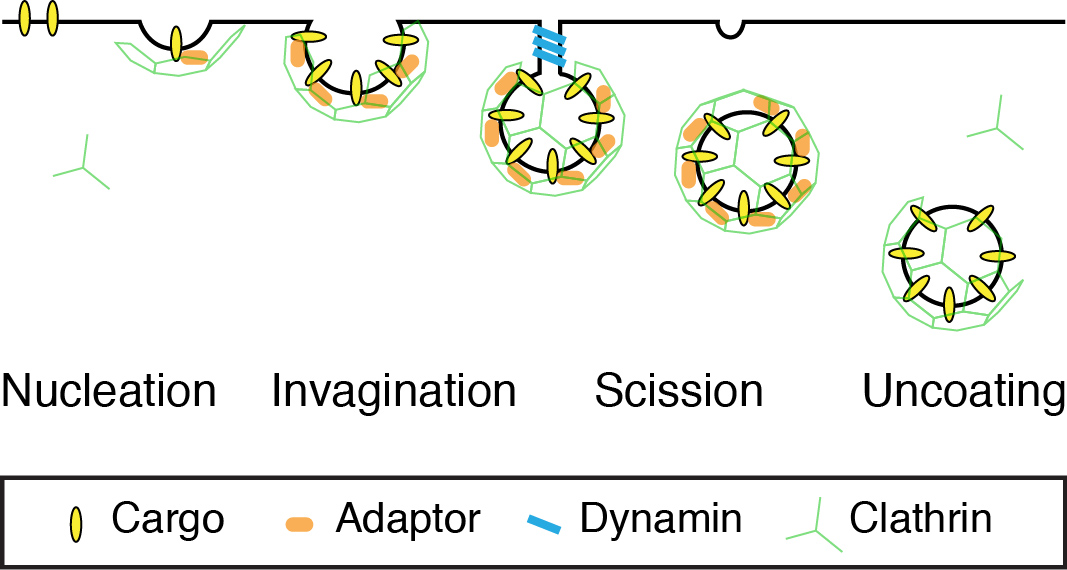
We have a new paper out! You can read it here. I thought I would write a post on how this paper came to be and also about our first proper experience with preprinting. Title of the paper: Non-specificity of Pitstop 2 in clathrin-mediated endocytosis. In a nutshell: we show that Pitstop 2, a supposedly selective clathrin inhibitor acts in a non-specific way to inhibit endocytosis.

PublishingScienceCodeComputingGraphsBiologieEnglisch
Veröffentlicht

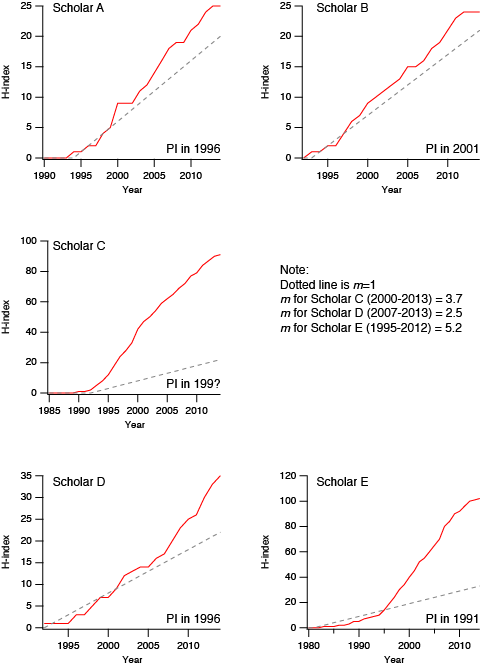
A recent opinion piece published in eLife bemoaned the way that citations are used to judge academics because we are not even certain of the veracity of this information. The main complaint was that Google Scholar – a service that aggregates citations to articles using a computer program – may be less-than-reliable. There are three main sources of citation statistics: Scopus, Web of Knowledge/Science and Google Scholar;

PublishingScienceCodeComputingGraphsBiologieEnglisch
Veröffentlicht
Autor Stephen Royle

How long does it take to publish a paper? The answer is – in our experience, at least – about 9 months. That’s right, it takes about the same amount of time to have a baby as it does to publish a scientific paper. Discussing how we can make the publication process quicker is for another day. Right now, let’s get into the numbers.

ComputingScienceCodeGraphsIgorBiologieEnglisch
Veröffentlicht

Fans of data visualisation will know the work of Edward Tufte well. His book “The Visual Display of Quantitative Information” is a classic which covers the history and the principals of conveying data in a concise way, that is easy to interpret. He is also credited with two different dataviz techniques: sparklines and image quilts.

PublishingReadingBooksLMBMolecular BiologyBiologieEnglisch
Veröffentlicht

Books about the MRC Laboratory of Molecular Biology are plentiful. If you haven’t read any, the best place to start are the books written by some of the Nobelists themselves: “I Wish I’d Made You Angry Earlier” by Perutz, “My Life in Science” by Brenner.

ComputingGraphsIgorIgorProPlotsBiologieEnglisch
Veröffentlicht

In the lab we use IgorPro from Wavemetrics for analysis. Here is a useful procedure to plot all XY pairs in an experiment. I was plotting out some cell tracking data with a colleague and I knew that I had this useful function buried in an experiment somewhere. I eventually found it and thought I’d post it here.

PublishingReadingPaper Of The DayPapersPotdBiologieEnglisch
Veröffentlicht

#paperoftheday #potd A common complaint from other PIs is that they “don’t read enough any more”. I feel like this too and a solution was proposed by a friend of a friend*: try to read one paper per day. This seemed like a good idea and I started to do this in 2013. The rules, obviously, can be set by you. Here’s my version: Read one paper each working day.

PublishingLag TimesPapersScienceWritingBiologieEnglisch
Veröffentlicht

How long does it take to publish a paper? I posted the picture below on Twitter to show how long it takes for us to publish a paper. The answer is 235 days. This is the median time from submission at the first journal to publication online or in print. The data are from our last ten papers. The infographic proved popular with 40 retweets and 22 favourites. It was pointed out to me that the a few things would improve this visualisation: 1.

ComputingCodeGrantsProductivityBiologieEnglisch
Veröffentlicht

I thought I would start add a blog to our lab website. The plan is to update maybe once a week with content that is too long for twitter but doesn’t fit in the categories on the lab website. I’m thinking extra analysis, paper commentaries, outreach activities etc. Let’s see how it goes. First up: how do you count the number of words or characters in a text file? Microsoft Word has a nice feature for doing this, but poor old TextEdit does not.