We’re more than halfway through 2020, and it has already been a year like no other. In the midst of global upheaval and uncertainty, work on the Research Organization Registry continues.
Version 4.3 of the DataCite Metadata Schema released during August, 2019 included (among other things), the capability to provide persistent identifiers for affiliated organizations in the metadata (Dasler and deSmaele, Identify your affiliation with Metadata Schema 4.
ROR had a party in Portugal last month! Sixty friends - some new, some old - came together in Lisbon on the eve of PIDapalooza 2020 to celebrate ROR’s unofficial first birthday, marking one year since the registry debuted at a community meeting in Dublin in January 2019.
Flashback to one year ago, December 2018 : The ROR project team was putting the final pieces in place to launch the ROR MVR (minimum viable registry) in January. The ROR ID format was under discussion. A website was under construction. The purchase of the ror.org domain was being negotiated. We were getting ready to ROAR!
As we announced previously, ROR launched a fundraising campaign in October to ensure the registry’s long-term sustainability. We are grateful for the community supporters who have already contributed to this campaign.
ROR launched in January 2019 with records for nearly 100,000 research organizations, all with unique IDs and associated metadata. ROR data is useful for a variety of reasons and for a variety of users, including both humans and machines.

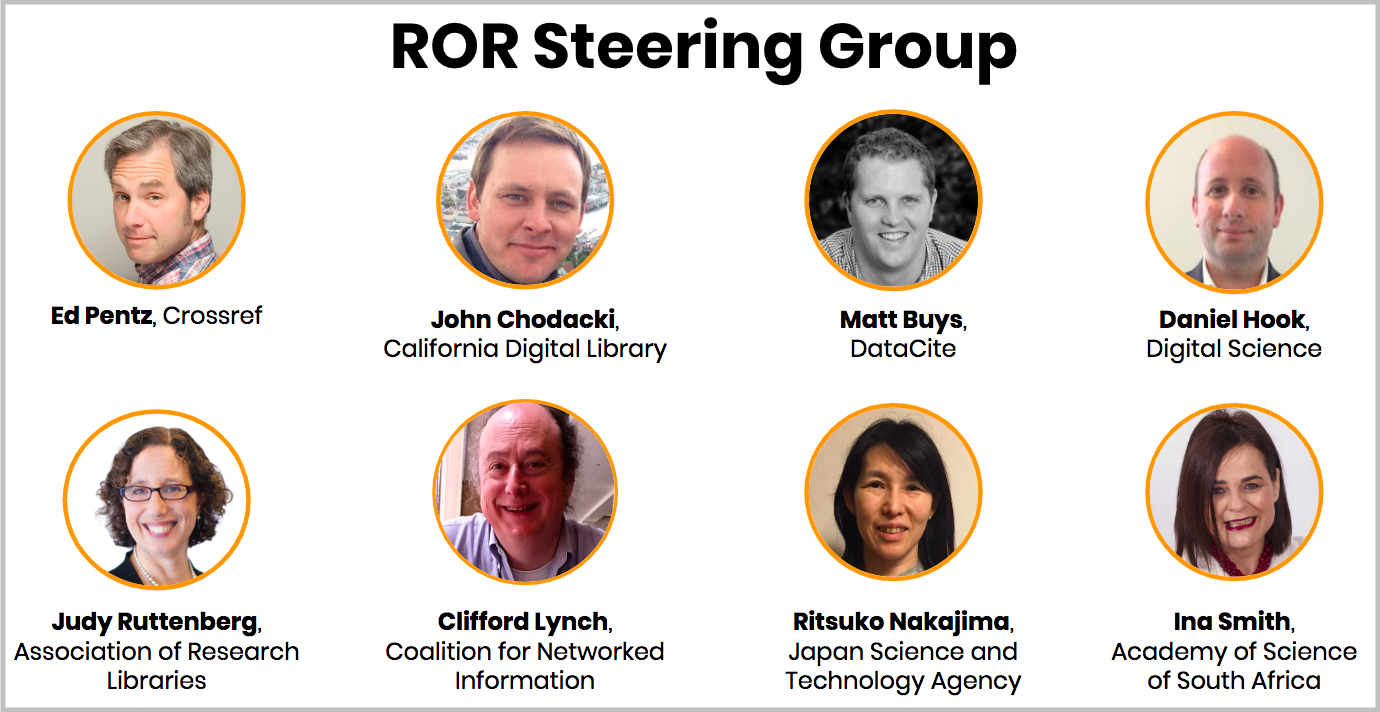
ROR is thrilled to announce that we are welcoming new members to the ROR Steering Group.
ROR launched a fundraising campaign in October to call on community stakeholders to pitch in toward supporting ROR’s long-term sustainability. While the overall goal of this campaign is to raise $175,000 from community supporters over the next two years, we set an initial target of $75,000 by the end of 2019.
ROR is the Research Organization Registry, a community-led project to develop an open, sustainable, usable, and unique identifier for every research organization in the world.
How many datasets have been published in Dryad from researchers at the University of California? This question is surprisingly complicated. A short answer might be, we don’t know!
ROR is an open registry for every research organization in the world, aiming to solve the problem of identifying which organizations are affiliated with which research outputs.