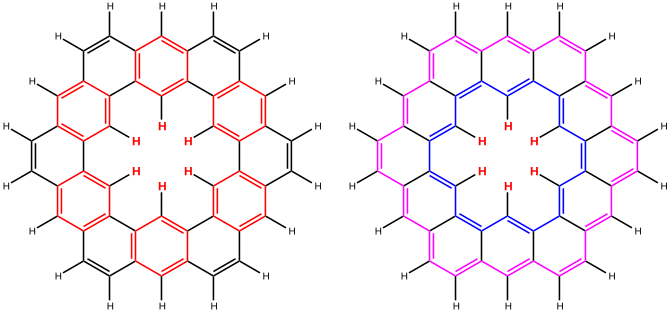
Increasingly, individual small molecules are having their structures imaged using STM, including cyclo[18]carbon that I recently discussed. The latest one receiving such treatment is Kekulene.
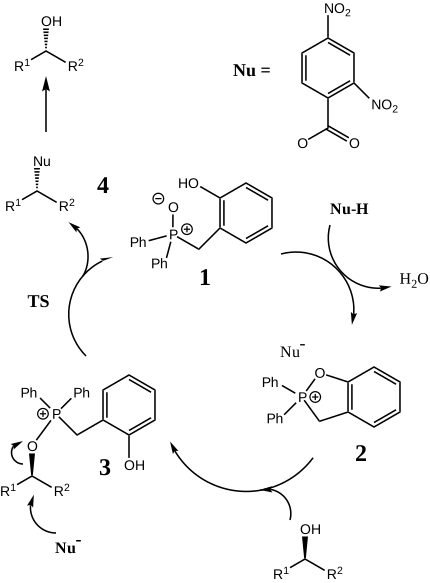
If, as a synthetic chemist, you want to invert the configuration of an alcohol in which the OH group is at a chiral centre, then the Mitsunobu reaction has been a stalwart for many years. Now a catalytic version has been published, along with a proposed mechanism.

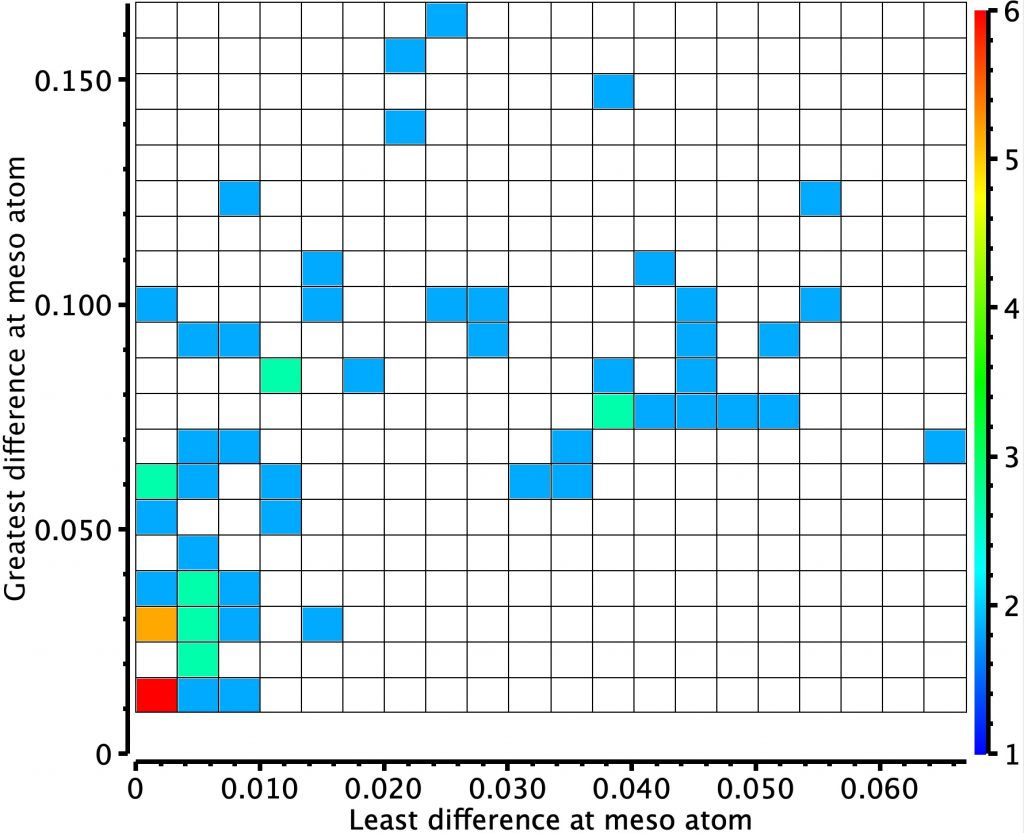
In the previous post, I looked at a class of molecule known as hexaphyrins, inspecting bond length alternation (BLA) at the so-called meso position, the carbon atom joining two pyrrole rings. A search of the difference in bond lengths at this position had shown two significant clusters of crystal structures.

The theme of the last three posts derives from the recently reported claimed experimental observation of bond length alternation (BLA) in cyclo[18]carbon, a ring of just 18 carbon atoms.

In the previous posts, I tried to track down the onset of bond length alternation (BLA) as a function of ring size in aromatic cyclocarbons, finding the answer varied dramatically depending on the type of method used to calculate it. So here I change the system to an unusual kind of aromatic ring, the leminiscular […]
In the previous post, I looked at the so-called Kekulé vibration of cyclo[18]carbon using various quantum methods and basis sets.

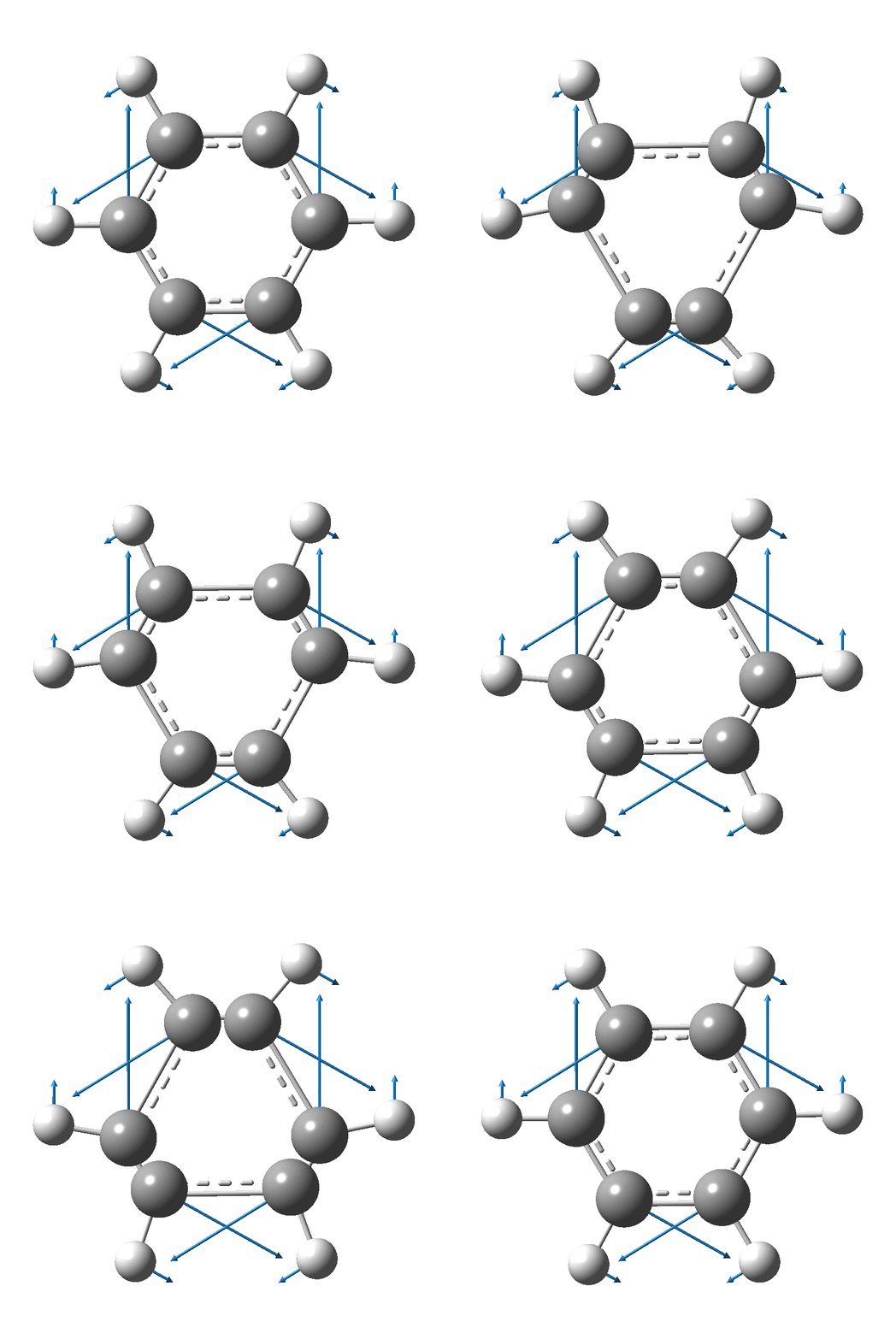
I have discussed the vibration in benzene known as the Kekulé mode in other posts, the first of which was all of ten years ago.

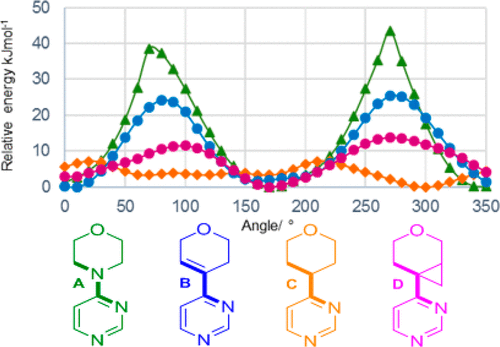
In the pipeline reports on an intriguing new ring system acting as an isostere for morpholine. I was interested in how the conformation of this ring system might be rationalised electronically and so I delved into the article. Here I recount what I found.

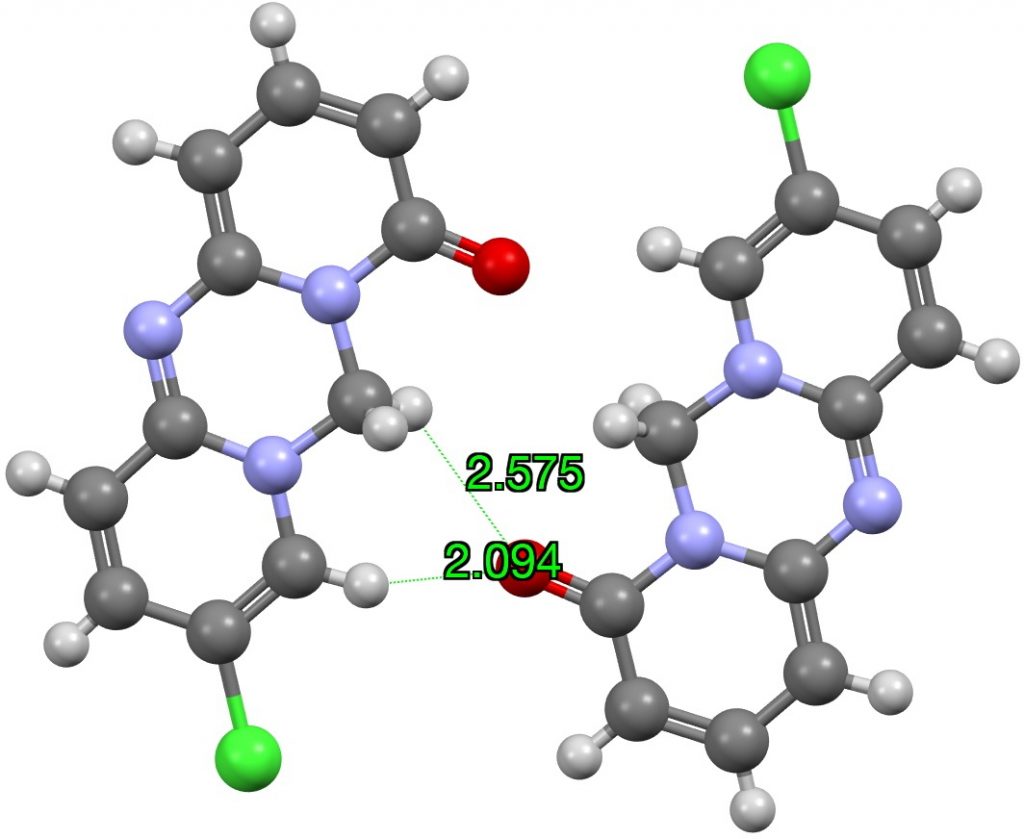
I have previously looked at the topic of hydrogen bonding interactions from the hydrogen of chloroform Here I generalize C-H…O interactions by conducting searches of the CSD (Cambridge structure database) as a function of the carbon hybridisation. I am going to jump straight to a specific molecule XEVJIR (DOI: 10.5517/cc5fgpq) identified from the searches appended to this […]
I have had some interesting discussions recently regarding metadata. What emerges is that it can be quite a broadly defined concept and it is clear that a variety of answers might be obtained when asking the simple question “what is it useful for?” Here I set out some of my answers to that question.

The World-Wide-Web is currently celebrating its 30th anniversary; you can get the T-shirt in the CERN visitor centre! Five years on, in May 1994, the first Web conference took place (WWW94) at CERN and now celebrating its own 25th anniversary.