ChemieEnglischWordPress

Henry Rzepa's Blog

Henry Rzepa's Blog
Chemistry with a twist
StartseiteAtom-Feed
language
Interesting ChemistryReaction MechanismChemieEnglisch
Veröffentlicht

The layout of floor 2 of the chemistry department here contains a number of small rooms which function as tutorial areas. Each has a (non-interactive) whiteboard used by students and tutors for, inter-alia , thought-showering. It was in one such room that I found myself with three colleagues this monday afternoon. We soon all sensed something not quite right about the room;
Interesting ChemistryAnimationChemical BondCondensationDemjanov RearrangementChemieEnglisch
Veröffentlicht

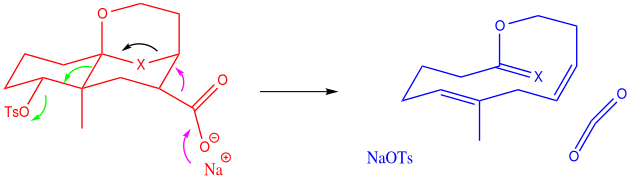
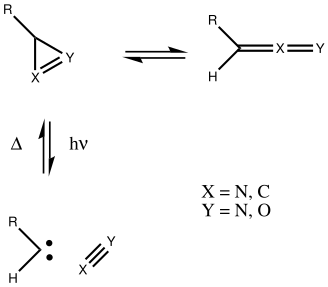
In answering tutorial problems, students often need skills in deciding how much time to spend on explaining what does not happen, as well as what does. Here I explore alternatives to the mechanism outlined in the previous post to see what computation has to say about what does (or might) not happen.

Interesting ChemistryReaction MechanismActivation EnergyAnimationEnergyChemieEnglisch
Veröffentlicht

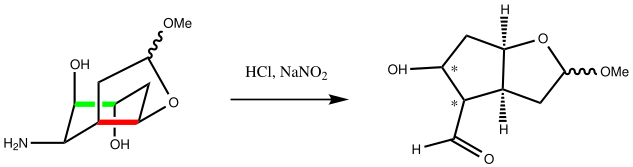
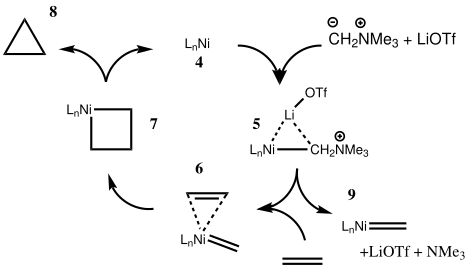
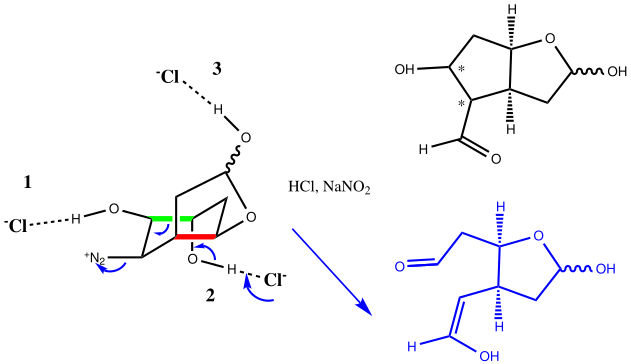
This reaction emerged a few years ago (thanks Alan!) as a tutorial problem in organic chemistry, in which students had to devise a mechanism for the reaction and use this to predict the stereochemical outcome at the two chiral centres indicated with *.  It originates in a brief report from R. B. Woodward’s group in 1973 describing a prostaglandin synthesis,[cite]10.1021/ja00801a066[/cite] the stereochemical outcome being crucial.

Reaction MechanismCambridgeDerek LoweHTMLHTML ElementChemieEnglisch
Veröffentlicht

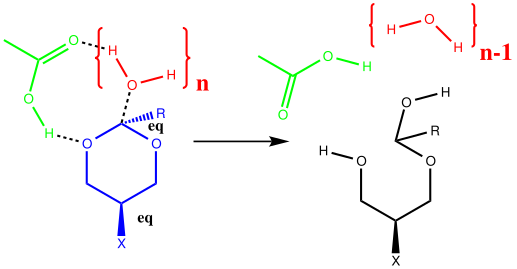
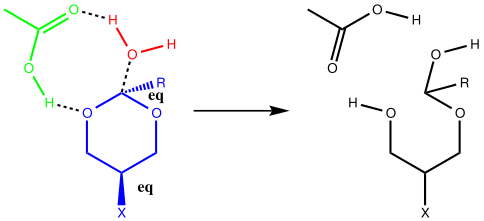
Derek Lowe has a recent post entitled " Another Funny-Looking Structure Comes Through ". He cites a recent medchem article[cite]10.1021/acsmedchemlett.5b00398[/cite] in which the following acetal sub-structure appears in a promising drug candidate (blue component below). His point is that orally taken drugs have to survive acid (green below) encountered in the stomach, and acetals are famously sensitive to hydrolysis (red below). But if

Interesting ChemistryAtoms In MoleculesChemical BondingDiagramHydrogen BondChemieEnglisch
Veröffentlicht

Steve Bachrach on his own blog has commented on a recent article[cite]10.1002/anie.201505934[/cite] discussing the structure of the trimer of fluoroethanol. Rather than the expected triangular form with three OH—O hydrogen bonds, the lowest energy form only had two such bonds, but it matched the microwave data much better. Here I explore this a bit more.

HistoricalChemieEnglisch
Veröffentlicht

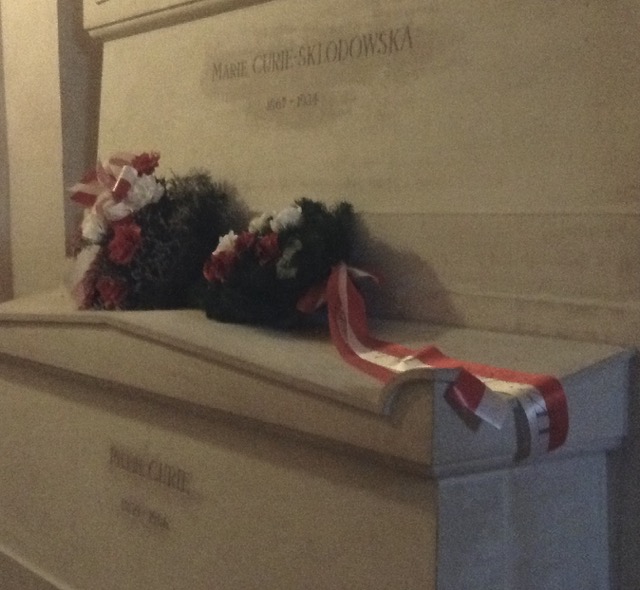
I have previously shown the grave of  William Perkin, a great british organic chemist. On a recent visit to  Paris, I went to see the crypt in the Panthéon, the great french secular necropolis. What a contrast to Perkin!

HistoricalInteresting ChemistryChemieEnglisch
Veröffentlicht

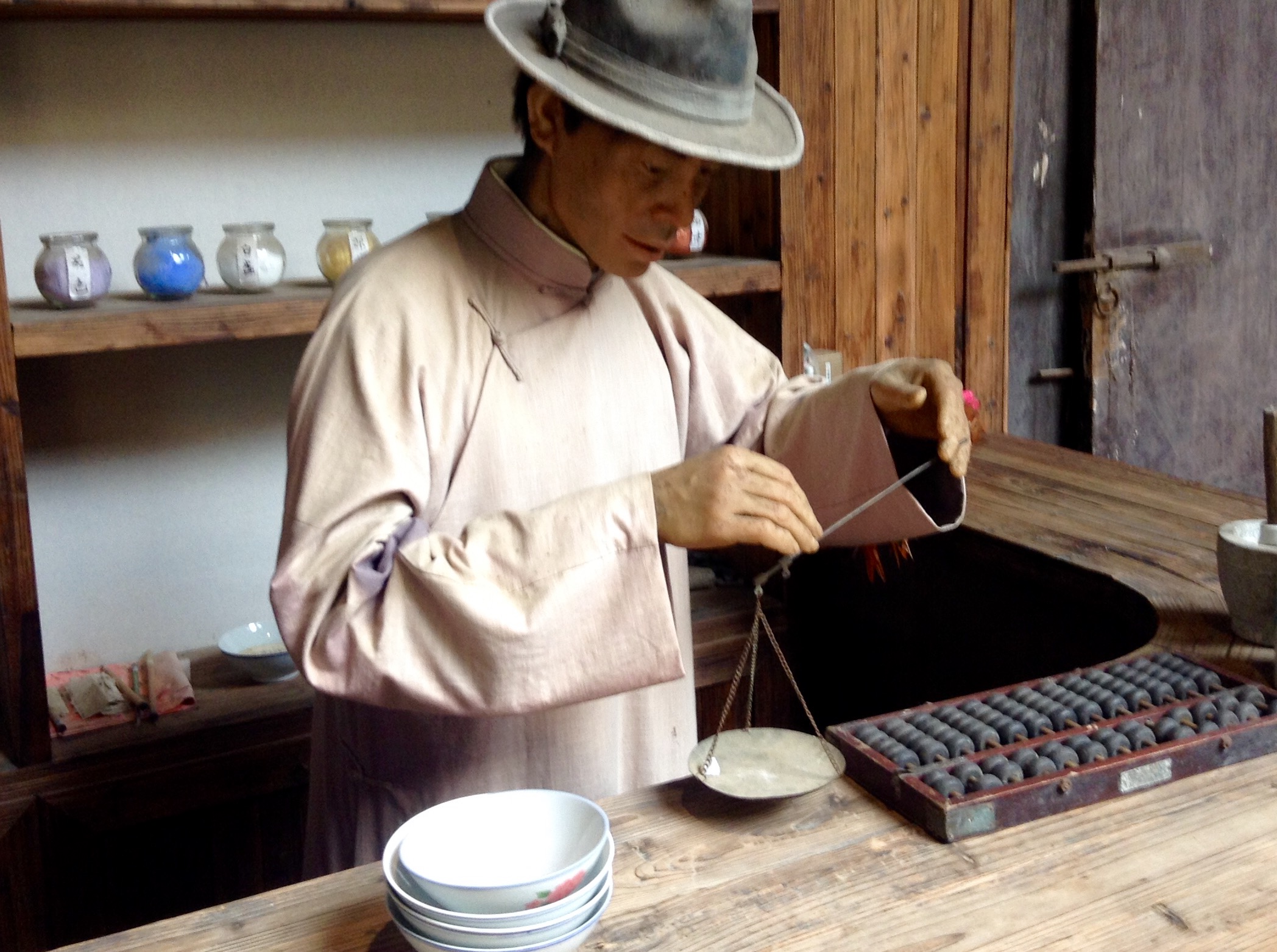
In Jingdezhen an Imperial Kiln was built in 1369 to produce porcelain that was “white as jade, thin as paper, bright as a mirror and tuneful as a bell”. It’s the colours of the glazes that caught my eye, achieved by a combination of oxidative and reductive firing in the kiln, coupled with exquisite control […]