Altre scienze socialiIngleseWordPress

Science in the Open

The online home of Cameron Neylon
Pagina inizialeAtom Foraggio
language
FeaturedFeedsOpen Notebook SciencePublishingRssAltre scienze socialiInglese
Pubblicato

Image by cameronneylon via Flickr I’ve largely stolen the title of this post from Daniel Mietchen because I it helped me to frame the issues. I’m giving an informal talk this afternoon and will, as I frequently do, use this to think through what I want to say. Needless to say this whole post is built to a very large extent on the contributions and ideas of others that are not adequately credited in the text here.

FeaturedAltre scienze socialiInglese
Pubblicato

Image via Wikipedia I have been trying to draft a collaboration agreement to support a research project where the aspiration is to be as open as possible and indeed this was written into the grant. This necessitates trying to pin down exactly what the project will do to release publications, data, software, and other outputs into the wild.

FeaturedCommentingJournalsP Versus NP ProblemPeer ReviewAltre scienze socialiInglese
Pubblicato

Image via Wikipedia No. I have no idea either, and the rest of the document just gets more confusing for a non-mathematician. Nonetheless the online maths community has lit up with excitement as this document, claiming to prove one of the major outstanding theorems in maths circulated. And in the process we are seeing online collaborative post publication peer review take off.

FeaturedCarole GobleGoogle DocsGoogle-waveHTML5Altre scienze socialiInglese
Pubblicato

Image via Wikipedia I am frequently overly enamoured of the idea of where we might get to, forgetting that there are a lot of people still getting used to where we’ve been. I was forcibly reminded of this by Carole Goble on the weekend when I expressed a dislike of the Utopia PDF viewer that enables active figures and semantic markup of the PDFs of scientific papers.

FeaturedBloggingNature NetworkScience-social-networkScienceBlogsAltre scienze socialiInglese
Pubblicato

Image by cameronneylon via Flickr I’ve been watching the reflection on the Science Blogs diaspora and the wider conversation on what next for the Science Blogosphere with some interest because I remain both hopeful and sceptical that someone somewhere is really going crack the problem of effectively using the social web for advancing science.

CopyrightFair UseIntellectual PropertyLawScholarly CommunicationAltre scienze socialiInglese
Pubblicato

Image via Wikipedia The following is my contribution to a collection prepared by the British Library and released today at the Wellcome Trust, called “Driving UK Research. Is copyright a help or a hindrance?â€?  - Press Release – Document[pdf] – which is being released under a CC-BY-NC license.

FeaturedHeadlineAcademic PublishingBusiness ModelPeer ReviewAltre scienze socialiInglese
Pubblicato

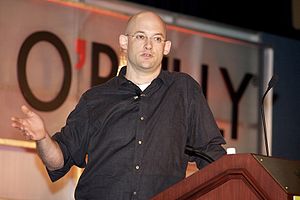
Image via Wikipedia Clay Shirky’s famous soundbite has helped to focus on minds on the way information on the web needs to be tackled and a move towards managing the process of selecting and prioritising information. But in the research space I’m getting a sense that it is fuelling a focus on preventing publication in a way that is analogous to the conventional filtering process involved in peer reviewed publication.

FeaturedData CaptureData GraphData ModelDropboxAltre scienze socialiInglese
Pubblicato

Jon Eisen asked a question on Friendfeed last week that sparked a really interesting discussion of what an electronic research record should look like. The conversation is worth a look as it illustrates different perspectives and views on what is important. In particular I thought Jon’s statement of what he wanted was very interesting: This is interesting to me because it maps onto my own desires.

FeaturedBmcOpen AccessOpen DataPanton PrinciplesAltre scienze socialiInglese
Pubblicato

Last Thursday night I was privileged to be invited to the 10th anniversary celebrations for BioMedCentral and to help announce and give the first BMC Open Data Prize. Peter Murray-Rust has written about the night and the contribution of Vitek Tracz to the Open Access movement. Here I want to focus on the prize we gave, the rationale behind it, and the (difficult!) process we went through to select a winner.

Impact FactorMetricsNational Institutes Of HealthOpen Access (publishing)Research-metricsAltre scienze socialiInglese
Pubblicato

Image via Wikipedia It has become reflexive in the Open Communities to talk about a need for “cultural change”. The obvious next step becomes to find strong and widely respected advocates of change, to evangelise to young researchers, and to hope for change to follow. Inevitably this process is slow, perhaps so slow as to be ineffective.