BlogsStudi sui media e scienze della comunicazioneInglese
Pubblicato
Autore Stefania Marghitu

*This interview was edited for clarity. It was conducted via phone with e-mail followups.
*This interview was edited for clarity. It was conducted via phone with e-mail followups.
.png)
Unlike an increasing number of colleagues, my television viewing is still largely tied to the broadcast schedule. This is entirely due to my being a creature of habit; while I am willing and able to adapt to the new, it’s usually a matter of necessity rather than inclination.

In 2006, Richard Sennett published a short article in The Political Quarterly entitled ‘What do we mean by talent?’ Having carried out ethnographic research with workers in the so-called ‘New Economy’, or rather those in the financial sector, new technology and what he terms ‘media services’ (163), Sennett sought to examine the notion of talent in relation to meritocracy.

I’ve always enjoyed action-adventure, especially swashbuckling action-adventure. Admittedly, though, when the BBC’s new drama The Musketeers (2014-) began last year I didn’t have high expectations. The BBC’s attempts at entertaining action series have been a little hit and miss, as the cancellation of Atlantis earlier this year and the rather short-lived Robin Hood (2006-2009) some years before.
I have watched pretty much every episode of the medical reality show 24 Hours in A&E (Channel 4, 2011–). Even though much of my research happens to focus on medico-scientific discourses in contemporary television, this is a programme I have watched for pure pleasure.

The Royal Television Society Huw Wheldon Memorial Lecture recently broadcast on BBC4 and titled ‘Public Service Broadcasting: A House of Cards?’ reflected on the changing landscape of broadcast television in light of developments in digital and internet technologies of content consumption.

I quite often think of myself as an old-fashioned structuralist (as my 1981 essay on narrative and Coronation Street showed) and am quite embarrassed to think about the number of first year students I attempted to introduce to the wonders of Todorov.

May 13th 2015 marks the ten year anniversary of the cancellation of Star Trek: Enterprise, a series that failed to live up to its own mandate, ‘to boldly go where no one has gone before.’ Barring The Original Series (TOS), which was cancelled after three seasons despite a now legendary letter-writing campaign, each successive series of Star Trek – from The Next Generation (TNG) to Deep Space Nine (DS9) and Voyager (VOY) – lasted seven seasons
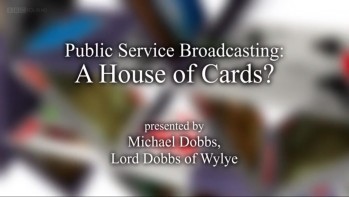
The Royal Television Society Huw Wheldon Memorial Lecture recently broadcast on BBC4 and titled ‘Public Service Broadcasting: A House of Cards?’ reflected on the changing landscape of broadcast television in light of developments in digital and internet technologies of content consumption.

— Former U.S. Army Captain Stuart Herrington in the American Experience ’s ‘Last Days of Vietnam’ Award-winning producer-director, Rory Kennedy’s latest documentary, ‘Last Days of Vietnam,’ dramatically recreates the chaotic endgame and resulting moral quandary that accompanied America’s involvement in the Second Indochina War.
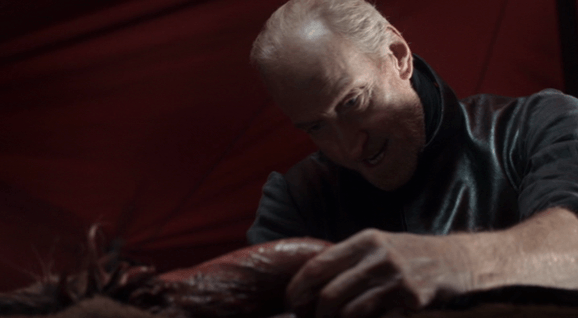
‘You Win or You Die’, the seventh episode from the first season of Game of Thrones (HBO, 2011-present), contains a scene that has deservedly gathered attention and acclaim.