Scienze della Terra e dell'AmbienteIngleseGhost

Geo★ Down Under

Experts in geodynamics, geophysics & geology tell you what you need to know
Pagina inizialeRSS Foraggio
language
OpinionEditorialScienze della Terra e dell'AmbienteInglese
Pubblicato
Autori Louis Moresi, Tim Rawling
In a series of articles written a decade ago, Mike Sandiford proposed a vision for solid Earth science that viewed our planet as a very limited and valuable resource. In this vision, solid Earth science is a key pillar of a holistic discipline focused on stewardship of our environment in the broadest possible sense.

OpinionScienze della Terra e dell'AmbienteInglese
Pubblicato
Autore Mike Sandiford

Rising demand for resources, declining discovery rates, concerns about resource security, carbon pollution and global equity issues, challenge us to deliver a new level of understanding of these crucial earth-system services both now and into the future. In particular, the provision of cheap and secure, reliable and sustainable energy without compromising the climate system will be predicated on our success in meeting this grand, new challenge.

OpinionScienze della Terra e dell'AmbienteInglese
Pubblicato
Autore Mike Sandiford

In acknowledging our remarkable success we may now need a different metaphor to encourage and inspire future generations of geoscientists. I suggest an appropriate metaphor relates to how we put our understanding of planetary dynamics to the benefit of all people and particularly to the issue of sustainability. Scientists carry the purpose and enthusiasms that infused their training.

OpinionScienze della Terra e dell'AmbienteInglese
Pubblicato
Autore Mike Sandiford

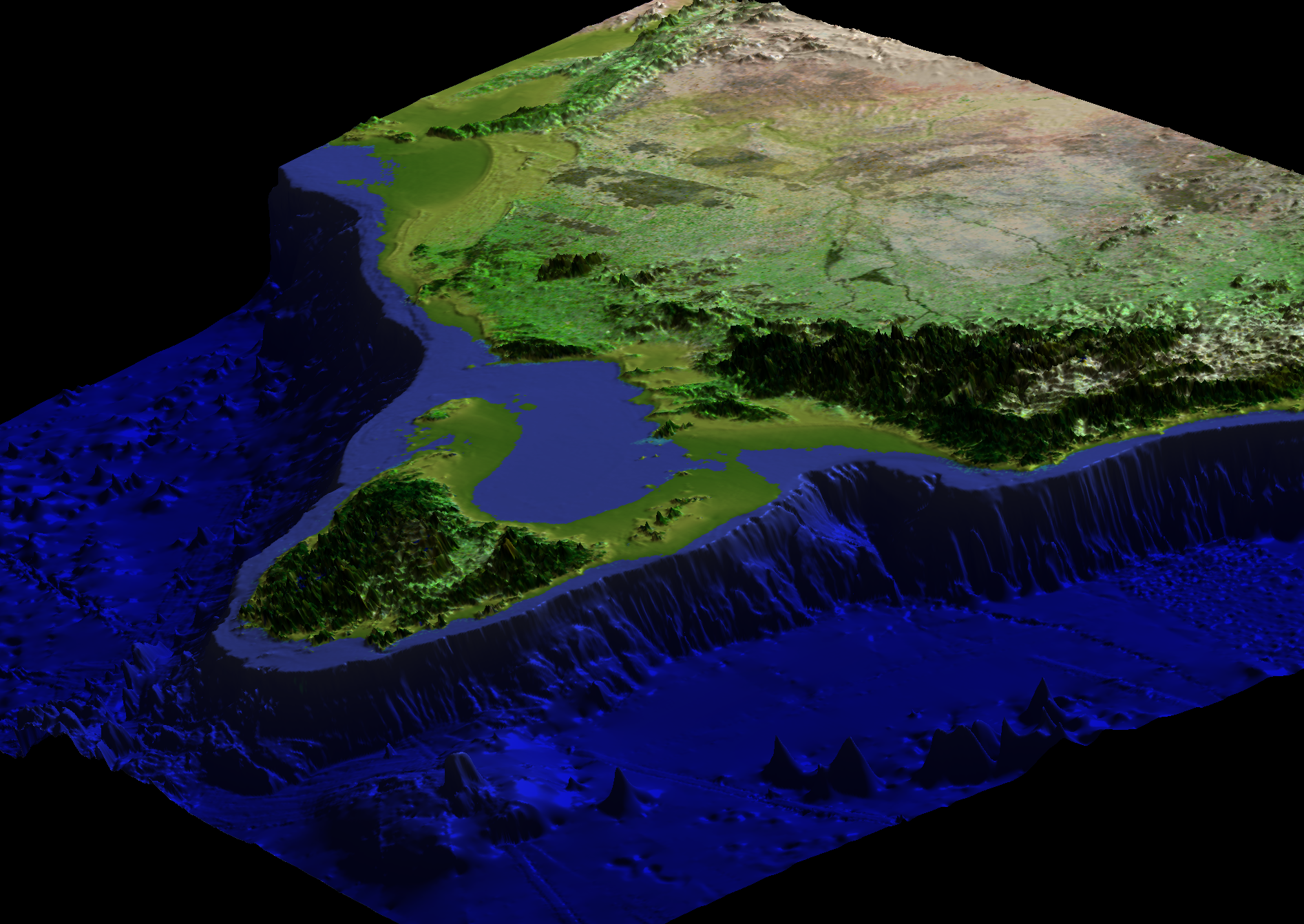
Who could imagine what the last Vicmanians thought confronted with the terrible reality their land was drowning? The Vicmanians occupied what is now Bass Strait for the first 30,000 years or so of human occupation of Australia. Prior to 10,000 years ago, sea levels were lower than today and Bass Straight was largely exposed. At the height of the last ice age, about 18,000 years ago, sea levels were  130 metres lower.

SeismologyGeophysicsScienze della Terra e dell'AmbienteInglese
Pubblicato
Autore Brian Kennett

Significant changes in physical properties produce conversions between compressional (P) and shear (S) waves. The Earth’s surface also returns energy to depth that can be reflected back to the surface. Analysis of this chain of conversions and reverberations yields information about the structure beneath the station. The most common approach is the use of receiver functions that exploit the conversions and so can map out major interfaces.

PublicationsScienze della Terra e dell'AmbienteInglese
Pubblicato
Autori Ben Mather, Marianne Richter

The Arctic Ocean is roughly 14,000 km away from Melbourne (Monash University, Australia), where most of the action for our recent publication ‘An Early Cretaceous subduction-modified mantle underneath the ultraslow spreading Gakkel Ridge, Arctic Ocean’ in Science Advances took place.

GeophysicsSeismologyOpinionScienze della Terra e dell'AmbienteInglese
Pubblicato
Autore Hrvoje Tkalčić

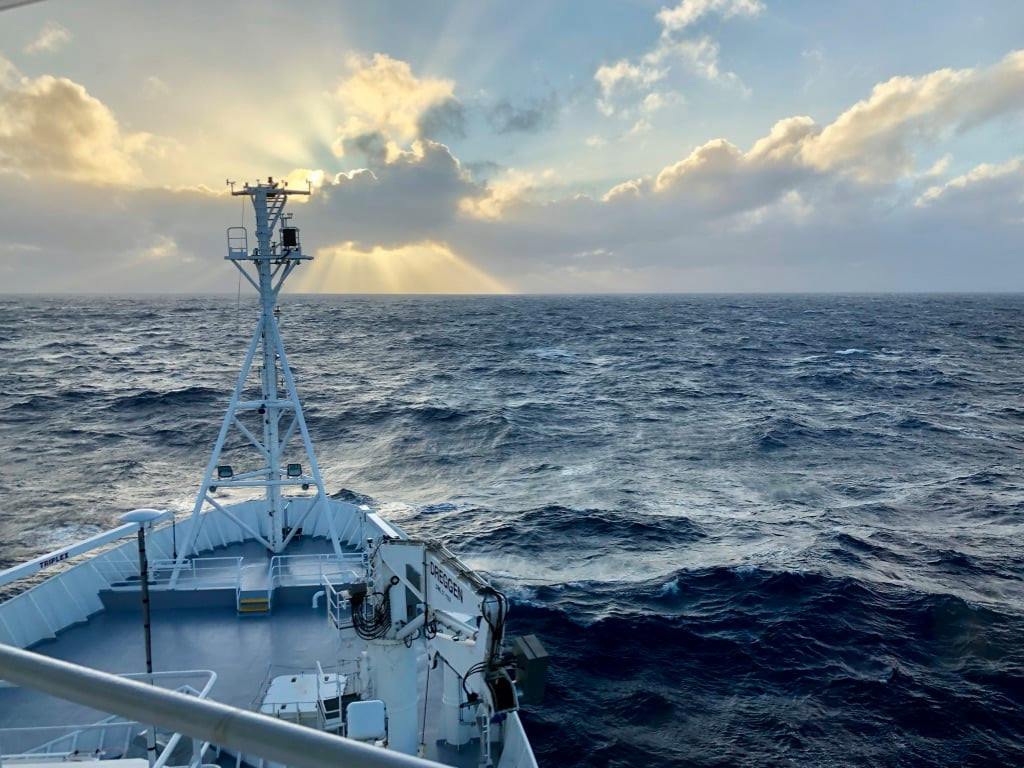
The period of extremely bad 48 hours of weather was approaching, and I had high hopes that we would be able to complete two more sites before high swell hits us and completely puts us out of action. The site MRO21 (Macquarie Ridge Ocean 21) was no different from other deployment sites on this voyage.

GeophysicsSeismologyScienze della Terra e dell'AmbienteInglese
Pubblicato
Autore Babak Hejrani

Earthquakes rupture on faults that cut through the Earth crustal layers (e.g. Fig. 1). Shallow earthquakes occur when seismic activity takes place within the top 30km of the earth's crust and they account for majority of the Earth's seismic activity.

GeodynamicsPublicationsGeophysicsScienze della Terra e dell'AmbienteInglese
Pubblicato
Autori Haibin Yang, Louis Moresi, Mark Quigley

We have all become highly sensitive to 'social distancing' since the COVID-19 pandemic swept across the Earth. The act of  social distancing (more correctly called 'physical distancing') is to keep a safe space between yourself and other people who are not from your household.

SeismologyGeophysicsOpinionScienze della Terra e dell'AmbienteInglese
Pubblicato
Autore Hrvoje Tkalčić

The furious fifties have certainly lived up to the acclaim they received. We have had to change our plan of voyage multiple times, and have lost precious time due to heaving-to the vessel to a favorable position with respect to the wind and swell direction, and on the lee side of the Macca island.