QuímicaInglêsSubstack

Corin Wagen

Corin Wagen
My personal blog, focusing on issues of chemistry and metascience, unified by trying to answer the question "how can we make science better"?
Pagina inicialFeed RSS
language
QuímicaInglês
Publicados

In scientific computation, where I principally reside these days, there’s a cultural and philosophical divide between physics-based and machine-learning-based approaches. Physics-based approaches to scientific problems typically start with defining a simplified model or theory for the system.

QuímicaInglês
Publicados

With apologies to Andrew Marvell. If you haven’t read “To His Coy Mistress”, I fear this won’t make much sense. Had we but funding enough and time, This coyness, founder, were no crime. We would sit down, and think which way To build, and pass our slow run-rate’s day. Thou by the Potomac’s side Shouldst SBIRs find; I by the tide Of El Segundo would complain.

QuímicaInglês
Publicados

This post is an attempt to capture some thoughts I have about ML models for predicting protein–ligand binding affinity, sequence- and structure-based approaches to protein modeling, and what the interplay between generative models and simulation may look like in the future. I have a lot of open questions about this space, and Abhishaike Mahajan’s recent Socratic dialogue on DNA foundation models made me curious to try the dialogue format here.

QuímicaInglês
Publicados

(This is a bit of a departure from my usual chemistry-focused writing.) Fasting is an important part of many religious traditions, but modern Protestant Christians don’t really have a unified stance on fasting (and have opposed systematic fasts for a while). That’s not to say that Protestants don’t fast, though: over just the past few years, I’ve met people doing water-only fasts, juice fasts, dinner-only fasts, “social media” fasts, and many

QuímicaInglês
Publicados

(Previously: 2022, 2023.) #1. Baldassar Castiglione, The Book of the Courier This book gets cited from time to time as a sort of historical guide to "being cool," since the characters spend some time discussing the idea of sprezzatura , basically grace or effortlessness. More interesting to me was the differences between Renaissance conceptions of virtue, character, &

QuímicaInglês
Publicados

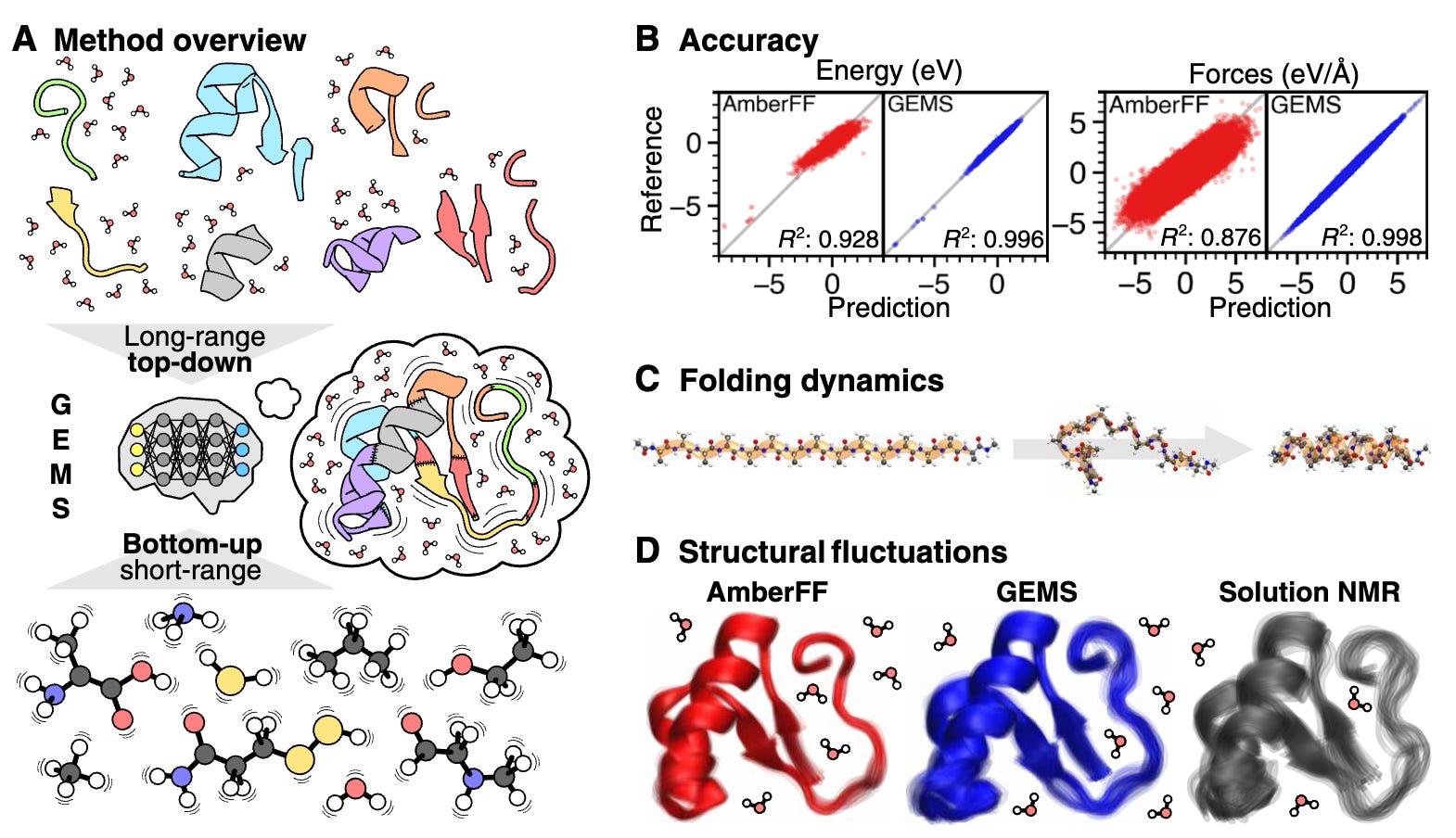
This post assumes some knowledge of molecular dynamics and forcefields/molecular mechanics. For readers unfamiliar with these topics, Abhishaike Mahajan has a great guide to these topics on his blog. Although forcefields are commonplace in all sorts of biomolecular simulation today, there’s a growing body of evidence showing that they often give unreliable results.

QuímicaInglês
Publicados

Abhishaike Mahajan recently wrote an excellent piece on how generative ML in chemistry is bottlenecked by synthesis ( disclaimer: I gave some comments on the piece, so I may be biased ). One of the common reactions to this piece has been that self-driving labs and robotics will soon solve this problem—this is a pretty common sentiment, and one that I’ve heard a lot.

QuímicaInglês
Publicados

Scientific software can be confusing, particularly when you're doing something that the software isn't primarily intended for. I often find myself wanting to run quick-and-dirty molecular dynamics simulations on small organic molecules, but I've struggled to find an easy way to do this using open-source tools.