Ciências NaturaisInglêsWordPress

Nicola Romanò

Of data analysis, biology and random other things
Pagina inicialFeed Atom
language
Data ThoughtsMachine LearningPythonStatistical ModellingAiInglês
Publicados
Autor Nicola Romanò

In previous posts, we have looked at the theory of what is a neural network and how the training process works. Today we are going to put that into practice and build our own neural network using Python! Table of Contents Requirements For the example in this post, I will be using Python 3.10. We will build a neural network using keras from the tensorflow package. TensorFlow is one of the most used solutions for building neural networks.

Data ThoughtsMachine LearningStatistical ModellingAiANNInglês
Publicados
Autor Nicola Romanò

In the previous post, we introduced neural networks and described the forward pass, the process of going from the inputs to the output(s) of the ANN. If you remember, we perform a weighted sum of the inputs (plus the bias) and pass it through an activation function. The question remained of how we decide which parameters (weights and biases) to use for our network.

Data ThoughtsMachine LearningStatistical ModellingAiANNInglês
Publicados
Autor Nicola Romanò

This is the first of a series of posts where I will introduce you to neural networks . Even if you do not know how they work, you have probably heard of neural networks in the news as something used for artificial intelligence . Many areas, such as image recognition, natural language processing, fraud detection and many more (biology included!), have taken incredibly huge steps forward in the last few decades thanks to

Data ThoughtsImage AnalysisPythonInglês
Publicados
Autor Nicola Romanò

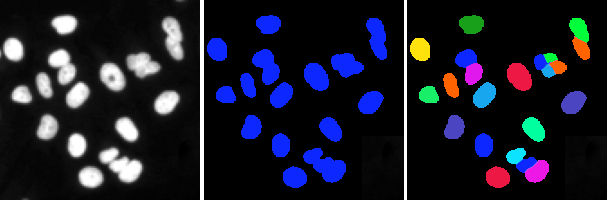
In the previous two posts we saw how to use Scikit Image to perform some basic image processing. This post will introduce you to image segmentation, one of the most important steps in image analysis. I am going to cover some of the “traditional” methods that work well in many situations.

Data ThoughtsImage AnalysisPythonScikit-imageInglês
Publicados
Autor Nicola Romanò

There are lots of amazing tools for image analysis out there, to perform some really powerful and complex analyses. Sometimes, however, you may want to create automated pipelines, for example, to analyse large amounts of images, or to process a video feed in real-time. Countless options are out there, each with its own strengths and weaknesses.

Data ThoughtsRStatistical ModellingGlmLogistic RegressionInglês
Publicados
Autor Nicola Romanò

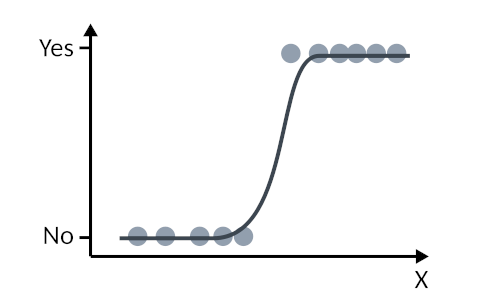
Introduction In previous posts, I discussed how to deal with situations where you measure a continuous outcome and you want to explain its variability as a function of one or more continuous or discrete variables, using linear regression or mixed-effects models.

Data ThoughtsRStatistical ModellingLinear ModelsMixed-effect ModelsInglês
Publicados
Autor Nicola Romanò

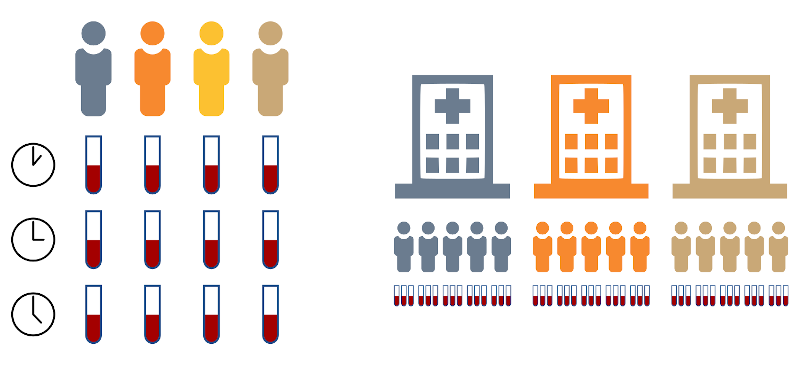
In a previous post, I discussed how to use linear regression to analyse whether one or more variables influence an outcome. Linear regression is great, but it is not always the best solution; one of the extremely important assumptions of linear regression is that the observations are independent . However, there are a lot of situations when that does not apply.

Data ThoughtsImage AnalysisMachine LearningRBinary TreesInglês
Publicados
Autor Nicola Romanò

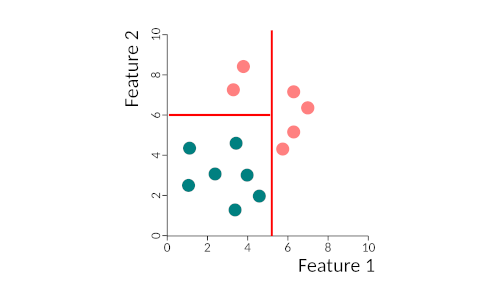
In today’s post, we are going to perform some sample classification using machine learning in R. We are going to use a publicly available dataset, the Breast Cancer Wisconsin (Diagnostic) Data Set (WDBC), which is available on the UC Irvine Machine Learning Repository. This is a fairly simple dataset, which is good to get started on this topic. We are going to use one of the simplest machine learning algorithms, binary trees .

Data ThoughtsRData VisualizationGgplotPlottingInglês
Publicados
Autor Nicola Romanò

Table of Contents Introduction to ggplot This post will give you a quick introduction to a great way of plotting using R: the ggplot2 package (which for simplicity I will call ggplot from now on). ggplot is an R package which makes it super-easy to create visually pleasing plots with just a few lines of code!

Data ThoughtsRStatistical ModellingLinear ModelsLinear RegressionInglês
Publicados
Autor Nicola Romanò

Table of Contents The second part of this series of posts will tackle multiple regression, that is, linear regression with more than one predictor. If you are not familiar with simple linear regression and have not read part 1 be sure to check that out first!