I occasionally spot an old blog that emerges, if only briefly, as “trending”. In this instance, only the second blog I ever wrote here, way back in 2009 as a follow up to this article.

With universities around the world having to very rapidly transition to blended learning (a mixture of virtual and face-2-face experiences) with a very large component based on online materials, I thought it might be interesting to try to give one snapshot of when the online experience started to happen in chemistry.
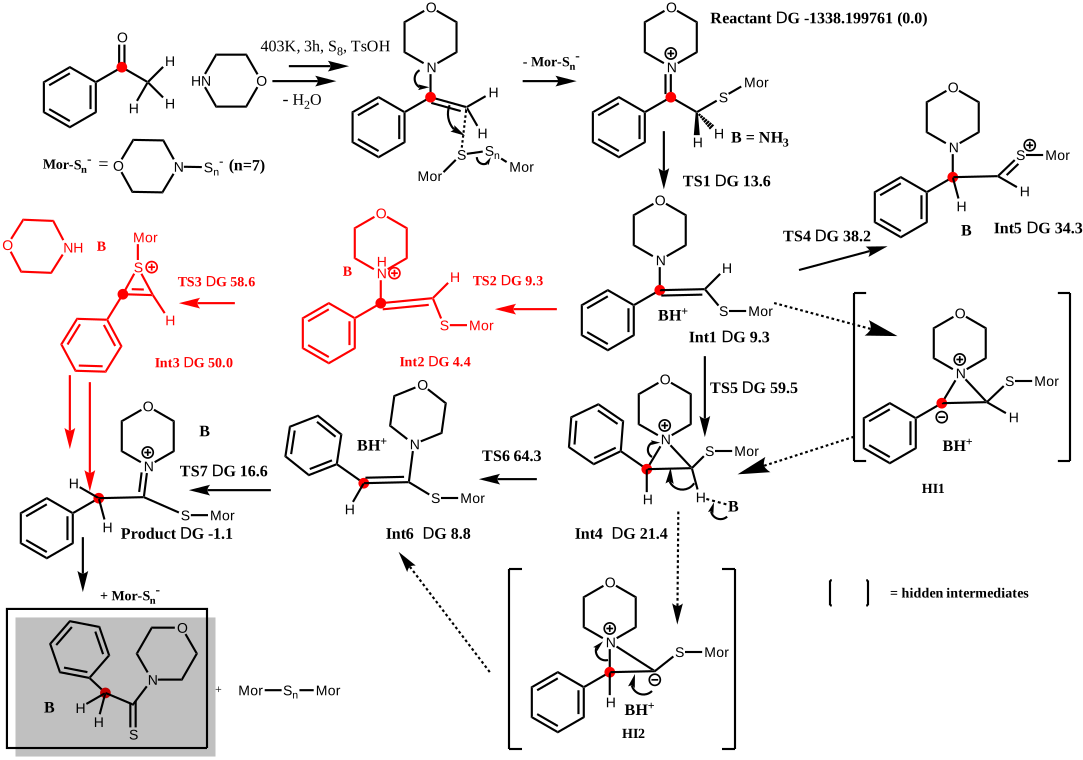
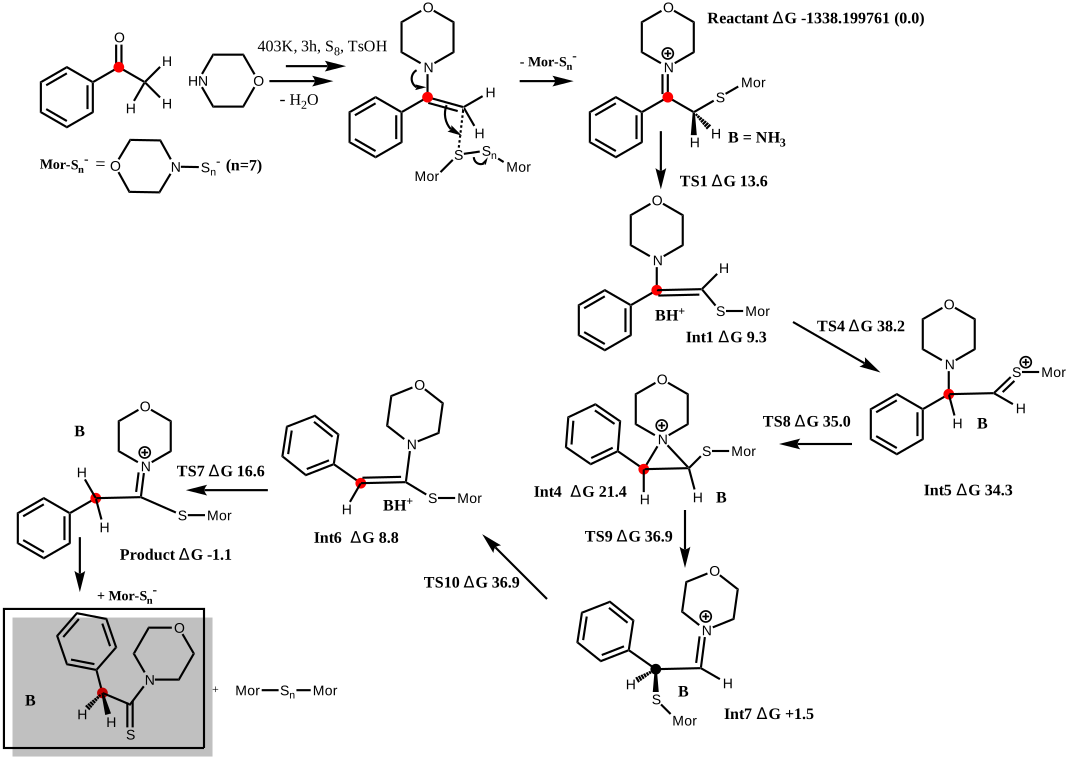
These four posts (the box set) set out to try to define the energetics for a reasonable reaction path for the Willgerodt-Kindler reaction. The rate of this reaction corresponds approximately to a free energy barrier of ~30 kcal/mol.
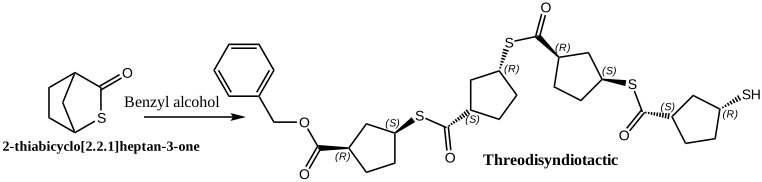
Here I investigate a recent report of a new generation of polyesters with the intrinsic properties of high crystallinity and chemical recyclability. The latter point is key, since many current plastics cannot be easily recycled to a form which can be used to regenerate the original polymer with high yield.

The folks at DataCite have announced a new research object discovery service which aims to give users a “comprehensive overview of connections between entities in the research landscape”. The portal https://commons.datacite.org acts as the entry point for three basic types of persistent identifiers (PIDs);
The two previous surveys of the potential energy surface for this, it has to be said, rather obscure reaction led to energy barriers that were rather to high to be entirely convincing. So here is a third possibility.
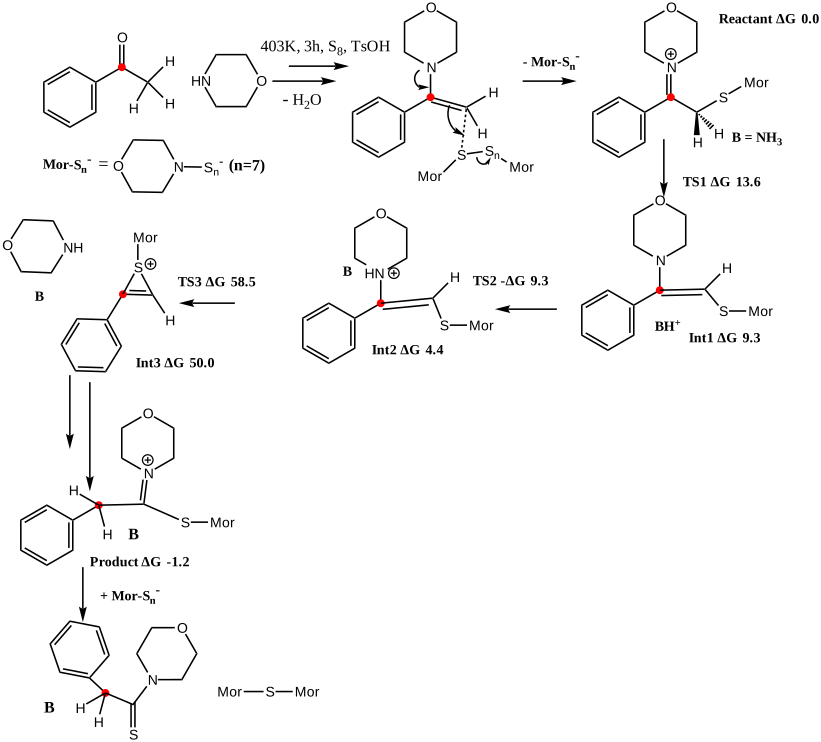
Continuing an exploration of the mechanism of this reaction, an alternative new mechanism was suggested in 1989 (having been first submitted to the journal ten years earlier!). Here the key intermediate proposed is a thiirenium cation (labelled 8 in the article) and labelled Int3 below.
Sometimes a (scientific) thought just pops into one’s mind. Most are probably best not shared with anyone, but since its the summer silly season, I thought I might with this one.
The Willgerodt reaction, discovered in 1887 and shown below, represents a transformation with a once famously obscure mechanism. A major step in the elucidation of that mechanism came using the then new technique of 14C radio-labelling, shortly after the atom bomb projects during WWII made 14CO2 readily available to researchers.
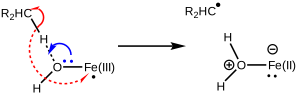
One of the most fascinating and important articles dealing with curly arrows I have seen is that by Klein and Knizia on the topic of C-H bond activations using an iron catalyst.
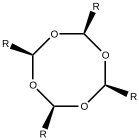
Metaldehyde is an insecticide used to control slugs.