HumanidadesInglêsGhost

Upstream

Upstream
The community blog for all things Open Research.
Pagina inicialFeed AtomMastodon
language
Thought PiecesHumanidadesInglês
Publicados

This post expands further on the assertion recently made by Danny Kingsley in her post on “Language co-option in the open space” that “words matter” when trying to have meaningful conversations about open access. Not only do words matter for creating common agreement, but words can also actively create biases, inform decision-making, and even thwart the visions of open publishing and infrastructure advocates most want to champion.
NewsHumanidadesInglês
Publicados

Access to cutting-edge research can spark innovation, drive progress, and shape our future. But what to do if the discoveries and scholarly work funded by our tax dollars are locked behind paywalls, accessible only to a privileged few? The U.S. government has been grappling with this question, and recent policy shifts aim to improve access to federally funded research.

MeetingsThought PiecesHumanidadesInglês
Publicados

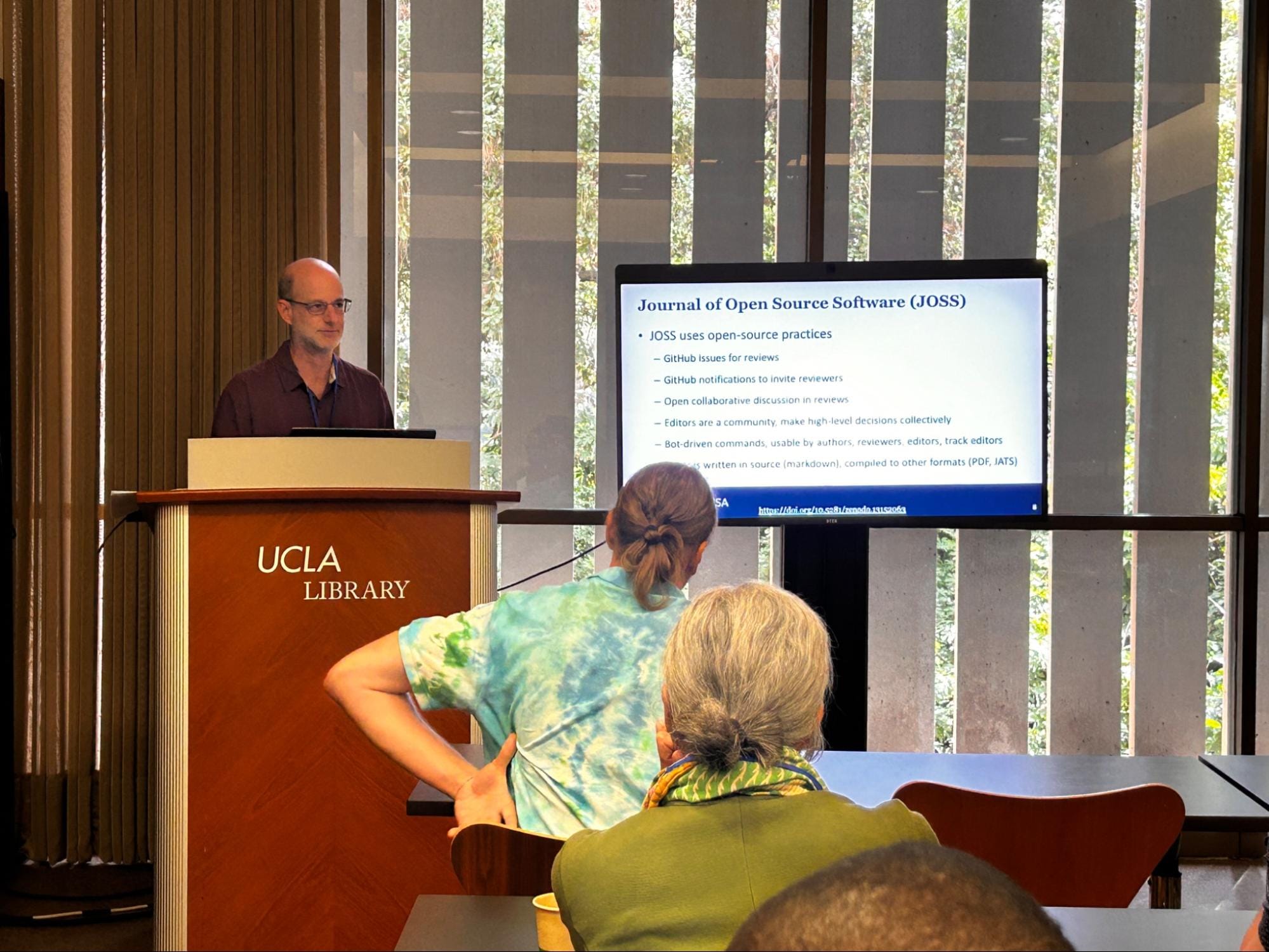
Coming down from the recent FORCE11 Scholarly Communication Institute (FSCI) and FORCE2024 conference at UCLA has allowed reflection on some of the recurring themes from the two events. One of these was the issue of language appropriation in the open scholarship space. In the process of attempting to write some of these issues up, it became clear that this requires something of a wander down history lane.

MeetingsNewsHumanidadesInglês
Publicados
Autor Adam Buttrick

Our community and tools rely on high-quality DOI metadata for building connections and obtaining efficiencies. However, the current model - where improvements to this metadata are limited to its creators or done within service-level silos - perpetuates a system of large-scale gaps, inefficiency, and disconnection. It doesn’t have to be this way.

InterviewsHumanidadesInglês
Publicados
Autor Joanna Ball

Lars Bjørnshauge is the visionary founder of the Directory of Open Access Journals (DOAJ). His transformation of a simple idea into a globally trusted directory revolutionized the accessibility and credibility of open access publishing. Under his leadership, DOAJ became a critical resource, supporting the dissemination of scholarly work worldwide and setting high standards for transparency in publishing.

Original ResearchThought PiecesHumanidadesInglês
Publicados
Autores John Chodacki, Todd Carpenter

Considerations in the context of open scholarship and open infrastructure Persistent identifiers (PIDs) in scholarly communications and research infrastructure have garnered growing attention over the last several years, especially from governments who are recognizing the vital role PIDs play in creating a more efficient and trustworthy research ecosystem.

Original ResearchHumanidadesInglês
Publicados

In a recent Upstream blog post we explored where data connected to papers funded by several U.S. Federal Agencies are published. Different data sharing practices across these agencies led to very different distributions of datasets across various repositories. We used CHORUS reports that combine linked article and dataset metadata as input for that work.