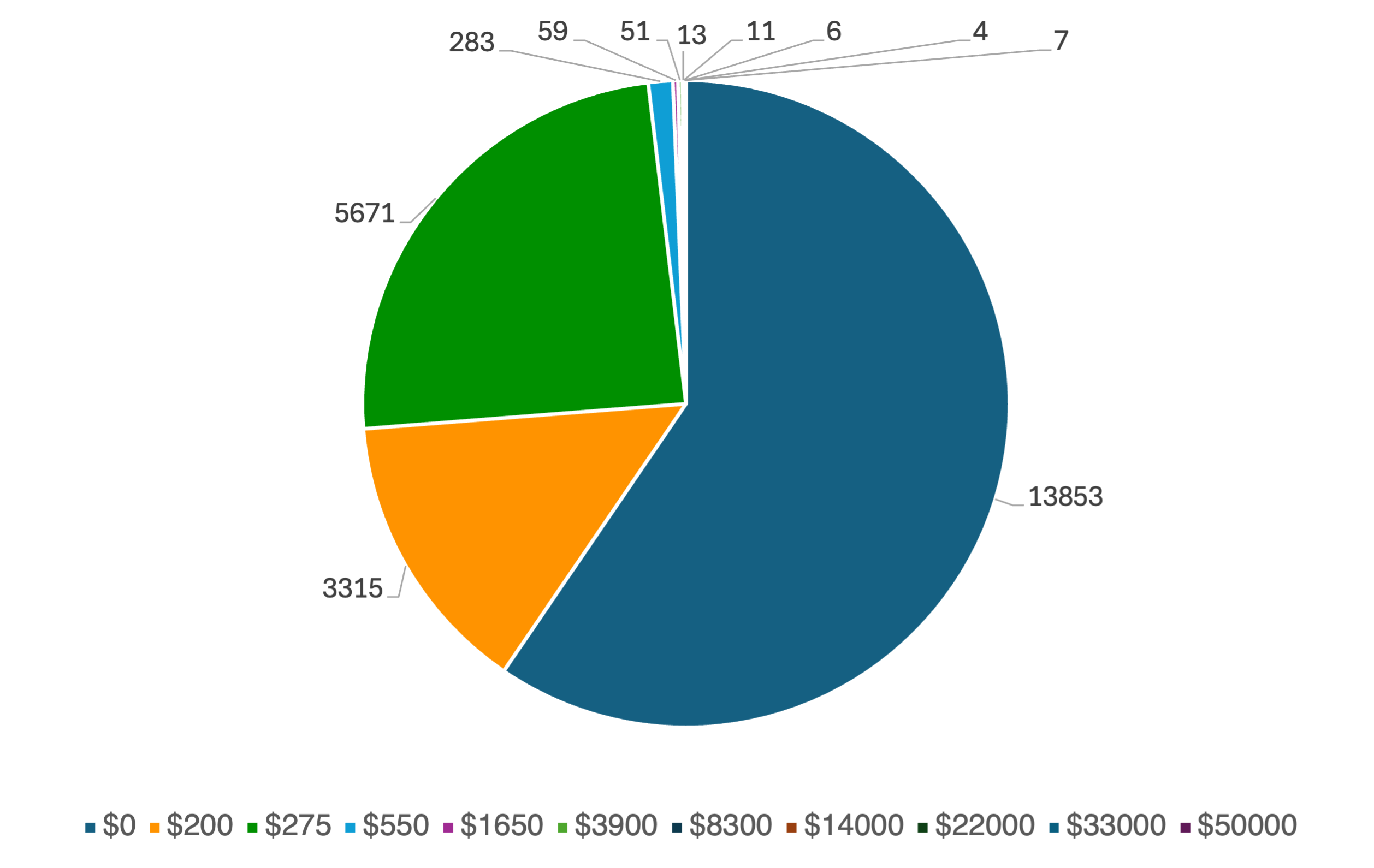
In January 2026, our new annual membership fee tier takes effect. The new tier is US$200 for member organisations that operate on publishing revenue or expenses (whichever is higher) of up to US$1,000 annually.

In January 2026, our new annual membership fee tier takes effect. The new tier is US$200 for member organisations that operate on publishing revenue or expenses (whichever is higher) of up to US$1,000 annually.
It has been 18 (!) years since Crossref last deprecated a metadata schema. In that time, we’ve released numerous schema versions, some major updates, and some interim releases that never saw wide adoption. Now, with 27 different schemas to support, we believe it’s time to streamline and move forward.
Background Scholarly metadata, deposited by thousands of our members and made openly available can act as “trust signals” for the publications. It provides information that helps others in the community to verify and assess the integrity of the work.

Crossref was created back in 2000 by 12 forward-thinking scholarly publishers from North America and Europe, and by 2002, these members had registered 4 million DOI records. At the time of writing, we have over 23,600 members in 164 different countries.

The Frankfurt Book Fair is the largest book fair in the world, and therefore a key event on our calendar. Held annually in Frankfurt, Germany, the 77th Frankfurt Book Fair (October 15–19, 2025) saw 118,000 trade visitors and 120,000 private visitors from 131 countries.
TL;DR. Metadata Manager will be retired at the end of 2025.
Our REST API makes all of the metadata we hold publicly available. It receives the majority of our API traffic, with around 1 billion hits per month. It’s one of the key ways that we fulfil our mission to make research objects easy to find, cite, link, assess, and reuse.
Noyam Journals, based in Accra, Ghana, was recently recognised for the completeness of its metadata through the Crossref Metadata Award, part of our 25th anniversary celebrations.

Wednesday 22nd October 2025—Crossref, the open scholarly infrastructure nonprofit, today releases an enhanced dashboard showing metadata coverage and individual organisations’ contributions to documenting the process and outputs of scientific research in the open.
Click here for the version in Portuguese Welcome back to our series of case studies of research funders using the Grant Linking System.
Repositories are home to a wide range of scholarly content; they often archive theses, dissertations, preprints, datasets, and other valuable outputs. These records are an important part of the research ecosystem and should be connected to the broader scholarly record.