Yeryüzü ve ilgili Çevre BilimleriİngilizceGhost

Geo★ Down Under

Experts in geodynamics, geophysics & geology tell you what you need to know
Ana SayfaRSS Besleme
language
GeophysicsSeismologyOpinionYeryüzü ve ilgili Çevre Bilimleriİngilizce
Yayınlandı
Yazar Louis Moresi
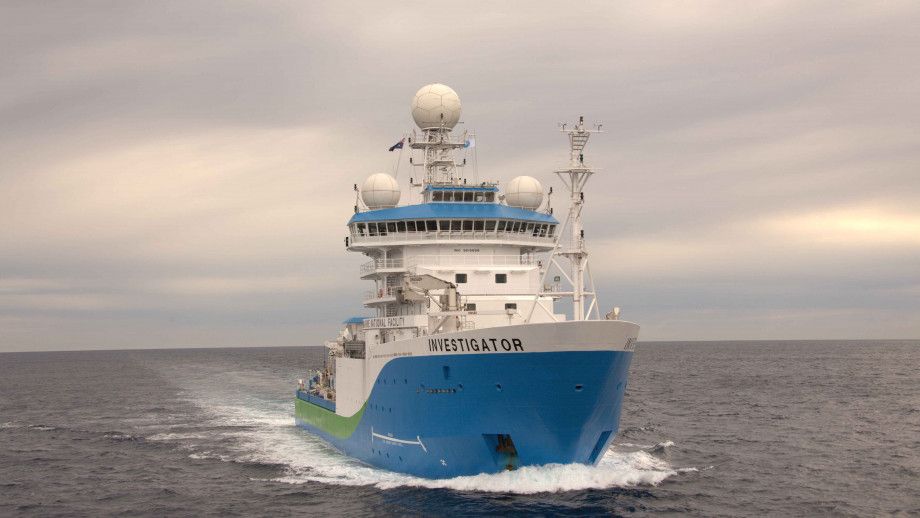
Updates An article in EOS, the scientific magazine of the AGU by Hrvoje Tkalčić, Caroline Eakin and others (Note: this post is updated when new diary entries are posted  — LM) Mike Coffin's blog at the Institute of Marine and Antarctic Studies, UTas The research voyage is aimed at shedding light on Macquarie Island’s underlying structure and geological evolution, while also enabling monitoring of future earthquakes and


EditorialOpinionNewsYeryüzü ve ilgili Çevre Bilimleriİngilizce
Yayınlandı
Yazar Louis Moresi

The COVID-19 border closures and the financial shocks to Australian Universities that followed have been felt especially hard in Earth Science departments around the country. In a series of articles over the next few weeks, we are going to explore some of the deep-seated reasons why our discipine has been impacted disproportionately, and how we can strengthen Earth Sciences for the future.

GeodynamicsSeismologyPublicationsYeryüzü ve ilgili Çevre Bilimleriİngilizce
Yayınlandı
Yazarlar Tim Stern, Geo Down Under Contributors

Tim Stern and Simon Lamb Victoria University of Wellington Mapping the variation of mantle seismic wave speeds with direction – giving rise to seismic anisotropy - is a powerful method to determine patterns of mantle flow. This work can also explain regions where seismic wave speeds are unusually high.

GeologyTheConversationYeryüzü ve ilgili Çevre Bilimleriİngilizce
Yayınlandı
Yazar Heather Handley

This article is republished from The Conversation under a Creative Commons license. Read the original article. Volcanic activity is a constant global threat. It’s estimated over 1 billion people live within the potential, direct impact range of volcanic eruptions. Just recently, lava flows from the eruption of Mount Nyiragongo, a volcano in the Democratic Republic of Congo, killed 32 people, with many more missing.

GeophysicsYeryüzü ve ilgili Çevre Bilimleriİngilizce
Yayınlandı
Yazar Hrvoje Tkalčić

Finally, our long wait has come to an end. It is great to see the Australian Antarctic Division (AAD) Macquarie Island expedition team now installing our seismometers on the Macquarie island as part of the "Macquarie Ridge in the 3D" project. Comprising 27 ocean-bottom-seismometer locations, our passive seismic array is now being reinforced by five more land instruments on the island itself.

GeodynamicsOpinionYeryüzü ve ilgili Çevre Bilimleriİngilizce
Yayınlandı
Yazar Tim Jones

Note: this article is a repost from the author's personal website with minor edits and additions Earth's mantle contains plumes, or columns of buoyant rock, that rise from deep within to produce volcanism at its surface. That is not a controversial statement among most Earth scientists. But, in keeping with scientific tradition, the idea has always had its skeptics.

GeodynamicsTectonicsYeryüzü ve ilgili Çevre Bilimleriİngilizce
Yayınlandı
Yazarlar Dietmar Muller, Nicolas Flament, Xianzhi Cao

Most massive volcanic eruptions on Earth are caused either by mantle plumes, deep-seated cylindrical upwellings originating deep in Earth’s mantle, or are part of the volcanic “ring of fire” above subduction zones where oceanic plates are recycled back into the mantle.

GeodynamicsGeophysicsPublicationsYeryüzü ve ilgili Çevre Bilimleriİngilizce
Yayınlandı
Yazarlar Adam Beall, Rhodri Davies

The largest earthquakes occur at subduction zones, where one plate descends beneath another into the underlying mantle, at a convergent plate boundary. Some subduction zones seem to host more large earthquakes than others (Fig. 1), potentially reflecting the influence of large-scale geodynamic processes, which vary from one subduction zone to the next.

GeologyNewsYeryüzü ve ilgili Çevre Bilimleriİngilizce
Yayınlandı
Yazarlar Geo Down Under Contributors, Louis Moresi

On a quest for critical metal resources that are required for our electric, low carbon future, what are the challenges we face ?  In two recent talks, economic geologists Simon Jowitt (UNLV) and John Mavrogenes (ANU) gave their perspectives on what we need to do to find the Rare Earth Elements that we are going to need.

OpinionYeryüzü ve ilgili Çevre Bilimleriİngilizce
Yayınlandı
Yazarlar Samuel C Boone, Mark Quigley, Peter Betts, Meghan S. Miller, Tim Rawling, Mike Sandiford

Unprecedented climatic, environmental, energy, and resource crises threaten our world due to a growing, unsustainable human footprint on our planet. But while Australia awaits national strategies to address climate change amidst the COVID-induced recession, deep staffing cuts and closures of tertiary geoscience programmes across the country compromise our collective ability to respond to these challenges.