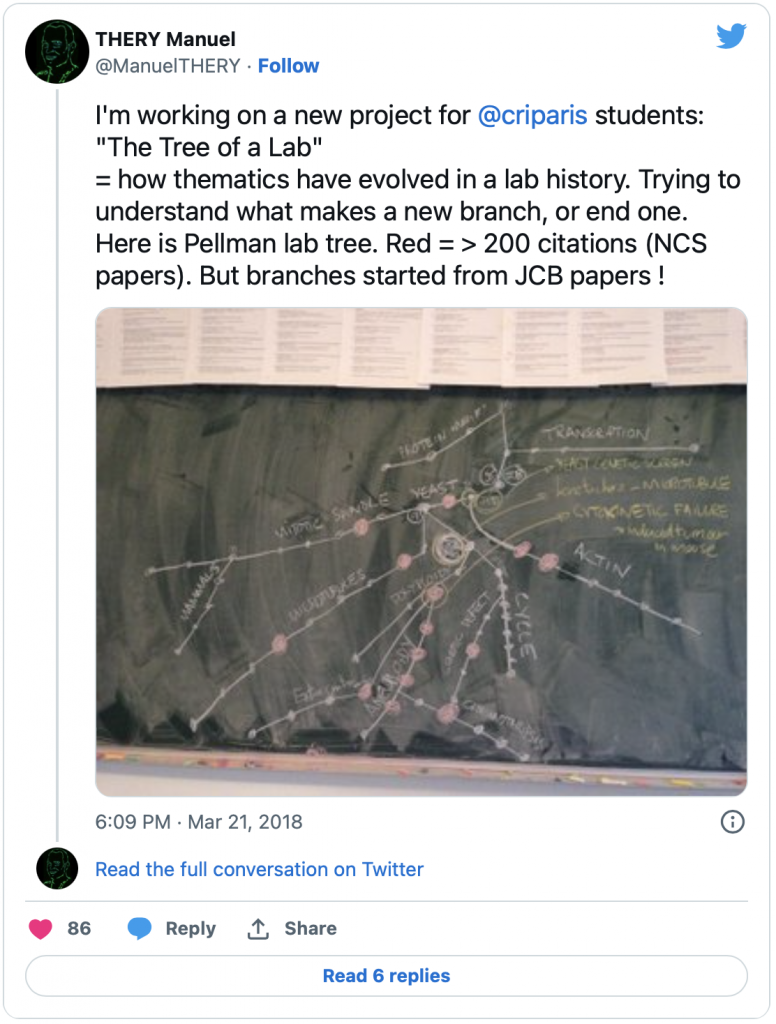
This post is about a citation analysis that didn’t quite work out. I liked this blackboard project by Manuel Théry looking at the influence of each paper authored by David Pellman’s lab on the future directions of the Pellman lab.
This post is about a citation analysis that didn’t quite work out. I liked this blackboard project by Manuel Théry looking at the influence of each paper authored by David Pellman’s lab on the future directions of the Pellman lab.
This is the first post at quantixed about Raspberry Pi computing. Pi Zero is a minimalist Raspberry Pi that can be coupled to a camera. With this little rig, you can make time-lapse footage amongst other things. I’ve set up a couple of these now.
I’ve been following the tweets from an account called Albums You Must Hear @Albums2Hear. Each tweet is an album recommended by the account owner. I’m a sucker for lists of Albums That I Must Hear Before I Die since I’m always interested in new (or not so new) music recommendations.
A long time ago I posted a little Automator routine to convert Word doc/docx files to PDF.

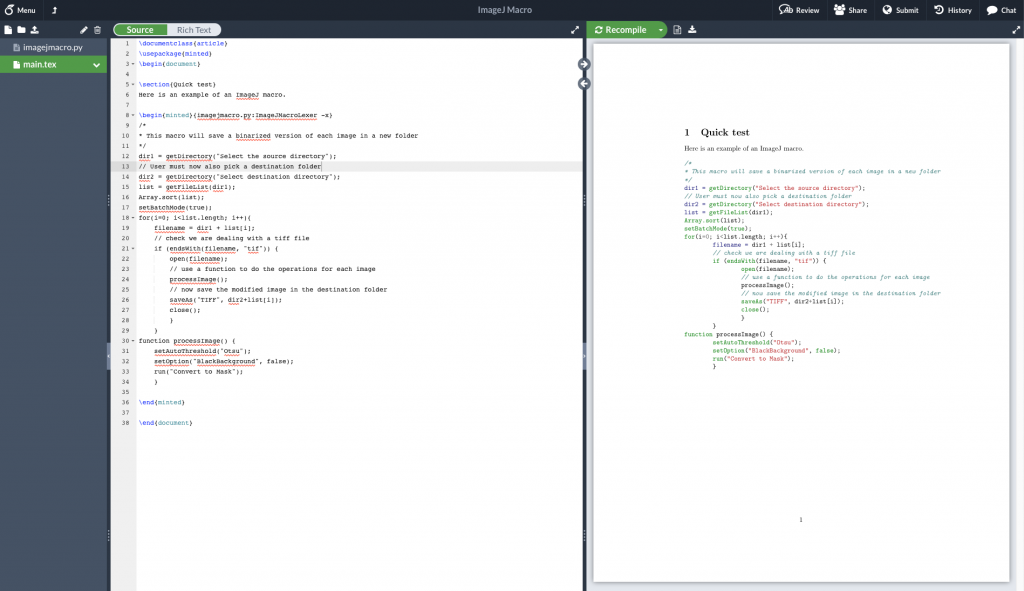
This quick post comes courtesy of LianTze Lim (an Overleaf TeXpert) and Kota Miura (a bioimage analyst). I asked on the ImageJ forum some time ago how to add an ImageJ Macro lexer for a LaTeX document I was writing. Kota responded with this lexer for pygments.

The Green Leek 10.5 km run is a mixed terrain race now in its third year. Today’s was a wet and muddy edition. The chip times were posted this afternoon and using my previous code, I took a look at the results.

I’d seen the small multiple artwork of running and cycling routes from Marcus Volz’s R package Strava all over the web. Ads for “posters of your GPS tracks” pop up on Reddit and I’d notice a few #Rstats people put up their posters on Twitter.
It has been a long time since I wrote a book review. A few months ago I read on IgorExchange that Martin Schmid had written a book about programming Igor. I snapped up a copy.
I’ve previously crunched times for local Half and Full Marathons here on quantixed. Last weekend was the Kenilworth Half Marathon (2018) over a new course. I thought I’d have a look at the distributions of times and paces of the runners. The times are available here.
Some great scientific data gets posted on Twitter. Sometimes I want to take a closer look and this post describes a strategy to do so. Edit: I received a request to take down the 3D volume images derived from the example dataset I used in this post.

We have a new paper out. It’s not exactly news, because the paper has been up on bioRxiv since December 2016 and hasn’t changed too much. All of the work was done by Nick Clarke when he was a PhD student in the lab.