A while back, the lab moved to an electronic lab notebook (details here and here). One of the drivers for this move was the huge number of hard copy lab note books that had accumulated in the lab over >10 years.
This wonderful movie has repeatedly popped up into my twitter feed. It was taken by Tessa Montague and is available here (tweet is here). The movie is striking because of the way that cytokinesis starts at one side and moves to the other. Most model systems for cell division have symmetrical division.

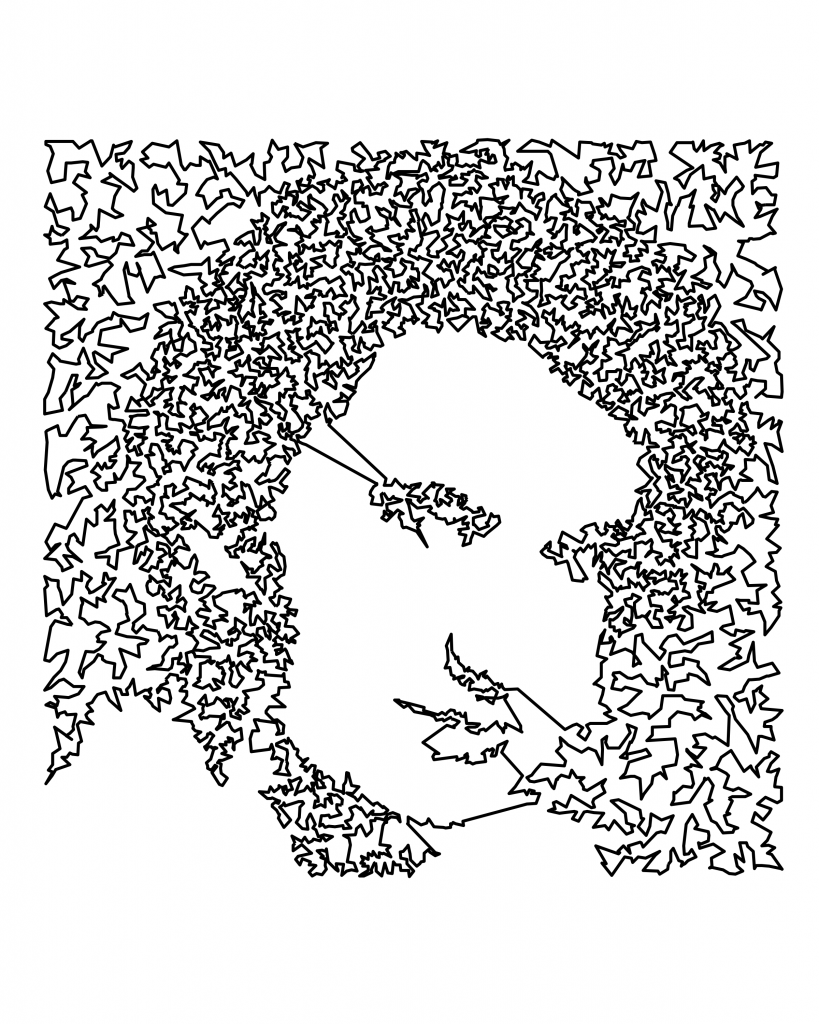
I read about Antonio Sánchez Chinchón’s clever approach to use the Travelling Salesperson algorithm to generate some math-art in R. The follow up was even nicer in my opinion, Pencil Scribbles. The subject was Boris Karloff as the monster in Frankenstein.

A few days ago, I read an article about Damien Hirst’s new spot paintings.
So quantixed occasionally gets correspondence from other researchers asking for advice. A recent email came from someone who had been “scooped”. What should they do? Before we get into this topic we have to define what we mean by being scooped.

I recently got a new GPS running watch, a Garmin Fēnix 5. As well as tracking runs, cycling and swimming, it does “activity tracking” – number of steps taken in a day, sleep, and so on. The step goals are set to move automatically and I wondered how it worked.

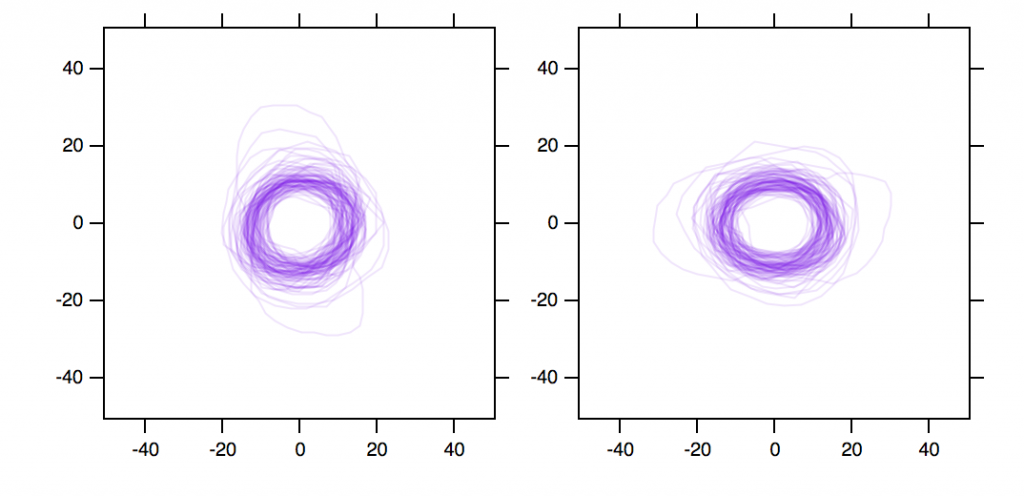
Many projects in the lab involve quantifying circular objects. Microtubules, vesicles and so on are approximately circular in cross section. This quick post is about how to find the diameter of these objects using a computer. So how do you measure the diameter of an object that is approximately circular?
As with children’s toys and clothes, books aimed at children tend to be targeted in a gender-stereotyped way. This is a bit depressing.
Here’s a quick tech tip. We’ve been writing papers in TeX recently, using Overleaf as a way to write collaboratively. This works great but sometimes, a Word file is required by the publisher. So how do you convert from one to the other quickly and with the least hassle?

Back in 2014, I posted an analysis of the time my lab takes to publish our work. This post is very popular. Probably because it looks at the total time it takes us to publish our work. It was time for an update. Here is the latest version.
I am now running a new module for masters students, MD997. The aim is to introduce the class to a range of advanced research methods and to get them to think about how to formulate their own research question(s). The module is built around a paper which is allocated in the first session.