Kimya BilimleriİngilizceWordPress

Henry Rzepa's Blog

Henry Rzepa's Blog
Chemistry with a twist
Ana SayfaAtom Besleme
language
Chemical IT13-olide3-dien-6Eudesma-1Semantic WebKimya Bilimleriİngilizce
Yayınlandı

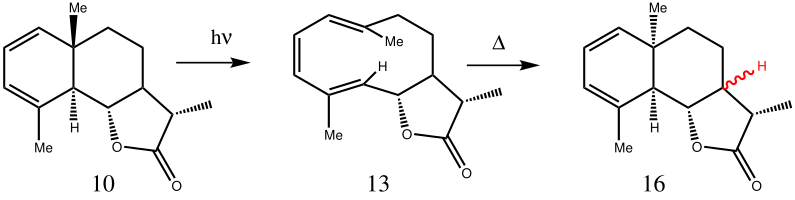
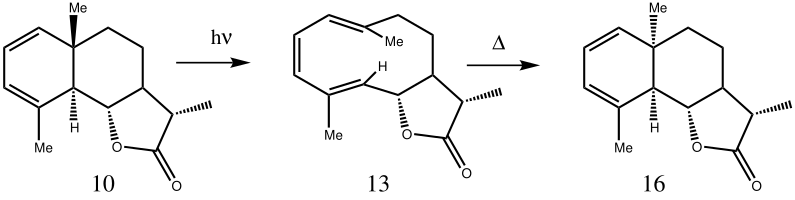
Previously, I had noted that Corey reported in 1963/65 the total synthesis of the sesquiterpene dihydrocostunolide. Compound 16, known as Eudesma-1,3-dien-6,13-olide was represented as shown below in black; the hydrogen shown in red was implicit in Corey’s representation, as was its stereochemistry. As of this instant, this compound is just one of 64,688,893 molecules recorded by Chemical Abstracts.
EnergyMethylPericyclicTutorial MaterialKimya Bilimleriİngilizce
Yayınlandı

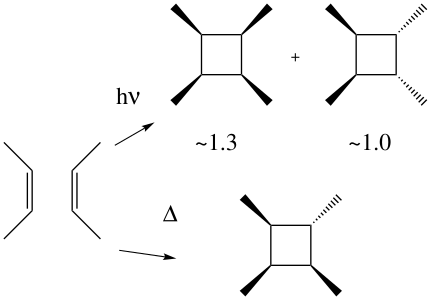
The π 2 + π 2 cyclodimerisation of cis -butene is the simplest cycloaddition reaction with stereochemical implications. I here give it the same treatment as I did previously for electrocyclic pericyclic reactions. The photochemical reaction is known to give a mixture of two tetramethylcyclobutanes in the ratio of 1.3:1.0, with the all- cis isomer apparently predominating.

AdamArchetypal CarrierConical IntersectionsElectrocyclicHistoricalKimya Bilimleriİngilizce
Yayınlandı

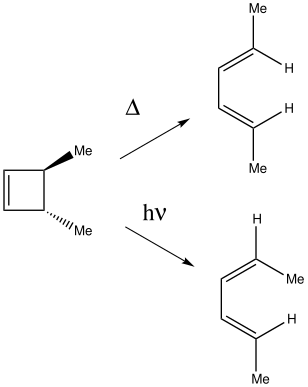
Woodward and Hoffmann published their milestone article  “Stereochemistry of Electrocyclic Reactions” in 1965. This brought maturity to the electronic theory of organic chemistry, arguably started by the proto-theory of Armstrong some 75 years earlier. Here, I take a modern look at the archetypal carrier of this insight, the ring opening of dimethylcyclobutene.

Curly ArrowsAnti-aromaticKeteneLower Energy PathwaysPericyclicKimya Bilimleriİngilizce
Yayınlandı

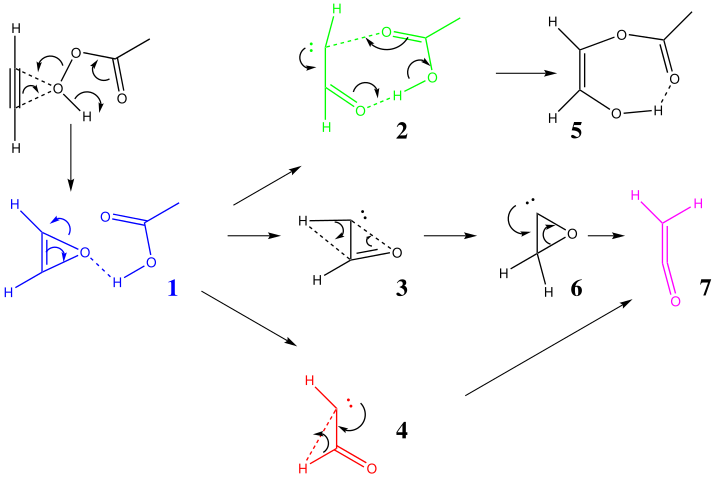
The epoxidation of an alkene to give an oxirane is taught in introductory organic chemistry. Formulating an analogous mechanism for such reaction of an alkyne sounds straightforward, but one gradually realises that it requires raiding knowledge from several other areas of (perhaps slightly more advanced) chemistry to achieve a joined up approach to the problem.

Interesting Chemistry200-300By-productChristopher IngoldEnergyKimya Bilimleriİngilizce
Yayınlandı

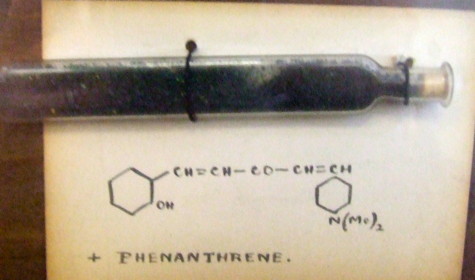
Following on from Armstrong’s almost electronic theory of chemistry in 1887-1890, and Beckmann’s radical idea around the same time that molecules undergoing transformations might do so via a reaction mechanism involving unseen intermediates (in his case, a transient enol of a ketone) I here describe how these concepts underwent further evolution in the early 1920s.

GeneralInteresting ChemistryCar DrivesCar RattlingChemical ConceptsKimya Bilimleriİngilizce
Yayınlandı

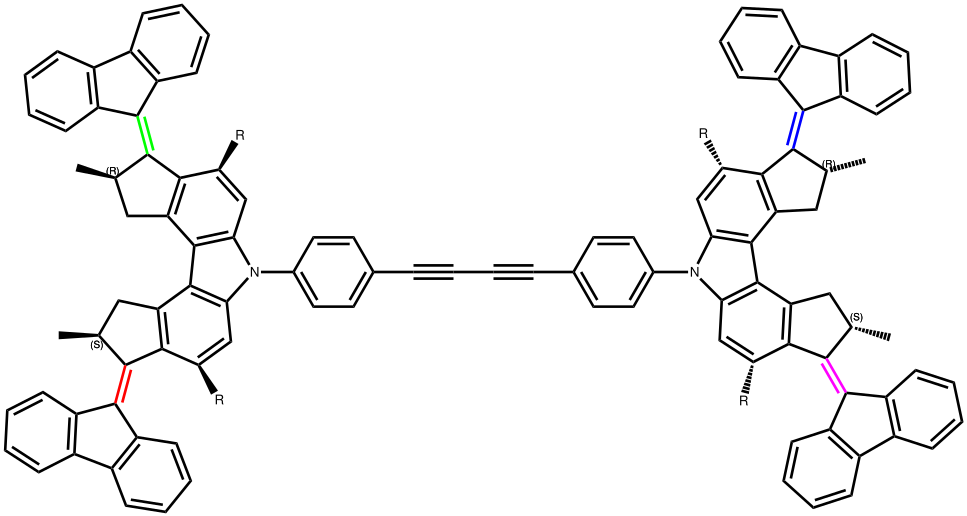
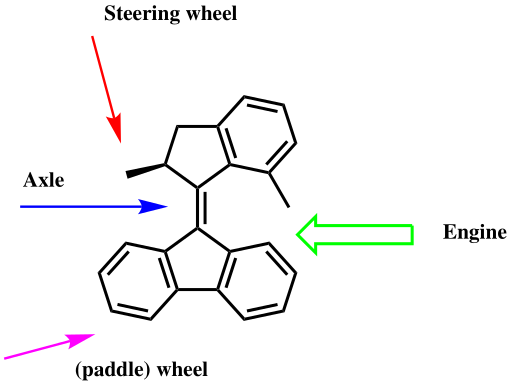
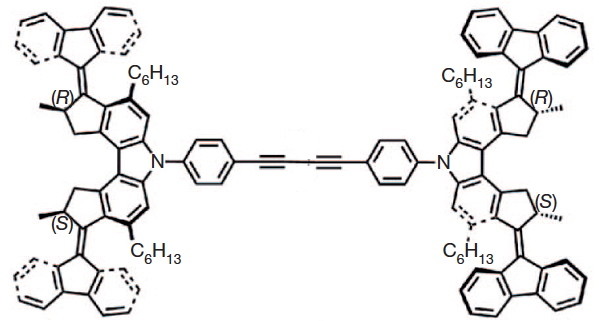
Fascination with nano-objects, molecules which resemble every day devices, is increasing. Thus the world’s smallest car has just been built. The mechanics of such a device can often be understood in terms of chemical concepts taught to most students. So I thought I would have a go at this one!