Accelerationists vs. catastrophists in the decade defining convergence

Accelerationists vs. catastrophists in the decade defining convergence
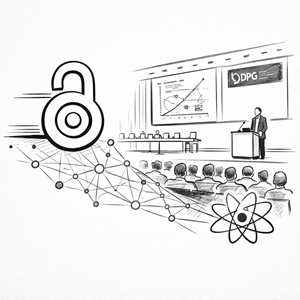
Wie steht es um Diamond Open Access in den Bundesländern? In der ersten SeDOA-Online-Veranstaltung berichteten vier Landesinitiativen über ihre Aktivitäten, Herausforderungen und ihre Wünsche an SeDOA. Die Veranstaltung eröffnete Möglichkeiten für länderübergreifende Vernetzung, Austausch und Synergien.
Long-term readers will remember that waaay back in 2011, we started the process of putting together a checklist for people naming new zoological genera and species, distilling the relevant portions of the long and complex International Code of Zoological Nomenclature (ICZN). Across twelve days of intense discussion, we got as far as DRAFT v3 of […]

If only we fixed the publishing system. If only we fixed the incentives, rewards and recognition. Open Science (OS) likes to position itself as a systems problem. And whilst these things do matter, decades of the same conversations and limited change is unveiling an uncomfortable truth: The biggest barrier to change in Open Science isn’t systems or structures. It’s people. And I don’t just mean people in the abstract;

We cannot teleport physical proximity, but we can replicate its psychological effects in remote teams. This has everything to do with propinquity. If the physical world provided connection by accident, the digital world requires connection by design. The most critical loss in the shift to remote work is “propinquity,” a fancy word for physical nearness.

John Willinsky was named a Member of the Order of Canada on December 31st, 2025, for almost three decades of dedication to making knowledge public through his PKP work. In this post, we reflect on how the generous support of PKP’s contributors, reflecting the deeply collective nature of the project, made this work possible. In […] The post PKP Founder John Willinsky Appointed to the Order of Canada appeared first on Public Knowledge Project.
After passing through rOpenSci peer review, the distionary package is now newly available on CRAN.It allows you to make probability distributions quickly – either from a few inputs or from its built-in library – and then probe them in detail.
Five years ago, LOTUS (Rutz et al. 2022) started as a small attempt to cultivate the flow of chemical knowledge, in the same way we study how metabolites flow through living systems, rather than to build yet another database.

Why does a video call feel empty compared to a handshake? How does physical absence break the social contract? What happens to trust in remote work? For generations, professional trust relied on a simple, physical toolkit. We shook hands. We looked each other in the eye across a table. We shared coffee during breaks. These were not just social niceties.

Der Diamond Open Access Standard (DOAS), der praktikable Kriterien für die Veröffentlichung wissenschaftlicher Zeitschriften festlegt, steht der Community jetzt auch auf Deutsch zur Verfügung. Die im DOAS formulierten Qualitätskriterien berücksichtigen über 70 aktuelle nationale und internationale Publikationsrichtlinien und wurden im intensiven Austausch mit der europäischen Diamond Open Access Community entwickelt.