Filosofía, Ética y Ciencias de la ReligiónInglés
Publicado
Autor Eric Gilliam
Each piece in the MIT series can stand alone for the most part, but I’ve written them in such a way that they build off each other.
Each piece in the MIT series can stand alone for the most part, but I’ve written them in such a way that they build off each other.
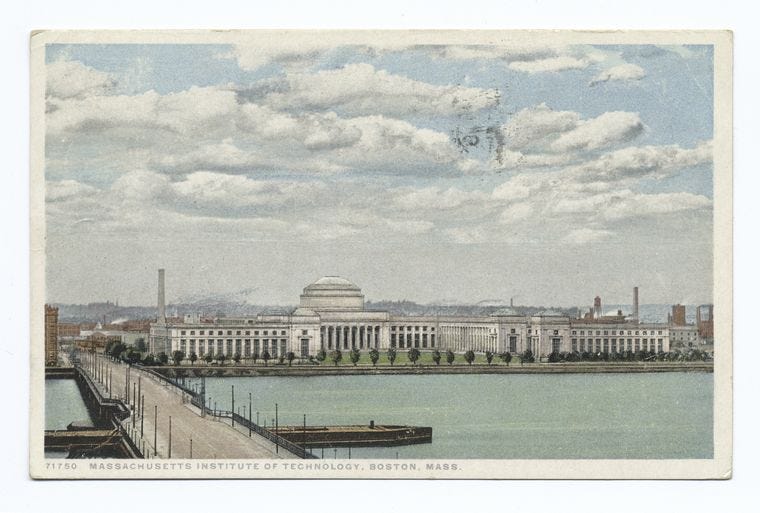
The MIT Series Patrick Collison and Tyler Cowen opened their 2019 Atlantic piece that helped jump-start the progress studies movement with the following passage: In my eyes, MIT is entirely deserving of this honor: being used as the authors’ first example of an organization that generated progress.

It has been about three weeks since the last piece for the Engineering Innovation Substack. I apologize for the delay, but I think the delay will be worth it. I’ve been working on a series of (at least) three pieces that serve as a bit of a (short) progress studies history of MIT. This is a set of pieces that I specifically had in mind when I started this newsletter and I’m extremely excited to have the opportunity to share them with you all.

Several subscribers (mostly involved with the deep tech VC community) have requested that I write some pieces that look deeply at some programs that are already doing things well.

I’m excited to announce that this is the first post of the Engineering Innovation Newsletter in partnership with Good Science Project. Good Science Project is a new organization dedicated to improving the funding and practice of science.

Subscribe now Since the last article on WW2-era German science was so well-received, I’ve decided to keep the theme of great pieces of scholarship about scientific history going. This week’s post is largely drawn from the essays of Gerard Holton. Holton’s work is, similar to the scholarship covered in the previous post, criminally under-talked about in the progress studies community.

Subscribe now This Week’s Article The primary reason I’m writing this update is to inform subscribers that the article that was slated to come out this Friday will be a few days late. I came down with an infection this week and progress was a bit slow as a result. The planned article will incorporate a lot of ideas from Gerald Holton, a physicist/science historian and all-around fantastic thinker.

Subscribe now In most Engineering Innovation posts, I try to provide some new, evidence-based argument on how to improve the innovation pipeline. The posts try to bring readers on the journey through the academic evidence and relevant history that informs the argument. But this post will be different. In this post, I won’t be taking a stand at all.

This piece contains some longer excerpts from Watson’s writing about the discovery of DNA that tell the story far more beautifully than I ever could.

Subscribe now Last week, I finished a new biography that I’ve been waiting on for months. Eagerly waiting for a book to be released is not something I make a habit of. But this was different: this book was about the great Johnny von Neumann.

Subscribe now The importance of grant-funding panels in science cannot be overstated. Every year in the US, tens of billions of dollars of scientific grant-funding get allocated based on the whims of these panels. The opinions of panels have a massive influence over what can and cannot get researched.