Ciencias QuímicasInglésWordPress

Henry Rzepa's Blog

Henry Rzepa's Blog
Chemistry with a twist
Página de inicioFeed Atom
language
Interesting ChemistryHenry ShineMichael DewarReaction MechanismTS(CC)Ciencias QuímicasInglés
Publicado

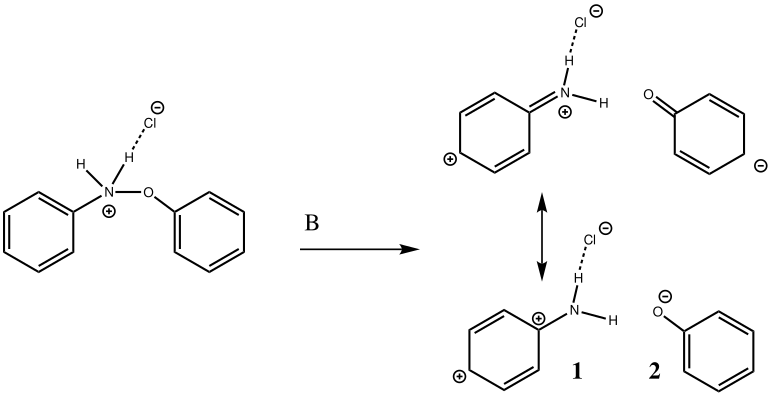
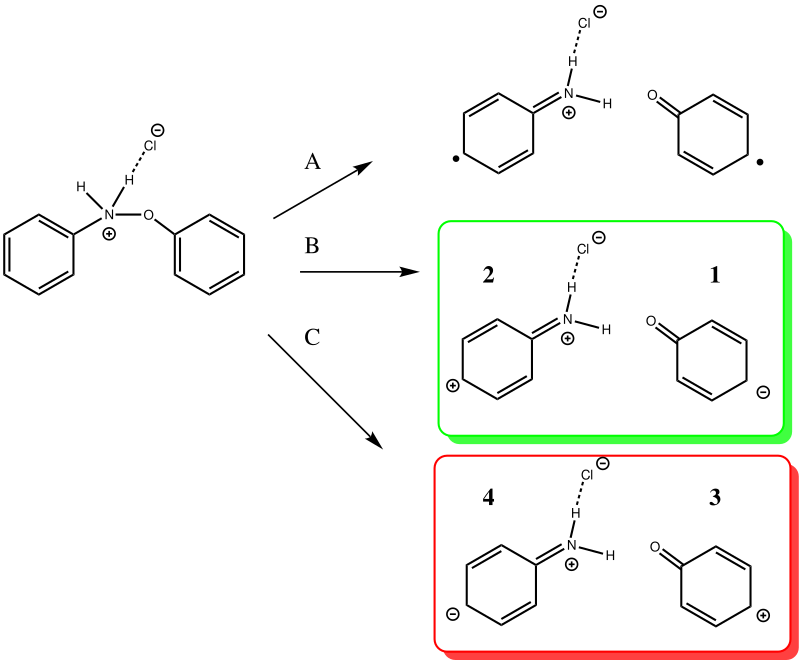
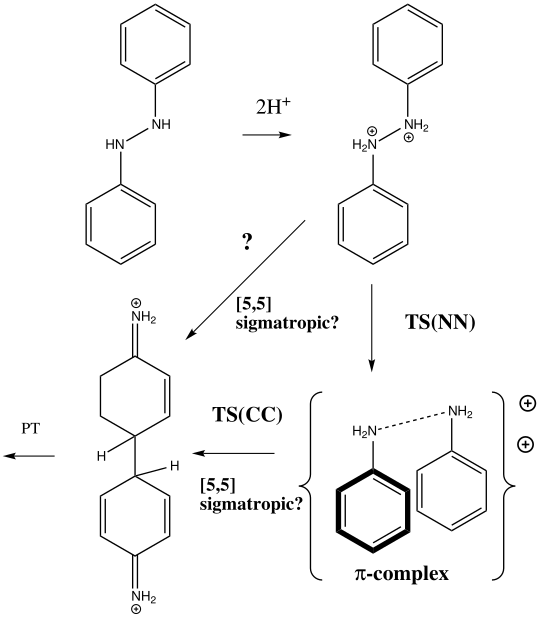
Kinetic isotope effects have become something of a lost art when it comes to exploring reaction mechanisms. But in their heyday they were absolutely critical for establishing the mechanism of the benzidine rearrangement. This classic mechanism proceeds via bisprotonation of diphenyl hydrazine, but what happens next was the crux.

Conformational AnalysisEnergy ProfilePericyclicReaction MechanismTutorial MaterialCiencias QuímicasInglés
Publicado

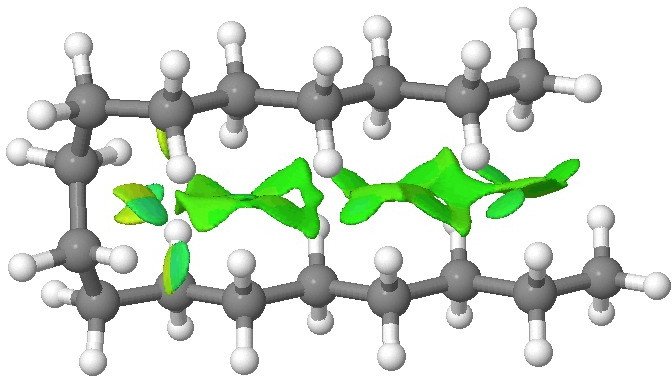
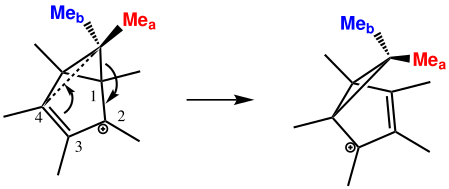
This is an interesting result I got when studying the [1,4] sigmatropic rearrangement of heptamethylbicyclo-[3.1.0]hexenyl cations. It fits into the last lecture of a series on pericyclic mechanisms, and just before the first lecture on conformational analysis. This is how they join.

Interesting ChemistryΠ-hydrogen Bonded SystemsΠ-systemsCiencias QuímicasInglés
Publicado

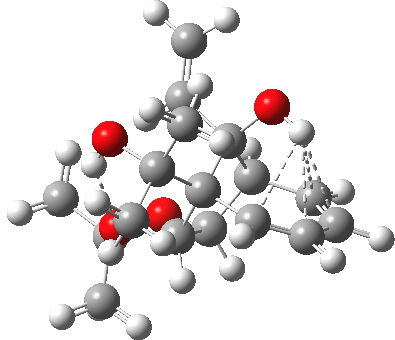
In this post, I looked at some hydrogen bonds formed by interaction of a π-system with an acidic hydrogen. Unlike normal lone pair donors, π-systems can involve more than two electrons, most commonly four or six. Here I look at examples of both these higher-order donors.

Interesting ChemistryHigher EnergyHistoricalΠ-complexPericyclicCiencias QuímicasInglés
Publicado

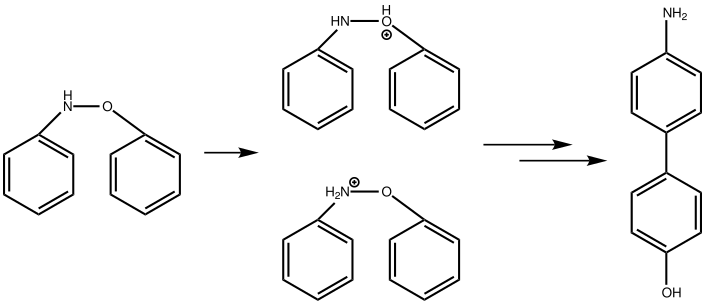
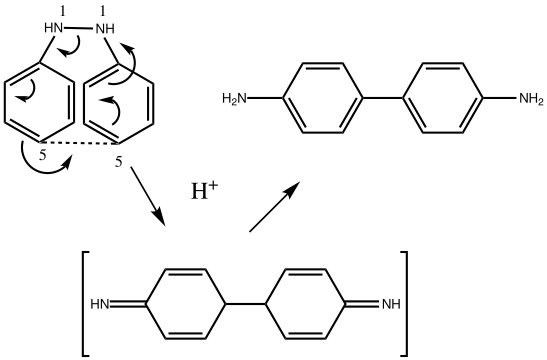
The benzidine rearrangement is claimed to be an example of the quite rare [5,5] sigmatropic migration, which is a ten-electron homologation of the very common [3,3] sigmatropic reaction (e.g. the Cope or Claisen). Some benzidine rearrangements are indeed thought to go through the [3,3] route. The topic has been reviewed here.

Interesting ChemistryEnergy GapCiencias QuímicasInglés
Publicado

A simple correlation between a ring size and the hydrogen bonding as quantified by the O(Lp)/H-O σ* NBO interaction in that ring, indicated a 7- or 8-membered ring was preferred over smaller ones. Here is the same study, but this time using the π-electrons of an alkene as the electron donor.

Crystal_structure_miningInteresting ChemistryBasic SearchCambridgeCF 3Ciencias QuímicasInglés
Publicado

I previously blogged about anomeric effects involving π electrons as donors, and my post on the conformation of 1,2-difluorethane turned out one of the most popular. Here I thought I would present the results of searching the Cambridge crystal database for examples of the gauche effect.

Interesting ChemistryCatalysisConformational AnalysisEnergyEpoxide ProductCiencias QuímicasInglés
Publicado

I return to this reaction one more time. Trying to explain why it is enantioselective for the epoxide product poses peculiar difficulties. Most of the substituents can adopt one of several conformations, and some exploration of this conformational space is needed.