Informatique et sciences de l'informationAnglaisGhost

Front Matter

Front Matter
The Front Matter Blog covers the intersection of science and technology since 2007.
Page d'accueilFlux AtomMastodonISSN 2749-9952
language
Science HackInformatique et sciences de l'informationAnglais
Publié

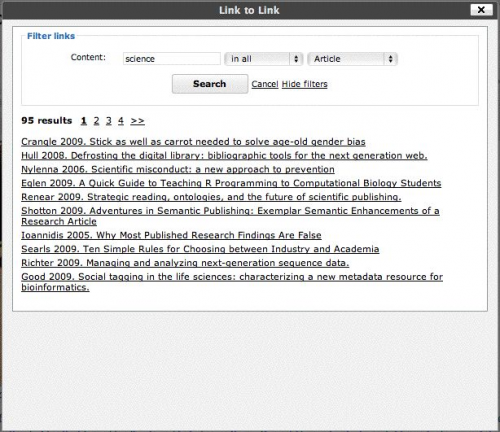
One of the annoyances with bibliographies as we use them for scholarly papers is that is usually unclear why a particular paper was cited. It is often possible for readers to gather this information by looking at the citation in the context of the surrounding text, but this is very difficult to automate.
Science HackInformatique et sciences de l'informationAnglais
Publié

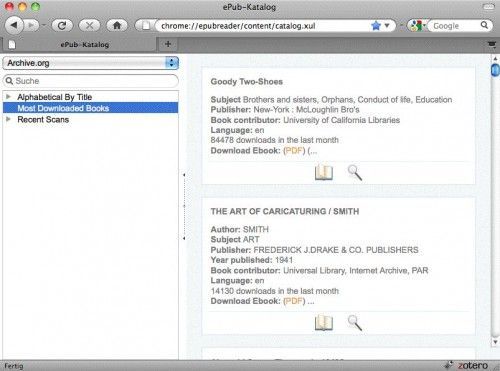
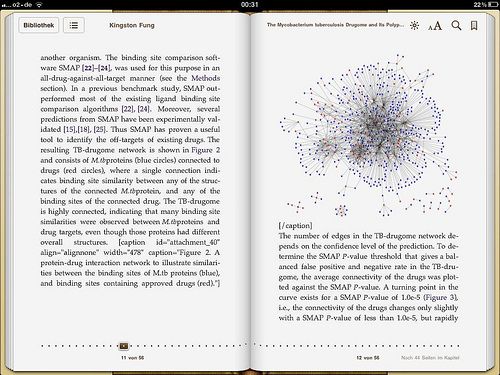
ePub is a great format for scholarly content, and there are a number of tools to create ePub files. But creating content is only half the story, at least as important is an easy mechanism for distribution. This is particularly true if your ePub files are not books, but shorter pieces of content: journal articles, blog posts or even output from your ongoing research.

FeatureInformatique et sciences de l'informationAnglais
Publié

Regular readers of this blog know about my current interest in WordPress as a tool to create scholarly content. In the last few weeks I have released several WordPress plugins for reference management and to create ePub files. Obviously I’m not the only person having this idea.

NewsInformatique et sciences de l'informationAnglais
Publié

The Beyond the PDF workshop took place a little over a week ago. One take-home message for me was that ePub is a very interesting document format for scholarly publishing and has several advantages over PDF. The workshop had a wonderful spirit to do something, and in this spirit I wrote a WordPress plugin that automatically creates ePub files from blog posts.

Meeting ReportInformatique et sciences de l'informationAnglais
Publié

Having breakfast at the end of a conference is a good way to recap what was discussed and can help to generate new ideas. Two years ago at ScienceOnline09 a conversation with Cameron Neylon that followed up on the session Reputation, authority and incentives. Or: How to get rid of the Impact Factor (moderated by Björn Brembs and Pete Binfield) was started my interest in unique author identifiers for researchers.

NewsInformatique et sciences de l'informationAnglais
Publié

DataCite is an international consortium for data citation. DataCite originally started as a project at the German National Library of Science and Technology (TIB). Since 2005 the TIB was providing digital object identifiers (DOIs) to research datasets. In December 2009 research libraries and technical information centres from 6 countries founded the DataCite initiative.

Meeting ReportInformatique et sciences de l'informationAnglais
Publié

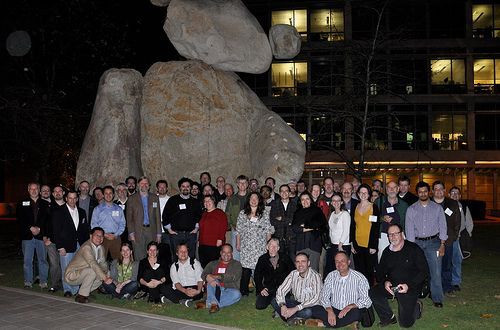
ScienceOnline2011, the fifth annual international meeting on Science and the Web, is only two days away. I am very excited for many reasons, most importantly because it gives me the chance to meet many online friends in person – again or for the first time. On Saturday I will help moderate two (related) sessions: How is the Web changing the way we identify scientific impact and Having fun with citations.

NewsInformatique et sciences de l'informationAnglais
Publié

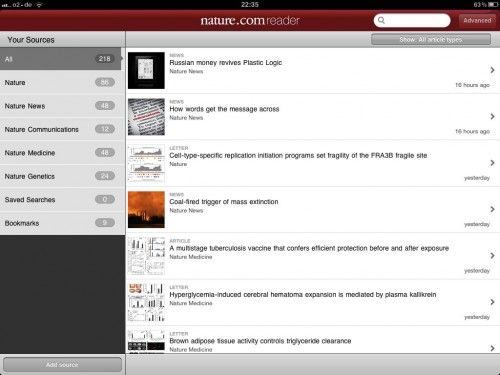
Articles published in Nature , Nature Biotechnology , Nature Cell Biology , Nature Medicine or Nature Chemical Biology are now available for renting from DeepDyve. Downloading or printing is not possible, and the $3.99 rental is for 24 hours. Later this month, Nature plans to release the nature.com reader for the iPad.

Meeting ReportInformatique et sciences de l'informationAnglais
Publié

In 1990 Tim Berners-Lee and others started HTML and the world wide web to facilitate scientific communications at CERN, the world’s largest particle physics laboratory. Although the world wide web profoundly changed scholarly publishing (and of course many other things), HTML did not become the standard document format for scientific papers. In fact, there is no standard document format.