ChimieAnglaisWordPress

Henry Rzepa's Blog

Henry Rzepa's Blog
Chemistry with a twist
Page d'accueilFlux Atom
language
General3gConformational AnalysisCuyclooctaneEnergyChimieAnglais
Publié

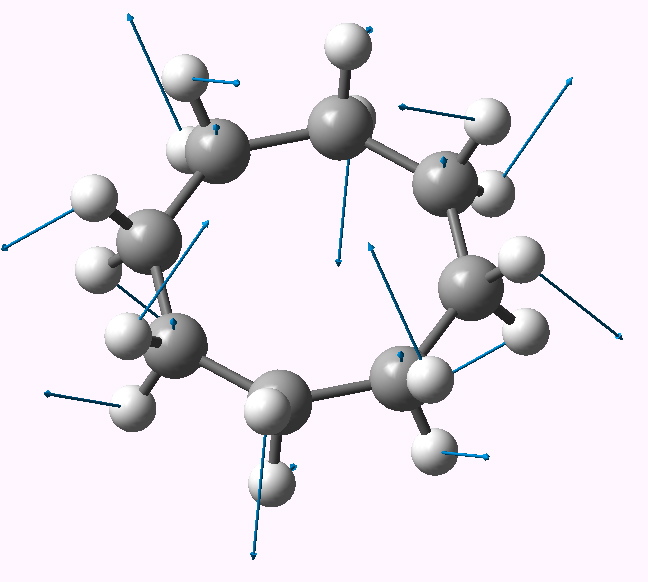
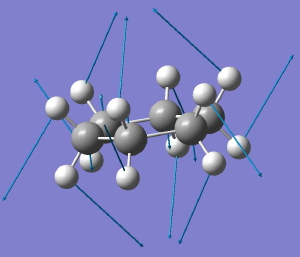
In the previous post, I suggested that inspecting the imaginary modes of planar cyclohexane might be a fruitful and systematic way in which at least parts of the conformational surface of this ring might be probed. Here, the same process is conducted for cyclo-octane.
GeneralInteresting ChemistryAdolf Von BaeyerAnimationCChimieAnglais
Publié

Like benzene, its fully saturated version cyclohexane represents an icon of organic chemistry. By 1890, the structure of planar benzene was pretty much understood, but organic chemistry was still struggling somewhat to fully embrace three rather than two dimensions.

HypervalencyInteresting ChemistryBondQuadrupleChimieAnglais
Publié

So ingrained is the habit to think of a bond as a simple straight line connecting two atoms, that we rarely ask ourselves if they are bent, and if so, by how much (and indeed, does it matter?). Well Hursthouse, Malik, and Sales, as long ago as 1978, asked just such a question about the […]

Interesting ChemistryAnimationCatalytic SystemsChemical IntimacyEnergyChimieAnglais
Publié

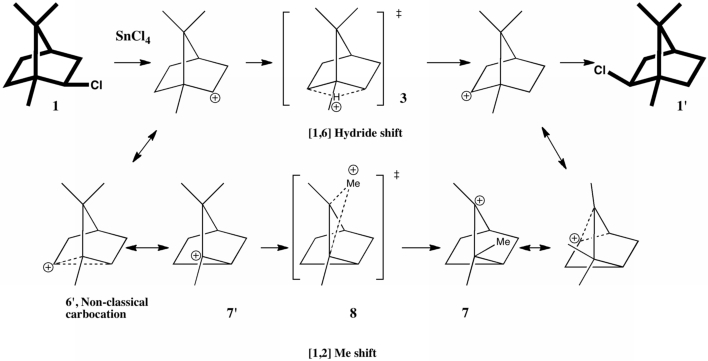
The scheme below illustrates one of the iconic reactions in organic chemistry. It is a modern representation of Meerwein’s famous experiment from which he inferred a carbocation intermediate, deduced from studying the rate of enantiomerization of isobornyl chloride when treated with the Lewis acid SnCl4.

HypervalencyInteresting ChemistryAromaticityPericyclicSouth CarolinaChimieAnglais
Publié

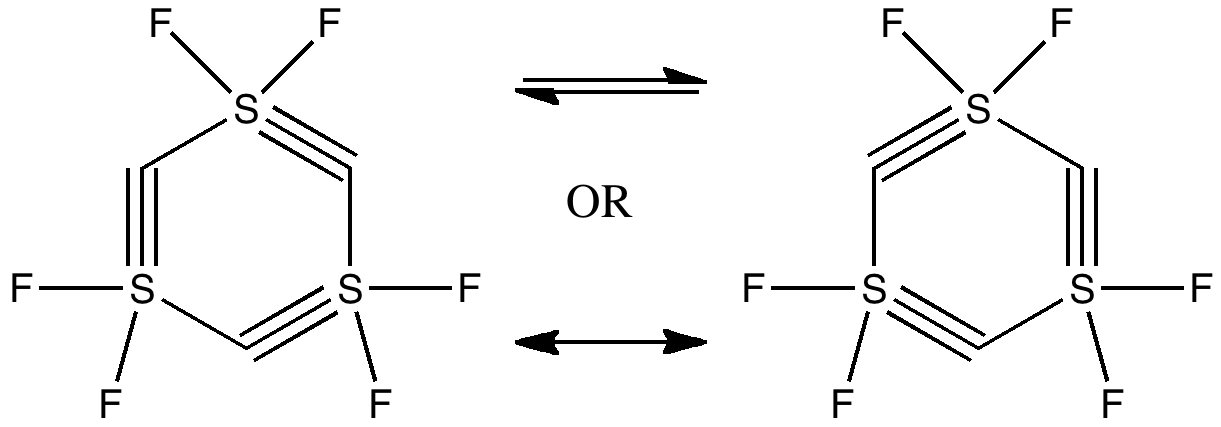
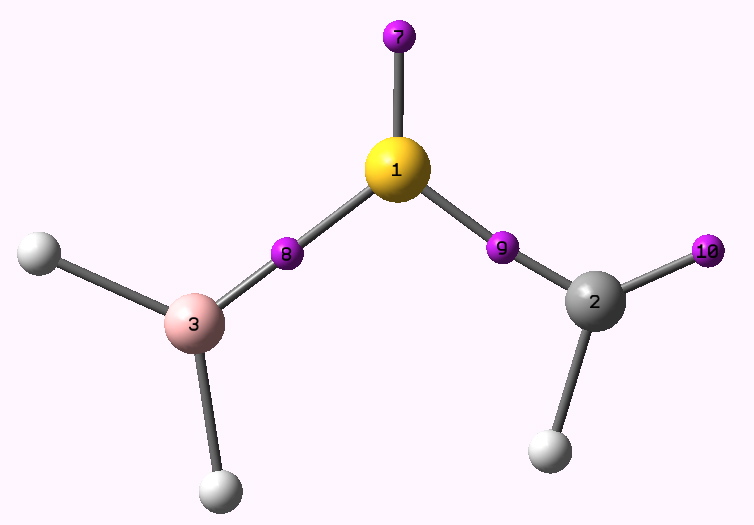
In the previous post, the molecule F 3 S-C≡SF 3 was found to exhibit a valence bond isomerism, one of the S-C bonds being single, the other triple, and with a large barrier (~31 kcal/mol, ν 284 i cm -1 ) to interconversion of the two valence-bond forms. So an interesting extension of this phenomenon is shown below: A cyclic form of the SCS Motif.

HypervalencyInteresting ChemistryAnimationCalculated Free Energy BarrierInorganic ChemistChimieAnglais
Publié

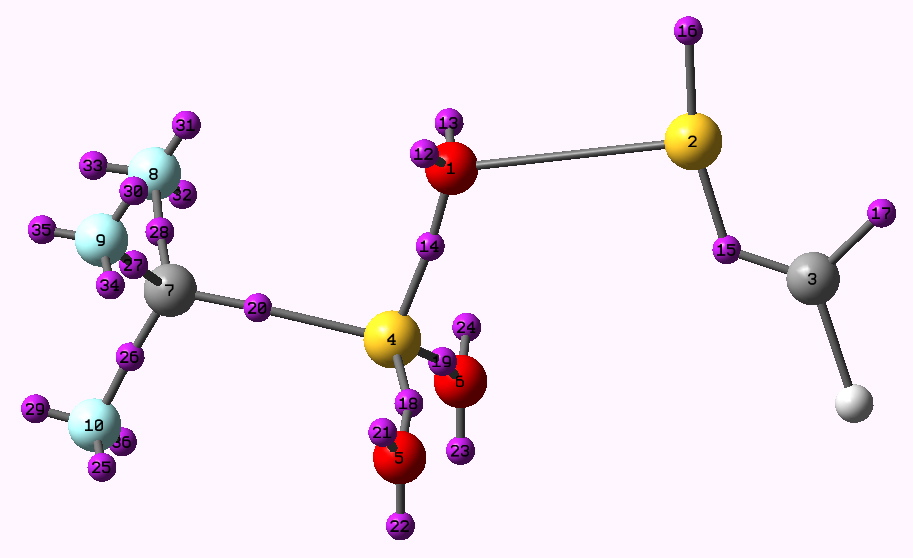
A previous post posed the question; during the transformation of one molecule to another, what is the maximum number of electron pairs that can simultaneously move either to or from any one atom-pair bond as part of the reaction?

Interesting ChemistryAromaticityClarClar IslandsCloud Clar IslandsChimieAnglais
Publié

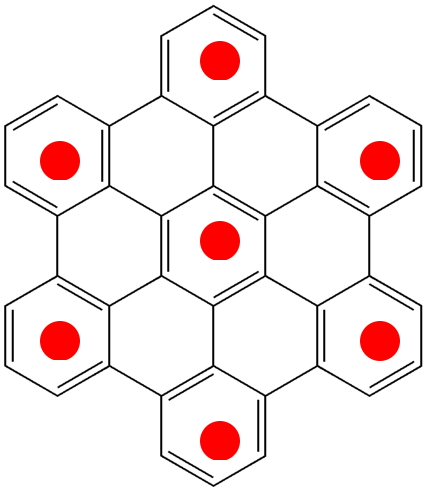
Clar islands are found not so much in an ocean, but in a type of molecule known as polycyclic aromatic hydrocarbons (PAH). One member of this class, graphene, is attracting a lot of attention recently as a potential material for use in computer chips.

HypervalencyInteresting ChemistryLarge Interaction EnergyChimieAnglais
Publié

In my first post on this theme, an ELF (Electron localization function) analysis of the bonding in the molecule HO-S≡C-H (DOI: 10.1002/anie.200903969) was presented. This analysis identified a lone pair of electrons localized on the carbon (integrating in fact to almost exactly 2.0) in addition to electrons in the CC region.