ChimieAnglaisWordPress

Henry Rzepa's Blog

Henry Rzepa's Blog
Chemistry with a twist
Page d'accueilFlux Atom
language
HypervalencyInteresting ChemistryCHsMatthias BickelhauptChimieAnglais
Publié

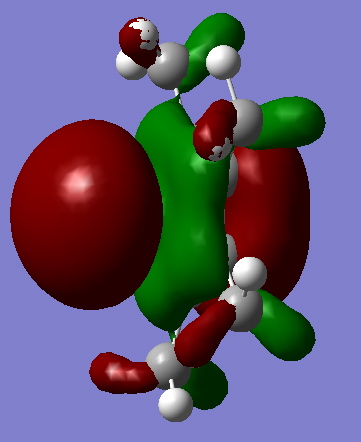
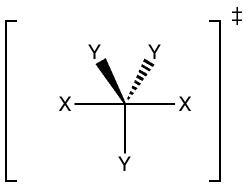
Science is about making connections. And these can often be made between the most unlikely concepts. Thus in the posts I have made about pentavalent carbon, one can identify a series of conceptual connections. The first, by Matthias Bickelhaupt and co, resulted in the suggestion of a possible frozen SN2 transition state.
Chemical ITInteresting ChemistryConformational AnalysisPseudoChimieAnglais
Publié

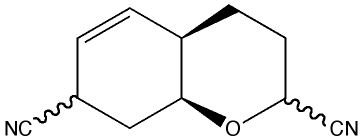
Chemistry can be very focussed nowadays. This especially applies to target-driven synthesis, where the objective is to make a specified molecule, in perhaps as an original manner as possible. A welcome, but not always essential aspect of such syntheses is the discovery of new chemistry.

Chemical ITInteresting ChemistryA. I. MageeA. JanaA. P. DoveChimieAnglais
Publié

The science journal is generally acknowledged as first appearing around 1665 with the Philosophical Transactions of the Royal Society in London and (simultaneously) the French Academy of Sciences in Paris. By the turn of the millennium, around 10,000 science and medical journals were estimated to exist.

Chemical ITFortranGoogleHTMLRegular Text EditorChimieAnglais
Publié

One of the many clever things that clever people can do with the Web is harvest it, aggregate it, classify it etc. Its not just Google that does this sort of thing! Egon Willighagen is one of those clever people. He runs the Chemical blogspace which does all sorts of amazing things with blogs.

Interesting ChemistryChemical SignificanceDiatomic Nitrogen GasEnergyPenceChimieAnglais
Publié

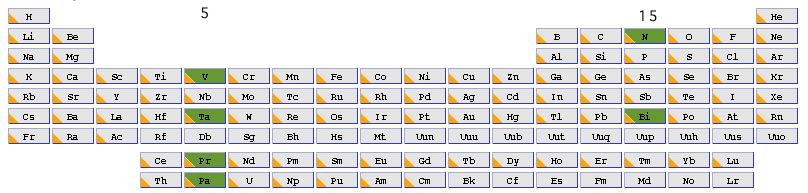
The 100th anniversary of G. N. Lewis’ famous electron pair theory of bonding is rapidly approaching in 2016 (DOI: 10.1021/ja02261a002). He set out a theory of bond types ranging from 1-6 electrons.

Interesting ChemistryAcetone SolutionGoogleNaI ComplexSodium ChlorideChimieAnglais
Publié

This story starts with an organic chemistry tutorial, when a student asked for clarification of the  Finkelstein reaction. This is a simple SN2 type displacement of an alkyl chloride or bromide, using sodium iodide in acetone solution, and resulting in an alkyl iodide. What was the driving force for this reaction he asked?