ChimieAnglaisWordPress

Henry Rzepa's Blog

Henry Rzepa's Blog
Chemistry with a twist
Page d'accueilFlux Atom
language
Interesting ChemistryAcetone SolutionGoogleNaI ComplexSodium ChlorideChimieAnglais
Publié

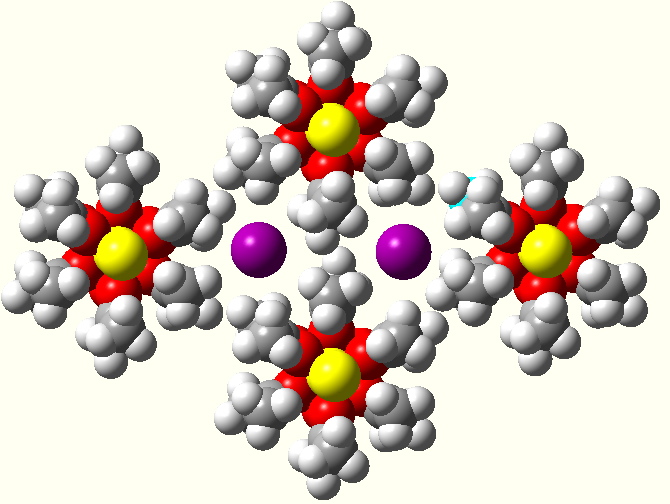
This story starts with an organic chemistry tutorial, when a student asked for clarification of the  Finkelstein reaction. This is a simple SN2 type displacement of an alkyl chloride or bromide, using sodium iodide in acetone solution, and resulting in an alkyl iodide. What was the driving force for this reaction he asked?
Interesting ChemistryBiological SystemsChiropticalChimieAnglais
Publié

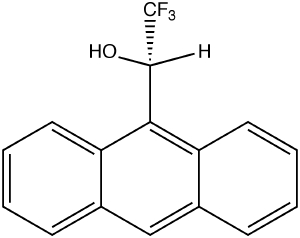
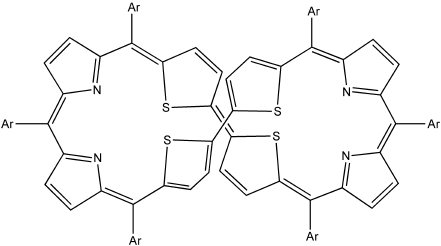
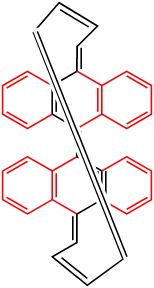
In the previous post,  it was noted that  Möbius annulenes are intrinsically chiral, and should therefore in principle be capable of resolution into enantiomers. The synthesis of such an annulene by Herges and co-workers was a racemic one; no attempt was reported at any resolution into such enantiomers.

Interesting ChemistryChemical CommunityChiropticalEdgar HeilbronnerEverestChimieAnglais
Publié

Much like climbing Mt. Everest because its there,  some hypothetical molecules are just too tantalizing for chemists to resist attempting a synthesis. Thus in 1964, Edgar Heilbronner  speculated on whether a conjugated annulene ring might be twistable into a  Möbius strip.

Interesting ChemistryAnti-aromatic SystemsChemical ShiftsClar IslandsSteve BachrachChimieAnglais
Publié

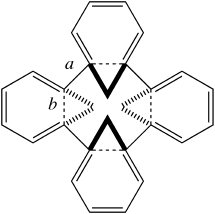
In 1988, Wilke[1] reported molecule 1 A 24-annulene. Click for 3D. It was a highly unexpected outcome of a nickel-catalyzed reaction and was described as a 24-annulene with an unusual 3D shape. Little attention has been paid to this molecule since its original report, but the focus has now returned!

Interesting ChemistryAromaticHistoricalMEPChimieAnglais
Publié

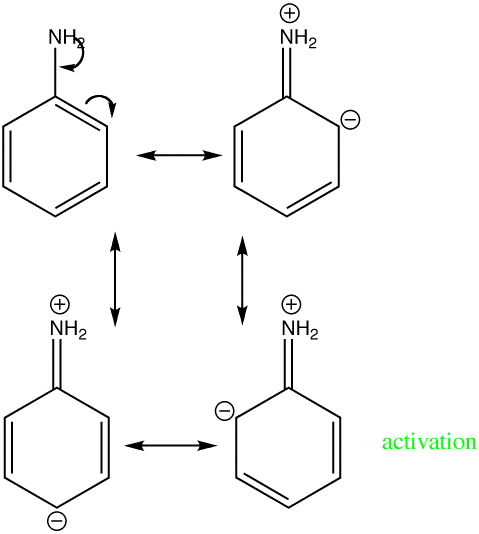
Every introductory course or text on aromatic electrophilic substitution contains an explanation along the lines of the resonance diagram shown below. With an o/p directing group such as NH2, it is argued that negative charge accumulates in those positions as a result of the resonance structures shown.

Chemical ITInteresting ChemistryACSBasic ToolsChemical AccuracyChimieAnglais
Publié

We recently developed a new computational chemistry practical laboratory here at Imperial College. I gave a talk about it at the recent ACS meeting in Salt Lake City. If you want to see the details of the lab, do go here. The talk itself contains further links and examples.

Interesting ChemistryActual Free Energy BarrierEnergyGas Phase ModelJulius SteglitzChimieAnglais
Publié

The ionization of a C-X bond (X=halogen) to form what we call a carbocation and which is known as the SN-1 reaction goes way back in the history of chemistry. Julius Steglitz was probably the first person to suggest such an ionization, back in 1899 (Steglitz, J.; Am. Chem.

Interesting ChemistryGas Phase ModelChimieAnglais
Publié

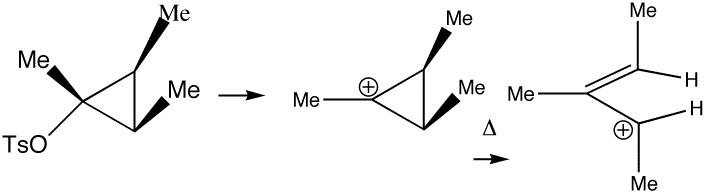
Click on diagram to see model. The reaction above is ostensibly a very simple pericyclic ring opening of a cyclopropyl carbocation to an allyl cation, preceeded by a preparatory step involving SN-1 solvolysis. As a 2-electron thermal process, the second step proceeds with disrotation of the terminii. Can this stereochemistry be illustrated with a computed model for the transition state for this process?