3QsRoaraCiências SociaisInglês
Publicados in Scholarly Communications Lab | ScholCommLab
Autor ScholCommLab

Our lab is growing! In our Three Questions series, we’re profiling each of our members and the amazing work they’re doing.
Our lab is growing! In our Three Questions series, we’re profiling each of our members and the amazing work they’re doing.

Las trabajadoras del hogar en la caricatura de la prensa de la ciudad de México a mediados del siglo XX. por Daniela Lechuga Herrero “Gata”, “chacha”, “criadita” o “sirvienta” fueron sólo algunas de las denominaciones que se usaron para nombrar a las trabajadoras del hogar en México a inicios del siglo XX. De manera despectiva, […]

In Côte d’Ivoire, the Ministry of Higher Education and Scientific Research began implementing open science before the signing of the 2021 UNESCO Recommendation on Open Science.
If a researcher submits her publication to a journal, the subsequent use of that publication could potentially be problematic if the journal acquires rights to it. These are the copyright options available to researchers for the subsequent use of their publications or research data. In the course of a research process, sooner or later […] The post How to (re)use your own publication appeared first on iRights.info.
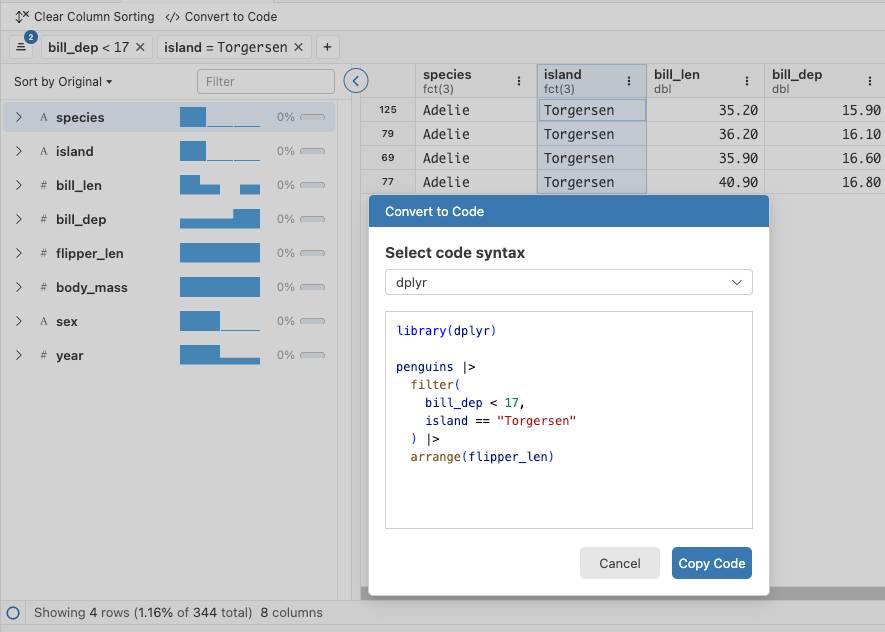
The most recent release of Positron (2025.10.0 build 199) has a few updates to the data explorer. Among other things, the actions you take in the data explorer like filtering and sorting can be converted to code: dplyr code for data frames, and SQL for DuckDB datasets.
Ein Blick hinter die Kulissen Mehr als 130 Teilnehmer*innen kamen am 25.02.2025 zum Online-Workshop „Personalressourcen und Infrastrukturkosten im Fokus des Informationsbudgets“. Der fünfte Workshop der Reihe „Finanzielle Gestaltung der Open-Access-Transformation an Hochschulen und Wissenschaftseinrichtungen“ wurde wieder als gemeinsames Angebot der Universitätsbibliothek Bielefeld und des Helmholtz Open Science Office im Rahmen des
In this blog to mark the International Day of Disaster Risk Reduction (October 13), HSC Coordinator Tom Ansell dives into the role of ‘Early Warning’ systems and policies as part of Disaster Risk Reduction initiatives. They fit within greater DRR programming to make sure that people are warning in advance ... The post Early Warning is one of the most important components of Disaster Risk Reduction – and one of the most successful!
Repositories are home to a wide range of scholarly content; they often archive theses, dissertations, preprints, datasets, and other valuable outputs. These records are an important part of the research ecosystem and should be connected to the broader scholarly record.
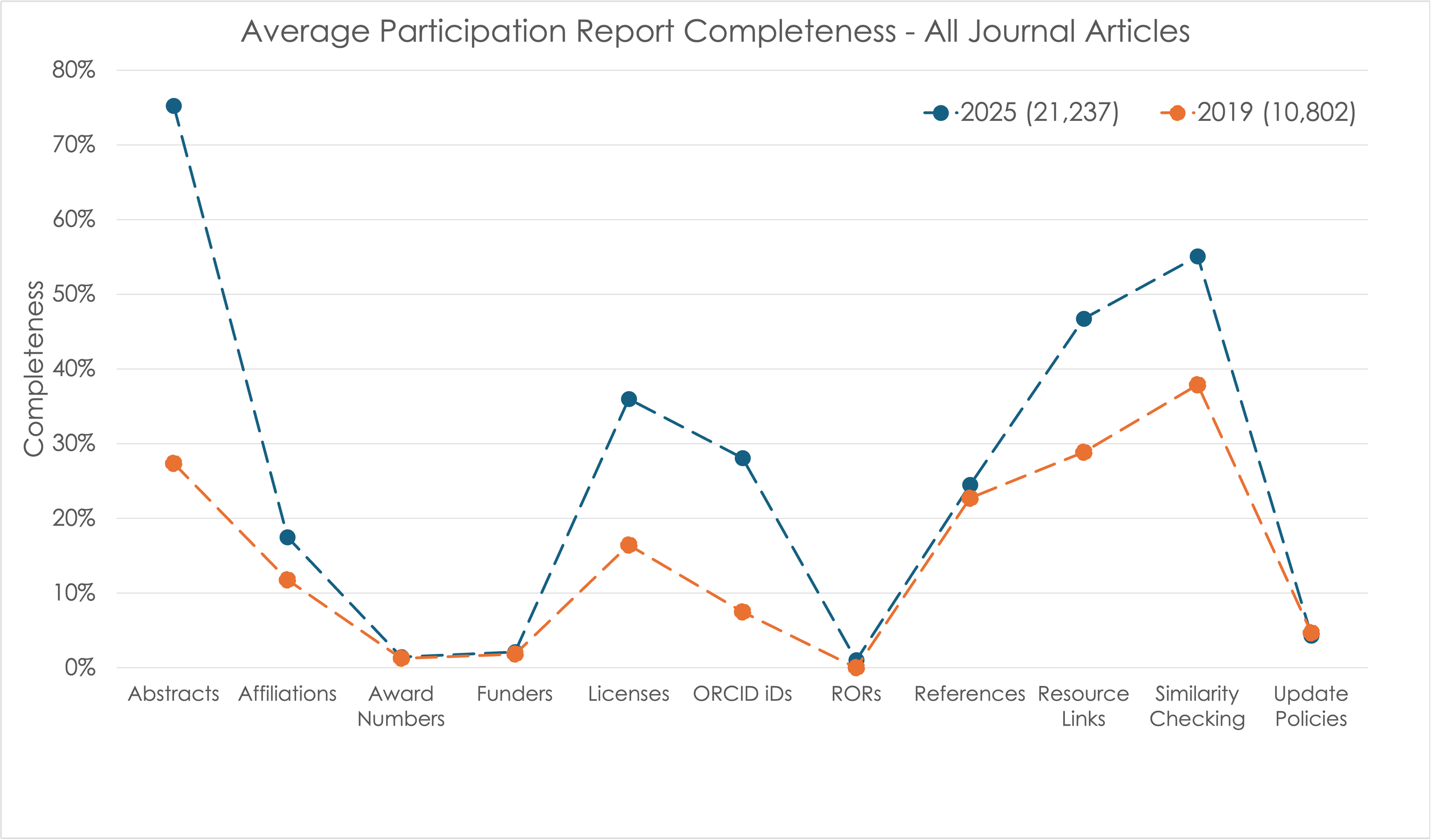
Ted Habermann, Metadata Game Changers The recent description of work at Crossref creating a dataset of grant<>output relationships included a sentence that really struck me: “The percentage of relationships that are registered explicitly by Crossref members providing grants IDs in funding information has grown from less than 0.1% in 2023 to 1% (modest numbers but amazing growth !)”. We are still in the early days of this
I was reading this article in the Guardian. The study it refers too looks like it was written by Confounding et al. but there is no link to the study for the reader to check this intuition. It feels like a basic requirement for any journalist writing about science to provide a link to the study they are writing about. Scientists do not give you anonymous tips!

New paper out this week, open access like usual, go get it for free: Atterholt, Jessie; Burton, M. Grace; Wedel, Mathew J.; Benito, Juan; Fricano, Ellen; and Field, Daniel J. 2025. Osteological correlates of the respiratory and vascular systems in the neural canals of Mesozoic ornithurines Ichthyornis and Janavis. The Anatomical Record. http://doi.org/10.1002/ar.70070.