Published in iPhylo
Author Roderic Page

I’ve relaunched a “toy” tool that I made a while ago to help geocode localitiies using GBIF. Geocoding converts a text string, such as “Cambodia: Ratanakiri Province” into latitude and longitude coordinates.
I’ve relaunched a “toy” tool that I made a while ago to help geocode localitiies using GBIF. Geocoding converts a text string, such as “Cambodia: Ratanakiri Province” into latitude and longitude coordinates.
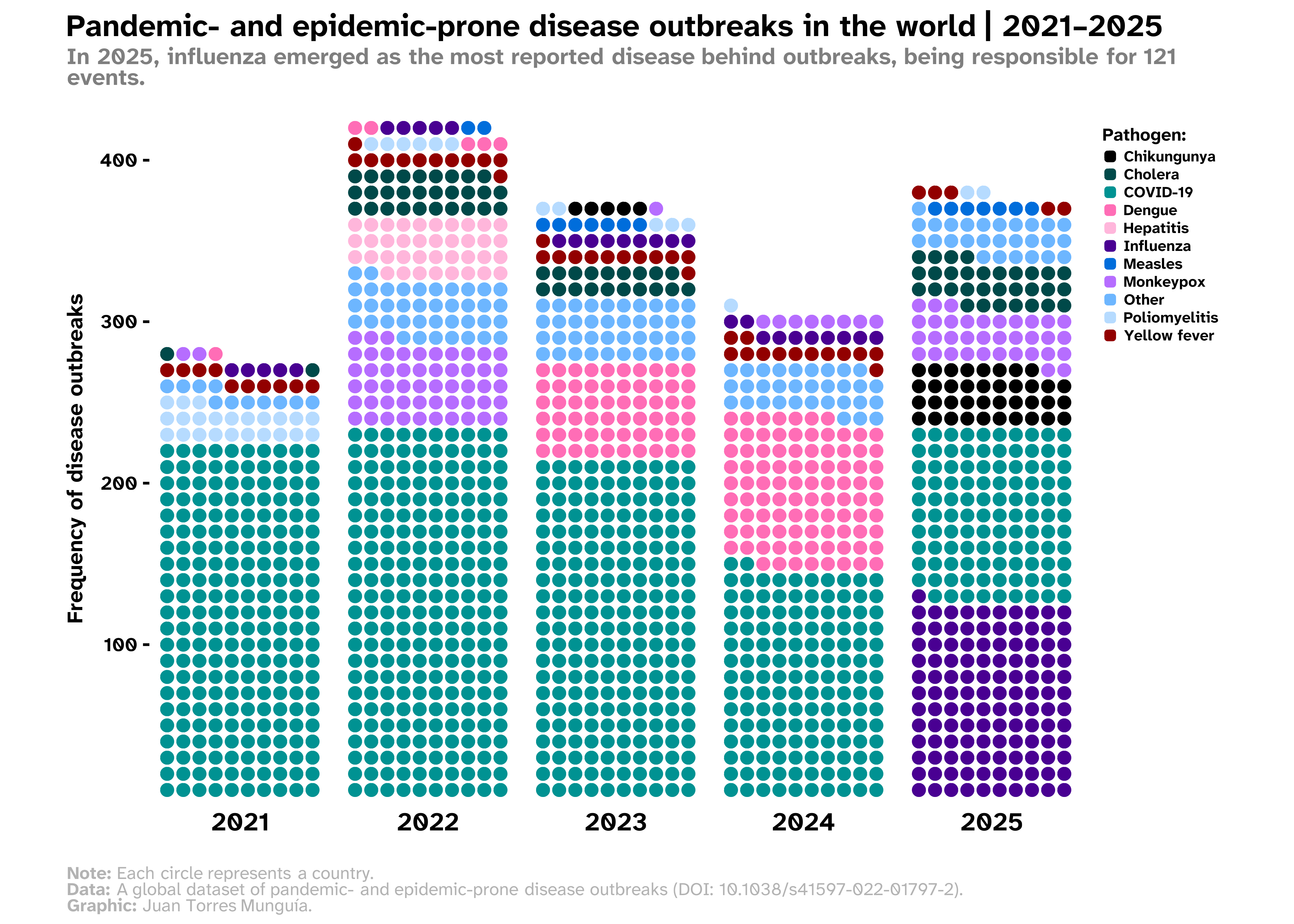
Overview Waffle charts are a useful way to visualize part-to-whole relationships. Commonly, waffle charts depict a grid of regular squares to represent the distribution of a categorical variable. Previously, in a post on this Blog, I built the following waffle chart to visualize disease outbreaks in the world between 2015 and 2024.

Die Fotosammlung des Archivs der sozialen Demokratie (AdsD) umfasst mehr als 300.000 Fotos. Doch das ist nur die Zahl der bereits erschlossenen Motive. Eine deutlich größere Zahl wartet noch darauf, erschlossen und somit für die Öffentlichkeit nutzbar gemacht zu werden.

Das HAUS SCHLESIEN in Königswinter-Heisterbacherrott ist ein lebendiger Begegnungsort für alle, die sich für die Kultur und Geschichte Schlesiens interessieren. Getragen vom gemeinnützigen Verein HAUS SCHLESIEN, der 2023 sein 50-jähriges Jubiläum feierte, erfüllt das im Haus beheimatete Dokumentations- und Informationszentrum den Satzungszweck: Schlesisches Kulturgut zu sammeln, bewahren und zugänglich zu machen.
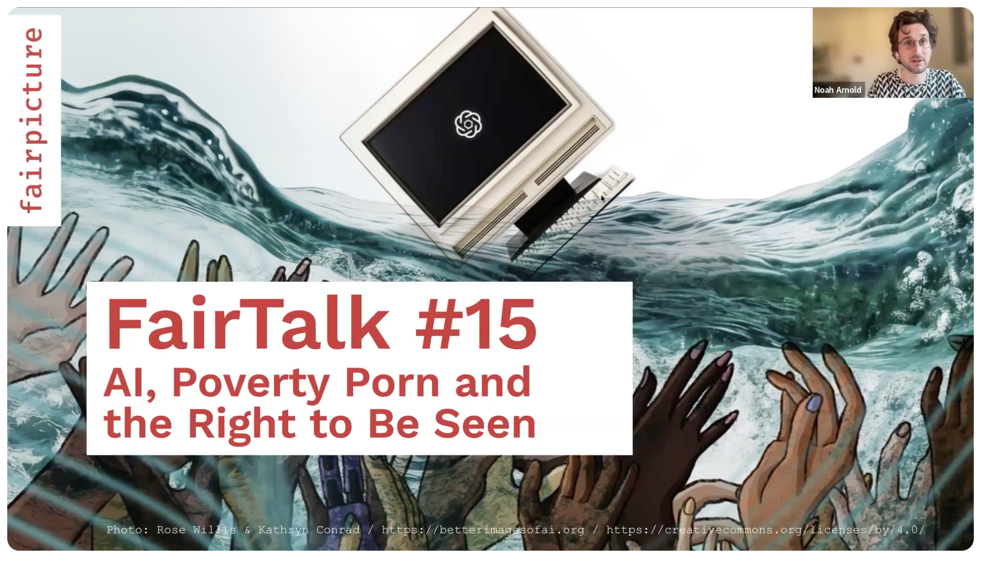
The arrival of artificial intelligence in the global development and non-profit sectors has sparked a period of intense ethical reflection around what some are calling ‘poverty porn 2.0’. The challenge is not merely technical but fundamental to non-profit mission.

A police officer who has become unpopular in his home department is seconded to a small island which is a French Overseas Territory. He arrives in a suit, which is incongruous to his surroundings and new colleagues, develops a relationship with his new partner, a Frenchwoman, which is by turns adversarial and potentially romantic.

Brad Ingelsby struck gold with Mare of Eastown (HBO, 2021), a small town mystery series helmed by Kate Winslet and Jean Smart. His latest drama Task (HBO, 2025) also racked up critical acclaim.

I had been meaning to write something about the slowness of Pluribus (Apple TV+, 2025-present) for a while (especially after watching episode 7, “The Gap”, with my jaw on the floor for most of it, which may or may not be why the episode is named thusly), and then, there it was, a new CSTonline […]
In my story about one of the molecules of the year, cyclo[48]carbon, I noted that the DFT method used in the literature to model the C-C bond length alternation around the ring (OX B3LYP30) had been re-calibrated against a remeasured crystal structure of C18H18 or [18]-annulene (below) in order to reproduce the observed values for […]
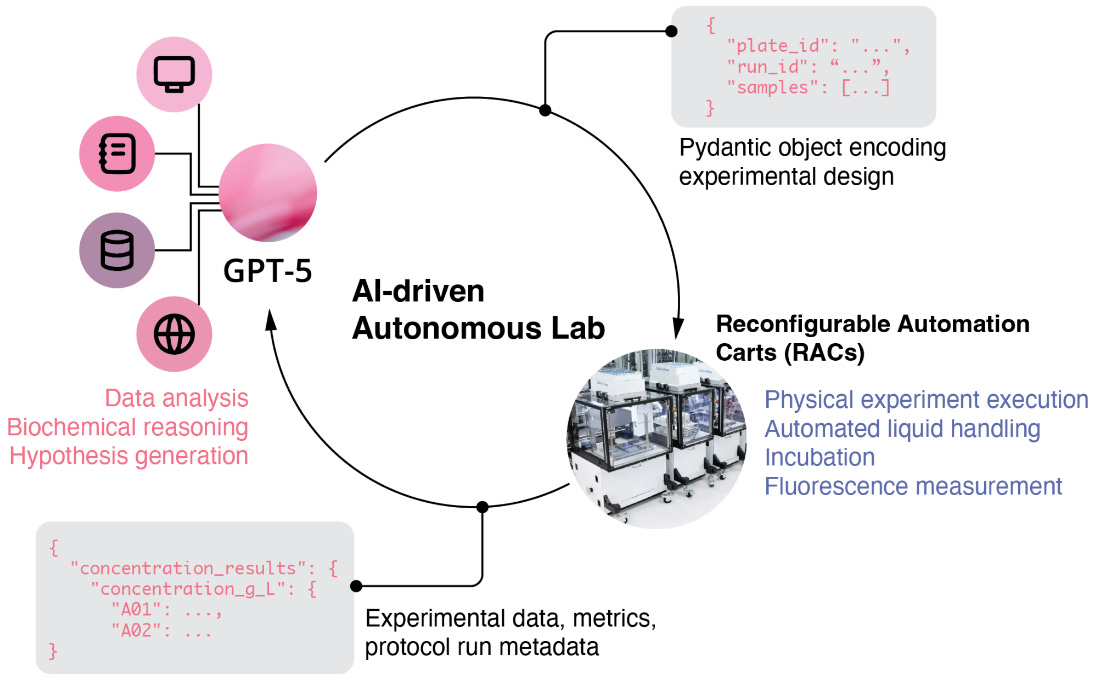
NIH bioinformatics funding, biosecurity, AI and labor, AI and social life, Applied Machine Learning Conference, R updates (R Weekly, Tidyverse), Saudi genomics, lab automation, papers &

ein Beitrag von Dr. Karolin Bubke (Leitung der Universitätsbibliothek Vechta), Dr. Christina Draheim (Koordinatorin des Fachinformationsdienst Pharmazie), Carsten Elsner (Leiter des Referats Publikationsservices), Vinzenz Fiebach (Mitarbeiter im Fachinformationsdienst Pharmazie), Dr. Michael Kotzyba (Leiter des Referats Informationstechnologie), Dr. Samuel Mund (Data Steward an der Hochschulbibliothek der Hochschule für Musik, Theater und