3QsEnglisch
Veröffentlicht in Scholarly Communications Lab | ScholCommLab
Autor ScholCommLab

Our lab is growing! In our Three Questions series, we’re profiling each of our members and the amazing work they’re doing.
Our lab is growing! In our Three Questions series, we’re profiling each of our members and the amazing work they’re doing.

Plant pathogens are ubiquitous in terrestrial ecosystems, but their role in these ecosystems is understudied. One aspect of their ecology that has not been studied is their influence on nutrient cycling.

New Metadata Helps Identify Data Authors and Institutions DOI: https://doi.org/10.59350/vavg2-54v64 To mark this year’s Love Data Week, the QDR team is offering a set of three brief blog entries highlighting new features for our users and tips on how to make the most of the repository’s offerings.
2025 veranstaltete der Legal Helpdesk Berlin fünf Workshops mit Angehörigen der Berliner Wissenschafts- und Kulturerbe-Einrichtungen, um die juristischen Probleme, Bedarfe und Ressourcen der Open-Research-Community besser kennenzulernen. Dieser Rückblick reflektiert Erkenntnisse aus der Workshop-Reihe und den ersten Monaten des Projekts.

This post is an adapted/expanded version of an abstract that I have submitted for a track on Open, collaborative and participatory science: rethinking knowledge legitimacy, policy and science futures at the EU-SPRI Annual Conference Over the past decades, the open science movement – as well as the many wider, nonacademic, open knowledge movements – have left their marks by building large, open knowledge commons: In the

The goal is not unanimity, but a process that surfaces assumptions, documents disagreement, and allows decisions to evolve with evidence
OpenCitations aggregates and deduplicates bibliographic information from CrossRef, Europe PubMed Central, and other sources to construct a comprehensive, open index of citations between scientific works. This post describes the opencitations-client package which wraps the OpenCitations API and implements an automated pipeline for locally downloading, caching, and accessing OpenCitations in bulk.
This is a list coming straight from my experience and it is NOT a listicle (I hate that word.

por Julieta I. Martínez López Teoberto Maler, explorador y fotógrafo austriaco, llegó a México en 1864 como soldado del cuerpo de voluntarios austro belgas del Ejercito Imperial Mexicano. Tras la caída del Imperio, Maler decidió permanecer en México y trabajar como fotógrafo en Guerrero, Oaxaca y Chiapas.
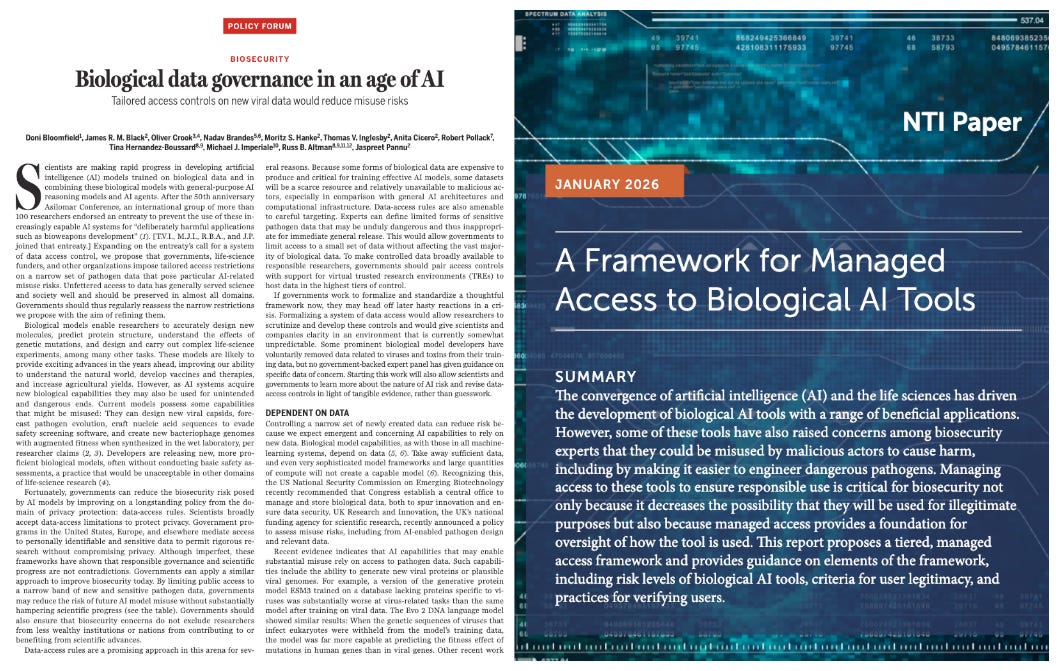
Parallel proposals target training data and model access to reduce biosecurity risk
Städte und Gemeinden sind die Orte, in denen die Aufnahme und Integration von Geflüchteten in der Praxis stattfindet. Welche Ressourcen sind wichtig, um diese Aufgabe erfolgreich zu gestalten, und inwiefern unterscheiden sich Integrationserfahrungen auf lokaler Ebene?